












The application of AI in drug discovery area has completely changed the way drugs are developed in the Pharmaceutical Industry.
Traditional drug discovery was an extremely slow and expensive process; the entire drug development process can be anything from 10-15 years or even longer.
Advancements in AI technology, however, have revolutionized the traditional approach to developing drugs.
Using AI, researchers can analyze enormous amounts of data and, in doing so, identify potential drug candidates at a far faster rate than with traditional approaches.
There are 2 areas within AI Technology that aid Scientists in identifying drug targets as quickly and efficiently as possible. These are Computational Drug Design and Machine Learning.
Generative AI also allows scientists to create entirely new and unique Chemical Structures (Molecules) targeted toward specific disease conditions.
Therefore, Generative AI has enabled the development of new treatments for diseases that were previously untreatable, thereby opening a new field for AI in drug discovery.
This article will outline how changes in AI in drug discovery process, and potentially change our method of treating Medical Diseases.
Drug Discovery using AI will drastically alter the historically slow, costly drug development process within the pharmaceutical industry. Historically, it took at least 10 years to develop a new medicine, and the total cost was often more than $2.5 billion per drug. Prior to the advent of AI in drug discovery, researchers were largely unaware of disease, genetics, and chemical compounds.
Therefore, they used vast resources to test hundreds of thousands of chemical compounds through a trial-and-error approach to discover drugs. AI in Drug Discovery has dramatically altered that reality.
AI in drug discovery is transforming the entire paradigm.
In drug discovery, large datasets on disease, genetic information, and compound chemistry are being used to enable AI systems to determine which compound(s) are the best candidates for drug development by virtue of their potential to bind to a particular biological target.
Prior to AI in drug discovery, researchers had to spend significant time testing various chemical compounds, hoping to find a successful candidate. Conversely, AI in drug discovery functions as a high-speed, efficient search engine to quickly identify the most suitable candidate for drug development.
#Transformative AI for Clinical Decision: Empowering Doctors to Think Faster
Generative AI is opening doors to regions of study that have been designated “undruggable,” or those regions in research in which scientists had attempted to develop a treatment but were unsuccessful, and therefore felt there was no possibility of developing a treatment. The possibilities enabled by generative AI in drug discovery allow researchers to explore alternative avenues for treating diseases once thought untreatable.
Another important tool for AI in drug discovery is the predictive model. Predictive models enable researchers to predict how a potential new drug would interact with the human body before beginning laboratory experiments. This allows researchers using AI in drug discovery to reduce risk factors associated with clinical trials by identifying optimal trial participants in real time and monitoring for adverse reactions.
AI in drug discovery has already changed the landscape of pharmaceutical development. With companies like Insilico Medicine having successfully used AI in drug discovery to advance drugs into clinical trials, AI continues to alter the paradigm of pharmaceutical development, enabling faster development timelines, lower development costs, and greater use of personalized medicine based on a patient’s specific genetic makeup.
It is often wondered why it takes so long to create new medicines. We recently saw a global emphasis on this challenge with the rapid development of several COVID-19 vaccines. However, we all know that the path from an idea in a laboratory to being available at your local pharmacy is long and difficult.
Pharmaceutical companies face challenges in developing new medicines; the first major hurdle is time: developing a new medicine typically requires at least 10 years from conception through final approval. There is also a financial barrier to entry. A successful drug can cost over $2.5 billion to bring into the market.
The reason for this complexity is due to the size of the challenge. To illustrate, one has to find a single “key” to unlock a small “lock” inside the human body. However, this particular “key” is embedded amongst billions and billions of other “keys” with very little difference in appearance. This represents the typical method used by chemists when they attempt to develop a new medicinal product – i.e., a long and difficult search process in which each scientist tries to find a “needle” in a giant haystack.
“However, what if there was another member in the research team that could assist scientists during their search for a new “needle”? This could be a computer-based system known as Artificial Intelligence (AI). AI can revolutionize the way medicinal products are developed.
AI acts as a guide that uses the laws of biology and chemistry to help scientists find the “needle” in the haystack. Thus, AI enables scientists to quickly and efficiently sift through the haystack of possibilities to potentially find a new, less costly solution for developing a medicinal product.
The Old Maze vs. The New Map: How AI Transforms the Drug Discovery Journey
The process of discovering a new drug is similar to navigating an enormously complex maze. In essence, the chemist’s search is performed blindly; the researcher navigates through paths one at a time using a massive amount of exhaustive research as a blindfold. Chemists have spent years searching for compounds that may treat a particular disease through blind trials in which they test thousands of compounds.
Thousands upon thousands of dead-end pathways were traversed by researchers who conducted countless costly studies with little to no guarantee of success. A primary cause of this lengthy period between bringing drugs from laboratories to pharmacies was the time required to conduct in vivo tests on every compound.
The impact of artificial intelligence on drug discovery has dramatically altered the current landscape. Instead of wandering through a maze, AI functions as an extremely efficient biological search engine. This search engine contains vast quantities of data regarding diseases, genetics, and chemistry. With this information, it can rapidly assess millions of potential combinations of drug candidates in mere hours.
Furthermore, this search engine not only assesses random combinations, but also learns about the underlying fundamentals of medicine efficacy. Therefore, it can predict whether each combination will ultimately prove effective before it is even tested in the laboratory.
This enormous paradigm shift from brute-force screening of potential drug targets to intelligent prediction allows researchers to avoid what are arguably the most time-consuming and costly phases of drug development (testing numerous possibilities and assessing their efficacy).
While the ability this powerful technology affords researchers represents an enormous advantage, a foundational question remains. That is, among all possible targets located within the human body, how does the computer identify where to direct its search?
Old vs New: Drug Discovery Transformation Snapshot
| Stage | Traditional Method | AI-Driven Approach | Impact |
|---|---|---|---|
| Traget Identification | Years of lab research | AI pattern detection | Faster discovery |
| Molecule Screening | Trial & error | Virtual screening | Cost reduction |
| Testing | Physical experiments | Simulation models | Efficiency |
| Timeline | 10-15 years | 3-6 years (potential) | Acceleration |
Source:
AI Pharmaceutical Research: How Modern Drug Discovery Works

The use of AI in pharmaceutical research has changed how pharmaceuticals are researched, delivering faster results and improving the odds of successful development. AI Pharmaceutical Research uses Artificial Intelligence (AI) to enable researchers to quickly evaluate large volumes of biological, chemical, and clinical data and identify potential treatments for diseases.
One of the biggest factors driving the transformation of the drug discovery process through data is the use of AI in pharmaceutical research.
Traditionally, the drug discovery process involved extensive, time-consuming trial and error, in which scientists would test multiple compounds over long periods. By leveraging computers to analyze complex biological data and forecast which molecular candidates are most likely to be successful in targeting a specific disease, AI Pharmaceutical Research enables researchers to quickly identify the best candidate molecule.
In addition, by using machine learning algorithms, AI Pharmaceutical Research systems can uncover patterns in data that might have gone unnoticed in traditional human-based research.
AI pharmaceutical research will provide the ability to identify drugs already on the market, create entirely new drugs using generative AI, and develop drugs with specifically desired characteristics. When creating customized drugs, researchers can focus on “undruggable” targets to find effective treatment options. Thus, AI pharmaceutical research can accelerate the pace of research and development.
Another major application of artificial intelligence (AI) is predictive modeling in pharmaceutical research. Predictive modeling is a subset of AI pharmaceutical research. With predictive models, researchers can study how candidate drugs function within biological systems before investing in clinical trials.
Predictive modeling has two benefits. First, it helps to prevent waste of resources on clinical trials. Second, it protects patients from adverse drug reactions by identifying potential problems prior to approval.
We expect AI-driven pharmaceutical research, particularly in drug discovery, to expand rapidly as more companies adopt AI. As such, drug discovery should be both faster and better. This could lead to the creation of personalized treatments based on each individual’s unique genetic information. Ultimately, AI pharmaceutical research has the potential to create a new paradigm of innovation and possibly revolutionize healthcare, leading to improved health outcomes for all patients.
#AI for Personalized Treatment: Breakthrough Care and How It Works
Finding the Bullseye: How AI Pinpoints a Disease’s True Weak Spot
To see if we can answer your question, we need to find out what the scientist wants to accomplish. Most illnesses — infectious as well as cancers — occur due to some irregularity with one part of a cell that produces a single type of protein. Most medicines work by attaching themselves directly to the protein.
Each type of protein is much like a microscopic “lock”. So now, we have our “key”, the right medication that fits into the “lock”.
However, there are many different “locks” in each person’s body—approximately 20,000. A researcher needs to select the correct “lock” to target the root cause of an illness. But since there is only one “lock” causing the illness, finding that single “lock” has been the major challenge for researchers in drug discovery over the years. If researchers make an incorrect choice, they could lose up to 10 years of their research. They would then likely fail in clinical trials.
Artificial Intelligence (AI) is very useful to biologists. With AI, biologists can analyze large amounts of genetic data and conduct research on living organisms. Biologists can use AI to discover subtle connections between specific human proteins and various diseases (connections humans might otherwise miss). It goes through every possible suspect and identifies which “lock” (one point) is the weakest link.
As a result, by quickly identifying which area of investigation to pursue, scientists save time and money. Researchers no longer spend years searching down a dead end. Additionally, because the entire drug development process focuses on the same “target” from day one, it is faster and less expensive than traditional methods. When AI finds the ideal “lock”, however, there is still a second significant issue: How does it create a new “key”?
Machine Learning in Pharmaceuticals: Turning Data into New Medicines
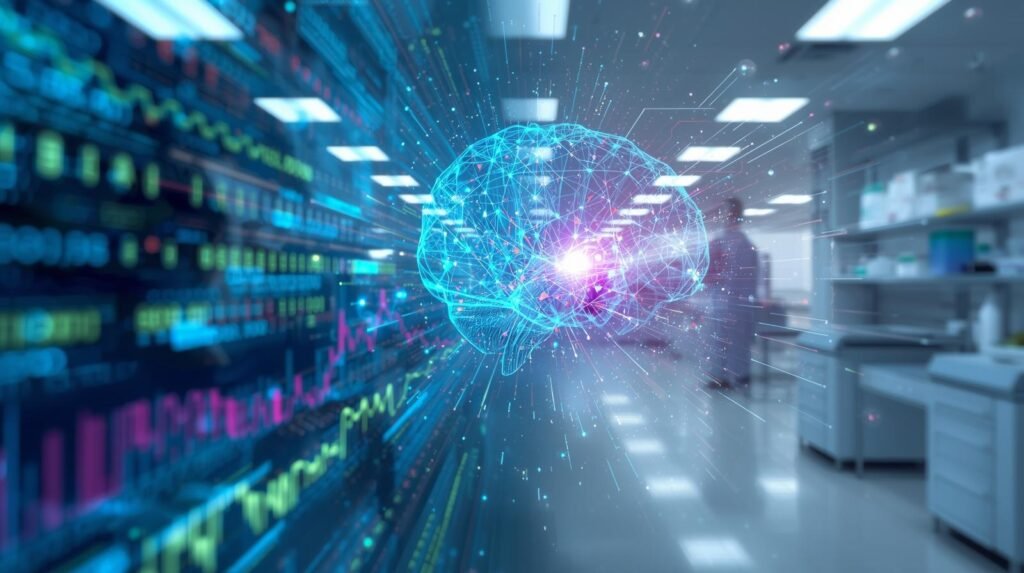
The pharmaceutical industry has a growing opportunity to change how drugs are developed and tested through Machine Learning, leveraging large datasets to generate new research ideas for developing new medications. Data volume has been increasing exponentially, while the amount of data created by the pharmaceutical industry is also increasing, but the number of traditional ways to find new medicines is decreasing.
Thus, Machine Learning in the Pharmaceutical Industry may be one of the few alternatives for rapidly testing and identifying new potential treatments compared to traditional trial-and-error approaches.
The ability of Machine Learning in Pharmaceuticals to discover new medicines relies heavily on large amounts of data from Clinical Trials, Genomics, and Chemical Databases, which are processed using many different algorithms.
Historical data used by Machine Learning in the Pharmaceutical Industry enables learning from past outcomes and trends to estimate the effectiveness of potential future compounds, thereby expediting the artificial intelligence (AI)-based development of a new medication. Historically, scientists would have had to conduct extensive trials with each candidate compound to determine which were most likely to succeed. Using Machine Learning in the Pharmaceutical Industry will enable scientists to quickly and accurately identify which candidates have the greatest potential for success.
A prime illustration of how Machine Learning has been utilized within the Pharmaceutical Industry is drug repurposing. By searching vast amounts of clinical data using Machine Learning algorithms, the ability to identify drugs used for indications other than their original design is greatly improved. Additionally, the rapid identification of drugs for various uses will provide quicker access to treatment options for a wide range of patient populations with diverse health conditions.
Additionally, Machine Learning in Pharmaceuticals helps design novel molecular compounds. Using a virtual compound design system, in which computer-generated molecules are analyzed through a series of algorithmically based processes, increases the likelihood of finding successful treatments for diseases while reducing the risk of conducting human clinical trials.
Another significant method in which machine learning impacts personalized medicine is by facilitating analysis of each individual’s data to predict treatment response, and development of targeted therapy. In summary, Machine Learning in Pharmaceuticals represents a revolutionary technological advancement that transforms data into new medications with unprecedented efficiency and effectiveness.
The Numbers That Are Changing Pharma Forever
| AI drug discovery market expected to exceed $9-10 billion by 2030 |
|---|
| AI can reduce discovery time by 30-50% |
| Average drug development cost $2.6 billion (traditional) |
| AI reduces failure rates in early-stage trials |
Source:
From Search to Creation: How AI Can Invent a Brand-New ‘Key’
Historically, researchers have relied upon the “numbers” approach when looking for a new “key,” i.e., a small molecule (drug). Using this methodology, researchers would evaluate a large collection of previously identified molecules to select fewer than 1,000 molecules that matched the “lock.” This was both time-consuming and often ineffective as researchers were often unable to discover a “key” despite having a relatively simple “lock.”
The way we are utilizing Generative AI in drug discovery is significantly different. If you can picture how generative AI works to generate images, music, and/or text, you will also be able to visualize how it functions in drug discovery. Rather than creating images/music/text, generative AI uses its knowledge of biology/chemistry to design novel chemical compounds. Rather than evaluating each possible “key”, the generative AI generates a completely novel compound designed from scratch with the optimal shape and characteristics to optimize “fit” within the “lock”.
This will represent significant changes in drug discovery. For many years, virtually all disease-related problems have been referred to as “un-druggable” because of the lack of similarity between the disease’s target protein structure and existing molecular structures. Utilizing generative AI permits overcoming these structural limitations.
Since generative AI does not rely on previously known molecules, it can produce a custom-designed “key” to access drug targets we believed were inaccessible through conventional means, and may ultimately yield cures for what we once believed were incurable diseases.
Although discovering new keys (new treatments) is an important component of advancing medical science, it represents only half of the equation. After a researcher has developed a new key (molecule), they need to determine if the new molecule operates as intended within a simulated environment representative of a complex living organism. Therefore, the next stage in the scientific process involves using generative AI as a simulation tool to run preclinical drug trials before conducting them in a laboratory.
Computational Drug Design: How AI Simulates Molecules Before Lab Testing
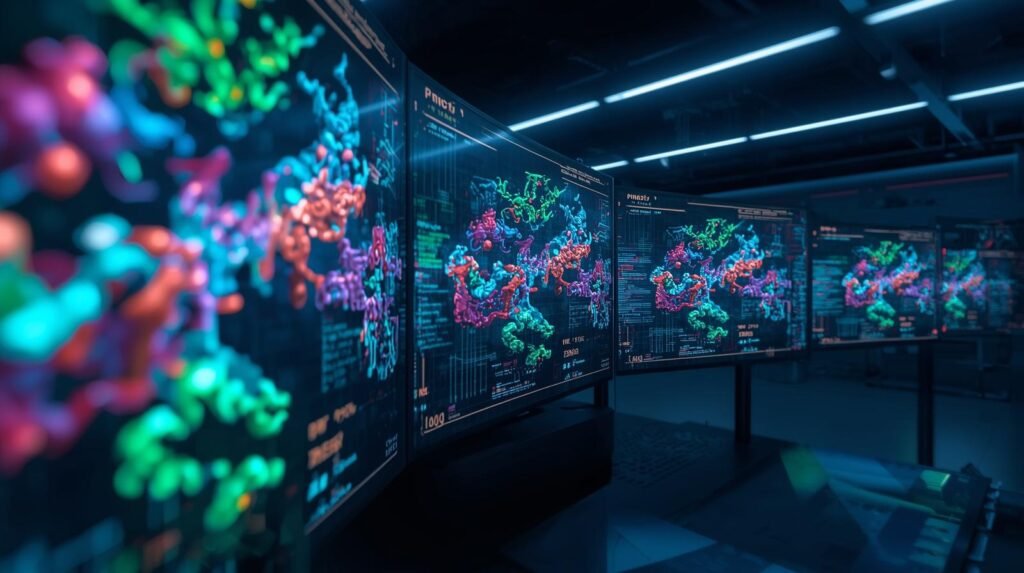
The use of artificial intelligence (AI) in computational drug design to model molecular interactions before the first clinical trials of those candidates should help researchers accelerate the identification of drug candidates by enabling virtual experiments.
Since researchers have been using computational drug design via molecular modeling and molecular dynamics simulations, these methods allow them to understand how a variety of compounds interact with their intended biological targets. This understanding enables researchers to select the candidate compound with the best chance of success, thereby minimizing trial and error when employing traditional AI methods in drug discovery.
Using computational drug design can offer numerous benefits. Probably one of the biggest benefits of using computational drug design is the time and money saved from conducting laboratory experiments. With computational drug design, researchers can virtually evaluate whether a large number of compounds may function as effective drugs.
In addition to evaluating efficacy, researchers also evaluate safety. After all evaluations are completed, researchers can synthesize the compounds they found most likely to function as drugs in sufficient quantities to test in the laboratory.
Drug Discovery has accelerated with the advent of computational drug design, as researchers can now identify candidate drugs that may have been overlooked in past traditional drug discovery efforts.
Researchers can use artificial intelligence (AI)- based computational drug design to examine large-scale biological systems and understand how a drug interacts with various factors (e.g., genetics, environment). Using this data, researchers can refine the compound’s molecular structure, resulting in safer and more effective drugs.
The future of drug development looks increasingly bright as an ever-growing number of pharmaceutical companies begin to incorporate computational drug design into their AI-based drug discovery pipelines. In addition to accelerating the time, process, and overall efficacy of bringing new treatment options to market, AI’s ability to predict and test drug effectiveness before they enter the lab will also lead to higher success rates.
How AI Designs a Drug (Step-by-Step Map)
| Step | What AI Does | Outcome |
|---|---|---|
| Data input | Analyze biological data | Identify targets |
| Pattern Detection | Find disease markers | Insights |
| Molecule Generation | Create compunds | Drug candidates |
| simulation | Test virtually | Reduce failure |
| Optimization | Improve molecule | Better drug |
Source:
Generative AI in Drug Discovery: Creating New Molecules with Intelligence
Generative AI in Drug Discovery may be one of the most exciting applications of innovative thinking in drug development. It allows researchers to break away from the old way of developing new drugs by taking an existing compound, screening it against a potential target, and determining whether it can inhibit or modify the target’s function.
The application of generative AI in drug discovery has opened many areas of drug research that were previously unavailable for treating diseases termed “undrugable” because they have too complex biochemical pathways to be treated with conventional approaches.
Drug discovery using generative AI requires large-scale datasets (chemical libraries, biological information, clinical outcome data) and large-scale algorithms to train them, enabling the models to make predictions. Once trained, generative AI predictive models generate new molecules that meet specified criteria (e.g., efficacy and safety).
Generative AI in drug discovery generates new drugs at speeds far greater than traditional drug development methods.
Generative AI in Drug Discovery will enable researchers to discover drugs from nearly limitless chemical combinations, whereas prior methods impose far more restrictions. Researchers would simply input what they want their drug compound(s) to look like (parameters), and receive a list of compounds that meet those parameters.
Additionally, Generative A.I. enables the optimization of drug candidates through rapid, iterative testing and modification until the best combination for each attribute is found. Therefore, only the most promising drug candidates are tested, saving both time and money in drug development — another benefit of using generative AI in drug discovery.
There is no limit to the amount of innovation in the pharmaceutical industry that will be enabled by the continued growth and evolution of generative A.I. in drug development. With this new technology, there is now an unlimited opportunity to develop new therapies for diseases that were previously not viable.
Real Breakthrough Story: AI Creating a Drug in Record Time
| Case: | Insilico Medicine |
|---|---|
| AI designed a novel fibrosis drug | |
| Timeline: 18 months (vs 4-5 years traditional) | |
| Drug advanced to clinical trials | |
| Impact | Proves AI can dramatically shorten drug discovery |
| Reduces cost and risk |
Source:
The ‘Digital Flight Simulator’ for New Medicines
Predictive modeling is a type of testing by scientists to see how a new drug would perform, using artificial intelligence. A scientist can create a virtual space that mimics the complexity of biochemical reactions occurring in a living body.
Using this space, a scientist may ask themselves what-if questions about the chemical compound they are planning to develop, and the predictions from the AI can help them understand whether their candidate drug will be effective, but also whether it might cause unwanted side effects because of its interaction with other elements of the body.
The AI uses information derived from a massive amount of biological data to learn the relationships among various biological molecules and cellular components in the human body. Thus, when a scientist provides the AI with the molecular structure of a new candidate drug, the AI can use this information to predict all possible outcomes of how and where the drug will interact within the body.
For example, will the new candidate drug bind with the correct molecular target? Are there any potential areas in which the candidate drug could adversely affect healthy physiological systems? Ultimately, the predictive nature of these AI models gives scientists another powerful tool to eliminate unviable candidates and prevent unnecessary time and money spent on developing potentially toxic or ineffective drugs.
While using predictive modeling has many advantages for scientists in identifying the best candidates for advancing to human clinical trials, one of the greatest advantages is that it reduces the number of failures that occur during drug development. Most candidate drugs have historically failed during the costly and time-consuming process of laboratory-based testing.
Scientists are now able to test thousands of possible candidate drugs through the use of predictive modeling prior to spending money on actual laboratory based testing.
The main advantage here is that scientists can quickly (early) remove from consideration the candidates least likely to succeed and focus their efforts on those that appear most likely to succeed. Ultimately, this will result in fewer candidate drugs being moved to the human clinical trial phase and a greater probability that successful candidates ultimately make it to the marketplace.
#Revolutionary AI in Hospitals – From Life-Saving Diagnosis to Intelligent Delivery Robots
AI Drug Development: From Discovery to Clinical Trials

The drug development process (AI in drug discovery through clinical trials) is being fundamentally changed by the use of artificial intelligence (“AI”) throughout the drug development pipeline. This is improving speed, efficiency, and effectiveness at each phase of the drug development process.
In the past, the drug development pathway (from concept to final regulatory approval for marketing) was long and expensive. Historically, it can take over 10 years and cost billions of dollars. With AI-driven drug development, AI-based technologies are now being integrated into every stage of the drug development process, thereby accelerating it.
AI in Drug Development is also enhancing the capabilities of AI in drug discovery portion of the drug development process. The drug discovery part of drug development involves using large amounts of biological, chemical, and genetic data about biological systems; this is accomplished by using various machine learning algorithms to identify potential drug candidates. This results in a reduction in many of the “try-it-and-see” approaches that have historically been used to discover new drugs. Consequently, researchers can significantly narrow their initial focus to the most likely drug candidates early in the drug development process.
The utilization of AI in drug development has multiple applications during the drug development process, including molecular design optimization of any potential candidate compound(s) as well as predictive models that enable only those candidate drugs with the greatest potential for success to move forward into laboratory testing. Therefore, predictive modeling enables the elimination of many of the lengthy and costly processes associated with developing drugs via traditional means.
In addition to identifying the most effective candidate drug(s), AI Drug Development can help select which patients to include in clinical trials by determining which have the appropriate genetic and biological markers based on their individual medical histories.
Also, with AI technology monitoring real-time data from each subject in the clinical trial, researchers can quickly determine whether there are any adverse effects or lack of efficacy among the subjects participating in the trial. The researcher can then take steps to protect the subjects and reduce the time required to complete the trial. Due to these advancements, AI Drug Development has reduced the time required for all phases of drug development.
The potential of this area continues to grow; therefore, we can expect AI to impact the pharmaceutical industry by enabling faster access to new treatment options, improving patient care, and achieving better results. In general, we can conclude that AI Drug Development is leading to a more efficient and focused method of developing new drugs and getting them to market.
Making Human Trials Faster, Safer, and More Effective
In addition to obtaining approval for a drug candidate from the “Digital Flight Simulator,” the next challenge a potential new drug faces is the Clinical Trial phase, during which the drug is administered to humans.
The Clinical Trial phase is normally the longest and most expensive of the stages drugs go through. The length of time it takes to find suitable participants for clinical trials (commonly called subjects), and to protect them from harm while they are participating in these studies, can take several years and be an expensive endeavor. Nevertheless, there are already signs that AI is having a positive influence in this field as well.
In particular, AI has enabled researchers to address the challenges associated with the clinical trial process in three ways.
- Choosing the Best Clinical Trial Participant Using Artificial Intelligence Technology: AI enables rapid review of large amounts of anonymized health data to select individuals whose physical and biological characteristics mirror the subject population in terms of the biological markers present and the stage of the disease process. AI selects the best possible candidates for obtaining reliable and accurate results from a clinical trial.
- AI Detects Potential Adverse Reactions More Rapidly Than Human Reviewers Can: The use of wearable devices such as smart watches is enabled by AI to continually collect data on the wearers, with AI reviewing this data to determine when there may be signs of adverse reactions. This provides another safety net for clinical trial participants who may have experienced adverse effects before realizing the impact.
- Using AI to Process Large Amounts of Clinical Trial Data Much Quicker Than Prior Methods: AI can process and analyze clinical trial data in real time, producing insights into the efficacy of new treatments. With AI, time to market for potential drugs is accelerated, but most importantly, researchers receive answers to their questions about a new treatment or drug faster than ever before.
Overall, AI will facilitate a faster, safer, and more personalized clinical trial experience. By identifying the best candidates for clinical trials and continually monitoring participants’ conditions, AI technology can help close the gap between laboratory research and the delivery of medications to pharmacies nationwide.
Success Story: How AI Designed a New Drug Now in Human Hands
A potential lifesaving therapy to combat one of the most debilitating diseases known to man isn’t science fiction; it exists now. One company at the forefront of developing this therapy is Insilico Medicine. They are currently conducting phase III human clinical trials on a drug developed using Artificial Intelligence (AI), for a severe lung condition that causes irreparable damage to the lungs.
This is significant because it marks another milestone in the history of medicine. It may represent the first time a fully AI-developed drug has entered late-stage human clinical trials.
Insilico’s AI played both the scientist and inventor roles. As a scientist, the AI analyzed an enormous database of biological information to identify the specific “protein” or “lock”, as we might call it, that was causing irreversible damage to the lungs. Then the AI acted as an inventor and designed a completely novel chemical compound – or “key”- that no person had made before.
The entire process, from identifying the key to designing the lock, took less than 30 months. That’s ten years sooner than typical research of this kind would take.
If there is any value to this single success story, it is a possible blueprint of how Pharmaceutical Research & Development (R&D) will look going forward. More importantly, if scientists working alongside intelligent machines can develop therapies at rates that were once thought impossible, what other possibilities exist?
With such rapid development of a medication for a disease of such complexity, it is hard to imagine what additional possibilities exist beyond being able to create drugs based on individual patient needs.
Drug Discovery Innovation: How AI Is Reshaping the Pharmaceutical Industry

Drug Discovery Innovation is undergoing a significant transition due to emerging capabilities of Artificial Intelligence (AI) technologies; this marks the birth of a new era for the pharmaceutical industry. The traditional Drug Discovery methods were limited for many years by long development times, high costs, and very low success rates.
AI will transform how all drug developers identify, develop, and deliver new medicines to the marketplace — dramatically increasing AI in Drug Discovery and Innovation across the entire industry.
It has affected each step of the AI in Drug Discovery and Innovation process, even at its inception. AI systems can quickly analyze large volumes of biological data to identify correlations between diseases and potential drug targets. Therefore, these systems can improve the speed and accuracy associated with identifying drug targets during the AI in Drug Discovery process. Traditionally, drug discovery relied on trial and error; therefore, this early process has also improved.
Following target identification, it continues AI in Drug Discovery Innovation by enabling researchers to use generative models for molecular design. Generative models enable researchers to create novel compounds tailored to specific requirements. Additionally, the algorithms used in generative models enable researchers to search the vast chemical space for novel molecules that might not be attainable with traditional methods. Therefore, it is possible that treatments could be developed for what are referred to as “undruggable” diseases.
Predictive modeling is also one of the many applications of artificial intelligence in molecular design. It supports AI in drug discovery by simulating how new drugs may behave in the body. Researchers can now identify potential side effects of their drug candidates, as well as whether adjustments should be made before costly lab testing is completed, using simulation models of the drug’s interaction with the body.
Analytics driven by artificial intelligence also increases efficiency in clinical trial activities, such as improved participant recruitment and real-time tracking of adverse reactions to experimental medications.
Artificial intelligence enables an even more nimble, targeted approach to drug discovery, resulting in shorter time-to-market and reduced costs associated with drug development. Using data analysis capabilities to quickly process vast amounts of information, artificial intelligence will accelerate innovation in Drug Discovery, enabling pharmaceutical organizations to respond to emerging public health crises much faster than ever before.
Through the continued evolution of Artificial Intelligence, it will also significantly transform AI in drug discovery, which will enable the pharmaceutical industry to continue to find new ways to develop therapies that will lead to enhanced global health outcomes.
Where AI Is Already Changing Medicine Today
| Area | AI Application | Real Benefit |
|---|---|---|
| Onclolgy | Cancer drug discovery | Faster treatment |
| Neurology | Alzheimer's research | Early detection |
| Rare diseases | Pattern analysis | New therapies |
| Personalized Medicine | Genetic targeting | Custom drugs |
| Clinical Trails | Patient matching | Better success rates |
Source:
Why Your Future Medicine Might Be Made Just for You
Many people know that there exists a drug that cures one person suffering from an ailment but has no impact on another. The reason is that most prescriptions written today are for what is considered “the average” or “typical” person. For example, purchasing clothing off the rack, the clothes may fit someone extremely well, somewhat well, or poorly. Therefore, personalized medicine intends to take this into account and create a “personalized suit” for each individual based upon their specific “blueprint” (their DNA).
In essence, personalized medicine uses an individual’s DNA blueprint to create a “custom-made” prescription based on their genetic characteristics. Genomics is the science behind studying your blueprints and the minor variations in those blueprints that help define YOU. The genetic code also defines why an individual’s body reacts differently to a drug than another individual’s. Unfortunately, your genetic code contains over three billion characters; therefore, it is physically impossible for physicians to review all the information in an individual’s genetic code.
Artificial intelligence will play a vital role in creating healthcare tailored to each individual. The artificial intelligence will serve as a “universal decoder” and rapidly scan an individual’s genetic data, comparing it with large databases of biological data. After analyzing both sets of data, the AI should be able to identify commonalities in the individual’s genetic blueprint and develop treatment recommendations. In other words, the AI should be able to determine which “key” is most likely to open an individual’s “genetic lock” before issuing a prescription.
This has tremendous potential for fighting cancers. Currently, chemotherapy treatments are usually developed and administered to patients without taking their genetic profiles into consideration. However, a future model of AI will allow doctors to assess a patient’s tumor based on its genetic profile. They can then utilize this information to write a prescription for a treatment that targets that particular type of cancer. By doing so, they increase the patient’s chances of achieving success while reducing the risk of side effects. While there is much promise in this area, many obstacles exist prior to its becoming standard practice in our daily lives.
The Big Hurdles: Why Isn’t Every Drug Made by AI Yet?
There are numerous barriers to developing routine “use” of AI in drug discovery in medicine today; however, there is one huge barrier — data. A student with a high IQ can’t study effectively without access to “good books.” Similarly, AI systems need high-quality scientific data to generate accurate results.
In other words, if the AI training data provided by the data scientists is of poor quality (i.e., messy, incomplete, or variable), then the same will be true for the conclusions generated by the AI system. As such, before reaching its full potential for discovering new medicines, researchers must first clean and standardize the massive amounts of biological data collected over the last few decades — a monumental task compared with cleaning the “digital homes” of each area of life science research.
Beneath the large amounts of data exists the “black box” issue. In some cases, an AI system might produce an outstanding result (e.g., a novel compound/drug candidate) but be unable to illustrate its methodology for arriving at that result.
To protect patients, regulatory entities need to understand the reasoning behind drug development. They need to know how the drugs can help patients and not simply rely on the statements from the AI system. The scientists are working to develop explainable AI (more understandable) to address this challenge.
While achieving a situation in which all data fed into an AI system is perfect, and every aspect of the decision-making process is transparent, would represent a giant leap in utilizing AI in pharmaceutical research, medicine is going to approach this slowly. New medicines must undergo rigorous testing and scrutiny by regulatory agencies prior to approval for sale in the United States to ensure they are both safe and effective.
AI is a revolutionary tool; it will be a while before the use of this technology becomes part of the established clinical trial environment and/or the regulatory approval environment. These barriers to entry are significant but necessary to establish safeguards as we move towards a world with fewer obstacles to using AI in pharmaceutical research.
AI vs Traditional Drug Discovery
| Factor | Traditional | AI-Based |
|---|---|---|
| Speed | Slow | Fast |
| Cost | Very high | Reduced |
| Accuracy | Moderate | Higher |
| Risk | High failure rate | Lower early-stage risk |
A New Era of Hope: What AI-Powered Medicine Means for Our Future
The journey toward developing a new drug is becoming a puzzle that contains numerous hurdles. The major hurdle still is finding the appropriate “lock” within the human body and creating the ideal molecular “key.” But, there is now a new partner to aid in this process: Artificial Intelligence (AI).
It’s not just about technology – it’s about time. There may be hope on the horizon. It could allow us to shorten the time required to find cures and expedite the delivery of potentially life-saving drugs to those who need them. It also could permit investigators to examine disease mechanisms that were formerly deemed “undruggable.” Moreover, it would enable researchers to replace their current expensive, trial-and-error approach to drug discovery with an intelligent, focused process.
The purpose of this framework is to provide background information for news articles regarding how artificial intelligence (AI) will affect the development of medicines by utilizing pharmaceutical R&D. The concept of AI in drug discovery represents a tremendous step forward for scientists to identify improved targets, develop enhanced drugs, and make improved predictions than they were able to prior to having access to AI.
While AI will not replace brilliant researchers working in laboratories, it can significantly enhance their capabilities as a collaborative tool. As we look at the potential to treat numerous rare medical disorders and create our long-held dream of personalized medicine, we are beginning to move from science fiction into the early stages of what could eventually become a new standard of care and hope for all of humanity.