














AI has a wide range of uses in industry and globally. A number of challenges exist for those new to AI and learning about AI’s fundamental operation. The intent of this paper is to explain the basic AI algorithm functions, provide you with insight into the data side of AI, and begin your journey through the exciting field of Machine Learning. The purpose of this article is to give you an easily understandable overview of what AI is, as well as how it is being applied today, so that you may have a better understanding of the possible applications for AI and the potential implications of AI
Summary
This article will detail the working principles of artificial intelligence (AI), with a specific focus on the use of algorithms. An algorithm is an ordered list of steps for processing information, enabling AI systems to recognize learning experiences and apply them to make intelligent decisions.
There are three main categories of algorithms that will be discussed. Each type has unique characteristics, functions, and uses. Those categories are: supervised learning, unsupervised learning, and reinforcement learning.
Also, there will be a discussion of data science as it relates to enhancing the capabilities of artificial intelligence (AI). This will be done by identifying some of the many ways data science can support the functionality of artificial intelligence. Examples of these forms of support include: data cleaning/cleansing to enhance the quality and integrity of data used in AI; data visualization to provide a visual representation of large amounts of complex data; and statistical analysis to identify trends/patterns within data.
Finally, there will be a review of three of the most popular machine learning models (linear regression, decision trees, and neural networks) that have been developed to translate AI theory into practical application.
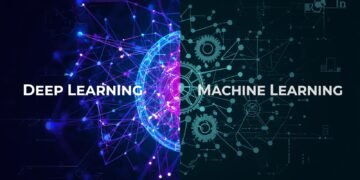
#Deep Learning vs Machine Learning: The Key Differences You Must Know
When you can see all of the individual pieces that make up Artificial Intelligence (AI) and the fundamental rules (elements & principles) behind them, you will be able to truly see the value added by AI; converting raw, unprocessed data into usable and meaningful information for use in a multitude of aspects of the “real” world as well as numerous types of businesses/industries.

What Are AI Algorithms?
The underlying premise for the development of artificial intelligence (AI), is the use of an algorithm. The term “algorithm” refers to a complete, step-by-step approach, whether in terms of formulas or processes, that defines how to solve virtually any problem. Algorithms are a significant component of AI applications because they enable rapid analysis of large amounts of data and can “learn” from their analyses.
Through this learning process, the algorithms can generate meaningful decisions based on their respective data analyses. In essence, the algorithms are at the foundation of all AI systems, enabling them to simulate human thought and decision-making.
Types of AI Algorithms
There are various ways to categorize AI algorithms, and each category serves a specific function.
- Supervised Machine Learning Algorithms are classified based on whether the Algorithm has access to Labeled Data. Supervised Machine Learning requires Labeled Data; therefore, it can provide exact solutions to problems such as Classification and Regression.
- Unsupervised Machine Learning Algorithms do not have Labeled Data available. Therefore, Unsupervised Machine Learning does not provide right or wrong answers; instead, it attempts to identify patterns and structures within the data. An example of Unsupervised Machine Learning would be Clustering, where through the use of Variables (attributes) associated with the Information (data) the data can be grouped (clustered) regardless of how the user understands the information.
- Reinforced Machine Learning is a Methodology used to train a Model to Make Decisions and improve those decisions through Positive Reinforcement (Rewards) and Negative Reinforcement (Penalties). Reinforced Machine Learning is a Methodology in which a Model makes decisions regarding actions in an Environment and then receives feedback, allowing the Model to improve decision-making over Time with the Goal of Achieving Greater Rewards and Fewer Penalties. This is typically achieved when a Model interacts with an Environment sequentially.
Types of AI Algorithms
| Algorithm Type | Description | Example | Use Case |
|---|---|---|---|
| Supervised Learning | Uses labeled data | Linear Regression | Prediction |
| Unsupervised Learning | Finds patterns | K-Means | Clustering |
| Rinforcement Learning | Learns via rewards | Q-Learning | Robotics |
| Deep Learning | Neural networks | CNN | Image recognition |
Source:
The Role of Data Science in AI
What is Data Science?
The field of Data Science has the potential to be a major contributor to Artificial Intelligence by providing tools, methods, and approaches for collecting, processing, and analyzing Data. Collecting, Processing, and Analyzing Data are key to enabling AI algorithms to learn and improve their abilities over time, making better decisions using the experience learned from Data. Data Science is a significant area within AI, as it enables this learning.
Importance of Data Cleaning
Data cleaning (also known as data scrubbing) is a very important part of the data preparation process. In the data preparation process, after data collection but prior to model training, the dataset is reviewed and altered to ensure there are no inconsistencies. This review of the dataset is called data cleaning. The objective of the data cleaning process is to find and correct errors in the dataset prior to developing a model.
If errors are found and corrected in the dataset prior to model development, the accuracy and reliability of the results are less likely to be affected. When you thoroughly examine your data for inaccuracies, you will have higher-quality data (data integrity), develop more reliable models, and produce more accurate model results.
The Power of Data Visualization
Data Visualization presents raw data in a visual format (images or graphics). These visuals present trends and patterns in data, helping individuals better understand the data and recognize them faster than they could by viewing only the numbers. Visuals such as charts and graphs help users recognize underlying patterns and relationships in data that might otherwise go unnoticed.
Utilizing Statistical Analysis

Statistical Analysis is an excellent way to examine large datasets to determine how different factors relate to one another and what patterns may be present. Statistical Methods help to show relationships and trends with your data so you can make informed decisions. Also, statistical analysis shows interaction or how things influence each other, and will inform the decisions you need to make, and give you an understanding of how they interact.
Data Science Impact Statistics
| Metric | Insight |
|---|---|
| Data preparation time | 80% of ML project time |
| AI project failures due to poor data | 60% |
| Data-driven companies performance | 5-6% more productive |
| Growth of data science jobs | Rapidly increasing |
Source:
Understanding Machine Learning
One of the primary ways Artificial Intelligence (A.I.) works is through Machine Learning. The focus of machine learning is on developing computer programs that can get better from experience. A second important aspect of machine learning is how well computers can perform several tasks on their own. Unlike regular programming, where the programmer has to write code for every possible situation, Machine Learning allows the computer to learn and adapt as it processes new information.
Because of this automatic adaptation, as the computer continues to process new pieces of information, its ability to make good decisions improves without requiring continuous intervention by someone else.
Machine Learning Models
Machine Learning Models Comparison
| Model | Type | Use Case | Strength |
|---|---|---|---|
| Linear Regression | Supervised | Prediction | Simple |
| Decision Tree | Supervised | Classification | Interpretable |
| Neural Network | Deep Learning | Complex tasks | High accuracy |
| K-Means | unsupervised | Clustering | Fast |
Source:
Linear Regression
A statistical method used to create models to make estimates on the continuous value of an outcome variable (an output variable which may take many different values) based upon one or more predictors (input variables which are going to be used as input to estimate the outcome variable).
The goal of linear regression is to find an equation to define the relationship between the predictor(s) and the outcome variable(s), so that when you want to know the estimated value of some new data point, you have the ability to do this. The equation also provides insight into how past data points influence your estimate(s) of the new data point.
Understanding Linear Regression
Statistical analysis using Linear Regression allows you to examine how variables are related to other variables. Linear Regression is usually used for predicting the value of one variable from another. Simply put, a Linear Regression study involves creating an equation that best fits all data points and examining the relationship between two variables.
Using Linear Regression assumes a linear relationship between two variables (e.g., if one variable changes, the other should change in a predictable way) and enables understanding and prediction of both variables’ movements. For example, you may use Linear Regression to study the relationship between individuals’ height and weight. By plotting each individual’s height and weight on a graph and drawing a straight line through the points, you will have created an equation to predict an individual’s weight from their height.
Linear Regression has significant power and is widely utilized across many disciplines including economics, biology, engineering, and social sciences. Linear Regression provides researchers with valuable information necessary to make informed decisions and predictions. Studying how Linear Regression works also provides insight into the interactions and dynamics among the variables.
#Supervised vs Unsupervised Learning: The Key Differences You Must Know
Linear Regression: Applications and Limitations
Regression analysis is a statistical technique applied in virtually every discipline; it is very effective at identifying relationships among variables, which are useful for predicting future events. Companies frequently apply regression analysis to estimate their future sales based on past sales. Scientists also use this type of regression analysis to examine the relationship between weather (such as extreme temperatures) and crop yields.
Regression analysis applies the best possible linear equation to represent the connection among the data sets. This allows the user to make estimates concerning what may occur in the future or to identify the degree of association existing among variables.
Although regression analysis provides valuable insights into the associations among variables, there are numerous major limitations that need to be taken into account.
The first of these assumptions is that the relationship between your independent variables and your dependent variables will be linear. If there is some type of relationship but it is non-linear (i.e., has an S-shaped curve), predictions from linear regression may be inaccurate or unreliable.
Outliers have a large impact on the reliability of regression results. Outliers are data points that do not fit into the rest of the data set. The presence of outliers can greatly affect the results of a regression analysis.
Regression Analysis cannot determine if one variable causes another variable to behave in a certain way. Even though two variables may appear to be related, this does not mean that the independent variable(s) cause the dependent variable(s) to act in a specific manner.
Real-World Example: Linear Regression
| Example | House Price Prediction |
|---|---|
| Input: Size, location, number of rooms | |
| Model: Linear regression | |
| Output: Predicted house price | |
| Result | Helps real estate pricing decisions |
| Works best with linear relationships |
Source:
Decision Trees
Decision Trees are an adaptive machine learning model for solving both regression and classification problems. The use of decision trees enables the utilization of all input variables (features) to determine the target variable. Each node on a decision tree is a representation of an if/then decision based upon the specific feature under evaluation at each given time; therefore, the path taken throughout the tree from root to leaf will be determined by these decisions.
Therefore, decision trees provide the flexibility to create complex decision paths as they can represent many different types of predictive models.
Structure and Functionality of Machine Learning Models
The overall purpose of developing a machine learning model is to identify trends in the information you have available and make decisions based on your analysis of that data. When developing a machine learning model, we develop an algorithm that allows it to learn from the data that it reviews.
A machine learning model has several components; the input data (upon which the model operates), the features (distinct measurable characteristics or attributes of the input data), the algorithms (the mathematical formulas/procedures that the model applies to interpret and produce the output from the input data) and the output (classifications/predictions/recommendations produced by the model).
The input data enables the model to comprehend both the broader context and finer details of the data being analyzed. Each feature is important as it either enhances or diminishes the model’s ability to perform. The way the model interprets/evaluates the input data to produce the output is determined by the algorithms used.
A wide array of differences exists among Machine Learning (ML) model types based on the model’s structure and the specific application. As such, supervised learning models are trained on data sets that contain labeled outputs for each example, enabling them to “learn” from the outputs of each example in the training data. In contrast, unsupervised learning models process input data without associated output values; instead, the end result typically involves discovering patterns in the data or grouping similar input examples.
There are also multiple additional machine learning models whose processes vary greatly (e.g., reinforcement learning). Unlike supervised and unsupervised learning models, reinforcement learning models use their own output to make decisions and select actions that best enable them to reach a desired outcome in their environment.
Many factors contribute to the effectiveness of most of these machine learning models: the quality of input data, the complexity of the algorithms used, and the nature of the problems being addressed. With this understanding of the inner workings of machine learning models and how they work to provide a comprehensive knowledge base to effectively apply machine learning models across a vast range of applications, including but not limited to natural language processing and image recognition.
Neural Networks
A “Neural Network” is a computer model that simulates how humans understand the world around us. The basic idea behind this type of model is that it consists of layers of nodes connected to one another. These nodes are similar to neurons in the human brain. These nodes take the data given in the input layer and apply what they have learned from previous experiences to produce an output in the output layer.
A typical Neural Network can be divided into three types of layers: the Input Layer, the Hidden Layers, and the Output Layer. In addition to taking in input data, all layers transform it into an output.
Most often, Neural Networks are trained with a large number of examples (or a dataset) and then use backpropagation to adjust the weights at every connection between nodes based on the differences between their predictions and the true values. The weights will continue to adjust as long as there is still room for improvement in predicting new unseen data.
Once the Neural Network has learned enough from the training dataset, it can be applied in numerous areas, including image and speech recognition, natural language understanding in both spoken and written forms, and strategic decision-making in games.
Decision Trees vs Neural Networks
| Feature | Decision Tree | Neural Network |
|---|---|---|
| Complexity | Low | High |
| Interpretability | High | Low |
| Accuracy | Moderate | HIgh |
| Data Requirement | Low | High |
| Use Case | Simple classification | Complex pattern recognition |
Source:
A Machine Learning Model Based on the Structure of the Human Brain
Machine Learning continues to evolve into an exciting area of research that studies how the human brain works. Many types of Machine Learning models are designed based on how the brain works or functions. Additionally, some Machine Learning models mimic the brain’s neural structure and synaptic connectivity, as well as other cognitive functions. Using this type of inspiration allows for a more organic means to design models and facilitates the development of future models.
Neural Networks are another type of brain-inspired Model that incorporates multiple layers of interconnected nodes, simulating how neurons interact to communicate with one another. Like humans, Neural Networks also utilize layering to process information when analyzing data, allowing them to recognize patterns and make predictions from the input.
Additionally, like humans, Neural Networks continue to adapt, changing their interconnections (node weights) to improve their accuracy and efficiency with continued use. Similar to how we build knowledge and experience through repeated exposure to varying stimuli and create new responses to them.
Machine Learning has many uses across numerous industries, including Health Care and Finance. As both industries rely heavily on the analysis of large datasets and the assistance in making decisions based on those analyses. In turn, the more we understand how to optimize the Model, the more capable the Model will be, and therefore the more complex problems it will be able to solve than were previously solvable.
Conclusion
It is very important to have some understanding of the underlying algorithms of AI (artificial intelligence), data science, and machine learning if you want to engage with, appreciate, and contribute to the emerging field of Artificial Intelligence.
The three concepts mentioned above form the foundation of every type of AI system. As technology advances and expands the uses and applications of these tools, there will continue to be a growing need to understand the foundational concepts of artificial intelligence to stay relevant in today’s fast-paced technological world.
Whether new to the field of artificial intelligence or simply looking to learn and/or deepen your knowledge of its core components, I believe this guide serves as an introductory, easy-to-read, and educationally rich resource for those interested in the many exciting aspects of the field.