















The connection among long-term financial performance, socially responsible business practices, and the ability to intelligently analyze large datasets represents the intersection of Strategic and Sustainable Artificial Intelligence (AI) Environmental, Social, and Governance (ESG) Investing. ESG offers investors a framework to assess companies’ environmental impact, social implications (including employee and stakeholder relationships), and corporate governance/leadership ethics.
However, historically, it has proven difficult to substantiate these claims due to the complexity of validation and the sheer volume of data required to assess such a broad range of factors.
This is where Artificial Intelligence (AI) becomes so useful to investors – by analyzing large volumes of data, identifying patterns and trends that may have gone un-noticed by even the most vigilant investor, AI can serve as an early warning system for investors concerning risks associated with investing in a particular company; identify discrepancies in a company’s sustainability reports; and lower the likelihood of investors being misled by “green-washers.”
What is important to note here is that this should not be used to substitute for human judgment, but rather to improve the overall quality of the “case file” that investors rely on when making investment decisions. The bigger picture for this concept is simple: investors need not compromise their values. Companies that successfully manage their ESG issues may also find themselves in a stronger position to navigate regulatory challenges, disruptions, and reputational risk – and therefore may develop greater resiliency over time.
As new AI-based tools begin to appear on the investing platforms available to today’s investors, there will be increasingly more opportunities for investors to participate in an intentional and thoughtful investing process that creates wealth and helps build a healthier and more equitable world.
Summary
“Revolutionary & Reliable AI Equipment Failure Prediction” showcases AI’s ability to detect early warning signs of machinery failure (before repair costs are incurred), leveraging today’s technologies. Unlike scheduling fixed maintenance intervals or simply monitoring thresholds in standard alarm systems, AI models can determine “normalcy” for each piece of equipment under its respective operating conditions (i.e., load, speed, product, environment).
AI identifies early warning signs of potential failure by detecting subtle patterns in input signals, such as vibrations, temperatures, pressures, acoustics, motor currents, and cycle-timing variations. These subtle patterns may go unnoticed by individuals, but will be converted into clearly defined risk-level indicators and action alerts.
The brief explains how AI-supported information contributes to Predictive Maintenance: identifying the most critical assets, recommending which inspections should occur, and allowing technicians to plan preventive maintenance at optimal times.
The brief addresses the reliability and trustworthiness of the process through methods such as Data Quality, Model Tuning, Technician Feedback, and Explanatory Alerts. False alarms are minimized; explanations of why an alert occurred are provided, along with the specific signals that triggered it.
Benefits resulting from this approach include: Less unplanned downtime; Fewer secondary failures; Increased safety; Improved spare part ordering; More consistent performance. A phased roll-out is recommended for maximum success. First, begin with the most critical pieces of equipment. Validate the predicted failures vs. real work orders. Improve your workflow processes. Finally, apply the process to additional equipment throughout the entire facility/site.
“Wait Until It Breaks” vs. “Fix It Just In Case”: The Two Traditional Maintenance Traps
For decades, we’ve responded to equipment failures using one of two methods. There are significant downsides to both methods.
The first response is by far the most common response. The first response is referred to as reactive maintenance. Reactive maintenance refers to a situation in which a refrigerator breaks down and stops cooling, or a manufacturing machine comes to a grinding halt, and then someone calls for repairs. As mentioned earlier, reactive maintenance is based on firefighting. When dealing with a fire (equipment breakdown), you’re disrupting the entire operation of the company, creating undue stress on employees, and doing so almost always at the worst possible time.
As an alternative to avoiding that disruption, many organizations adopted what they believed was a better option than reactive maintenance: preventive maintenance. Preventive Maintenance is similar to an annual required auto-service. In the case of auto service, mechanics will replace all of your vehicle’s parts, whether or not they need replacement, simply because the schedule indicates it is time for them to be replaced.
While preventive maintenance may reduce the number of unexpected equipment failures, it typically results in unnecessary spending and wasted time, as companies pay for repairs and replacements for items that do not require them.
Therefore, businesses are left with a difficult decision. They either take their chances that the equipment will fail unexpectedly, costing them significantly more in the end, or they can purchase a large insurance policy to cover potential losses.
Historically, these options represent a gamble versus an extremely expensive insurance plan. Therefore, there has been a great need for a third, more efficient and reliable means of achieving equipment reliability while eliminating the guesswork associated with the previous two alternatives.
From Reactive to Predictive: Maintenance Mindset Shift
| Approach | How it Works | Problem | AI Solution |
|---|---|---|---|
| Reactive | Fix after failure | Downtime | Predict early |
| Preventive | Scheduled maintenance | Over-Maintenance | Optimize timing |
| Predictive AI | Data-driven alerts | Minimal waste | Maximum efficiency |
Source:
#Revolutionary AI in Hospitals – From Life-Saving Diagnosis to Intelligent Delivery Robots
What Is AI-Powered Predictive Maintenance? A Doctor’s Visit for Your Equipment
Predictive Maintenance represents the next level of smart technology and transforms how we interact with it. Predictive Maintenance allows us to view a machine as if it were alive and had a health status, rather than simply functioning properly or improperly. Thus, Predictive Maintenance can be viewed as a more sophisticated form of maintenance, in which one monitors the condition of the equipment and determines whether a problem could develop before it does.
The concept described above is very similar to having a doctor who continuously monitors your vital signs and tracks subtle changes in your bodily functions (such as blood pressure, heart rate, or temperature). If the doctor was able to detect early warning signs of an illness based on your bodily functions, he/she may be able to provide you with a relatively easy solution to cure you before you even realize you became ill.
Similarly, the use of artificial intelligence (AI) in predictive maintenance enables tracking of machines that support modern society (e.g., wind turbines and MRI scanners).
Because machines do not have a heartbeat, sensors placed on them serve as their nervous system, monitoring their “health indicators” at all times. These health indicators include, but are not limited to, operating temperatures, vibration patterns, and energy consumption. As each sensor generates data about the machine, it is continually sent to a custom-designed AI program that understands what constitutes a “healthy” state for that specific piece of equipment.
Using data collected by the sensor(s), the AI can detect when the machine has deviated from its normal healthy state. When the AI detects deviations in the machine’s operational parameters, it sends alerts to the maintenance staff indicating which area of the machine requires attention, preventing a total machine failure and costly downtime. Predictive Maintenance uses data to proactively plan maintenance schedules rather than relying solely on intuition.
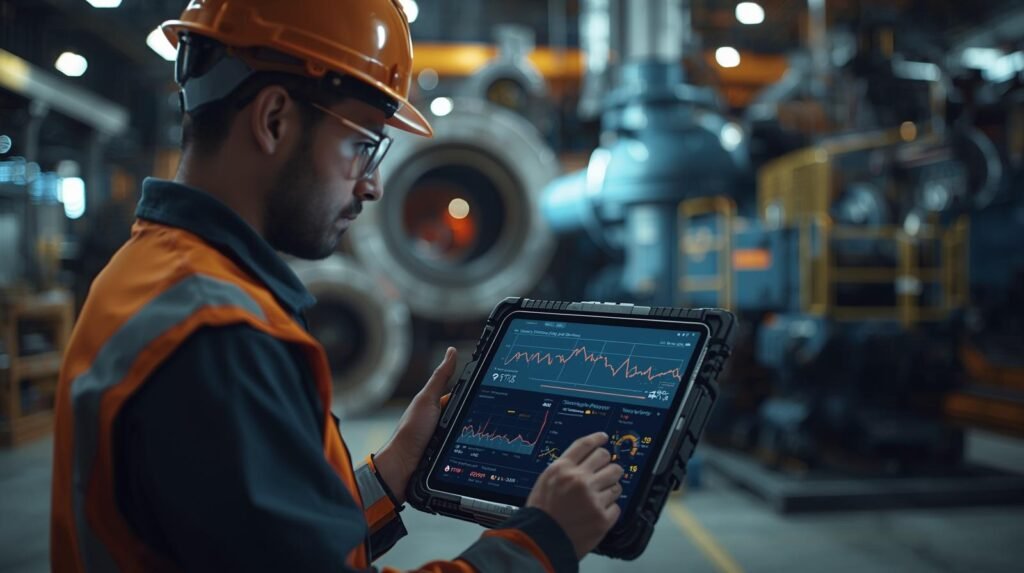
AI Equipment Failure Prediction: AI equipment failure prediction detects early warning signs before machines break down
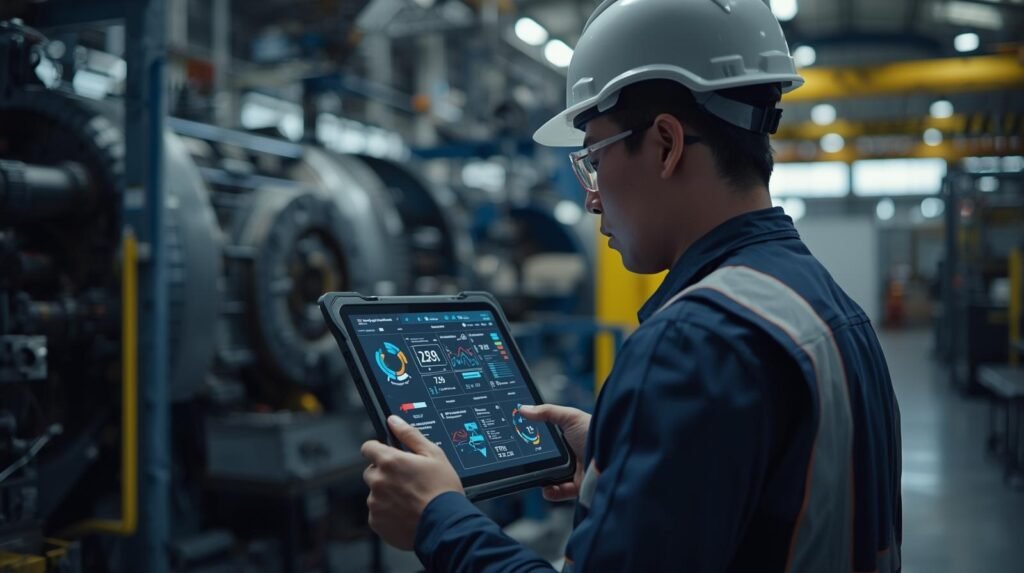
AI Equipment Failure Prediction allows the team to identify slight deviations from an item’s normal operation that could indicate impending equipment failure, well before conventional alarm, target-missed, and equipment-shutdown monitoring would.
In contrast to a threshold-based method for monitoring equipment, AI Equipment Failure Prediction uses sensors and their operating environment (temperature, ambient conditions, load, speed, etc.) to monitor trends across all sensors and track maintenance history. The AI Equipment Failure Prediction tool establishes a baseline of “normal” for each of your assets based on historical performance parameters; if those parameters are breached, the tool flags a trend that may indicate equipment failure.
In addition, AI Equipment Failure Prediction is a better way to implement equipment monitoring because the same piece of equipment operates differently at different times during a shift, seasonally, or with varying products. Because AI Equipment Failure Prediction adapts to changing operating conditions rather than relying on a static threshold, it offers benefits for implementing such equipment monitoring.
Typically, the workflow for deploying AI Equipment Failure Prediction includes data preparation (cleaning, etc.), feature extraction (pattern detection in vibration data, etc.), and estimating failure risk using machine learning algorithms.
While AI Equipment Failure Prediction typically predicts how likely a piece of equipment is to fail, most solutions provide insights into why a piece of equipment has an increased likelihood of failing – such as a bearing vibration pattern, a possible cooling issue, or excessive torque being placed on a motor — so technicians can react more quickly.
Beginning with alerts developed from predictions made by AI Equipment Failure prediction, we can generate alerts that allow operators to take direct action — “inspect bearing,” “check lubricant levels,” or “verify alignment” — rather than just letting them know there is an issue.
By using AI Equipment Failure Prediction, we aim to reduce unplanned downtime and the risk of secondary damage from failed components. We believe if we can identify when a component is going to fail prior to failure, we can eliminate other failures and limit downtime and cost associated with repairs. AI Equipment Failure Prediction also allows us to better manage spare parts, scheduling, and safety by moving away from reactive processes and toward proactive/planned maintenance processes.
In order to implement AI Equipment Failure Prediction within your organization, you should first identify your key equipment, confirm whether the sensors are in place to provide the data needed to support the model, create your measures of success (hours of downtime, MTBF [mean time between failures], maintenance costs), and then pilot test this process on one production line.
Once technicians’ input and feedback have validated the model’s predictions, you can scale across additional lines as necessary. Ultimately, AI Equipment Failure Prediction is a reliable predictive warning system that helps maintain consistent, predictable equipment performance, protects plant throughput, and provides a basis for informed maintenance decisions.
Predictive Maintenance AI: Predictive maintenance AI analyzes performance data to schedule repairs at the right time
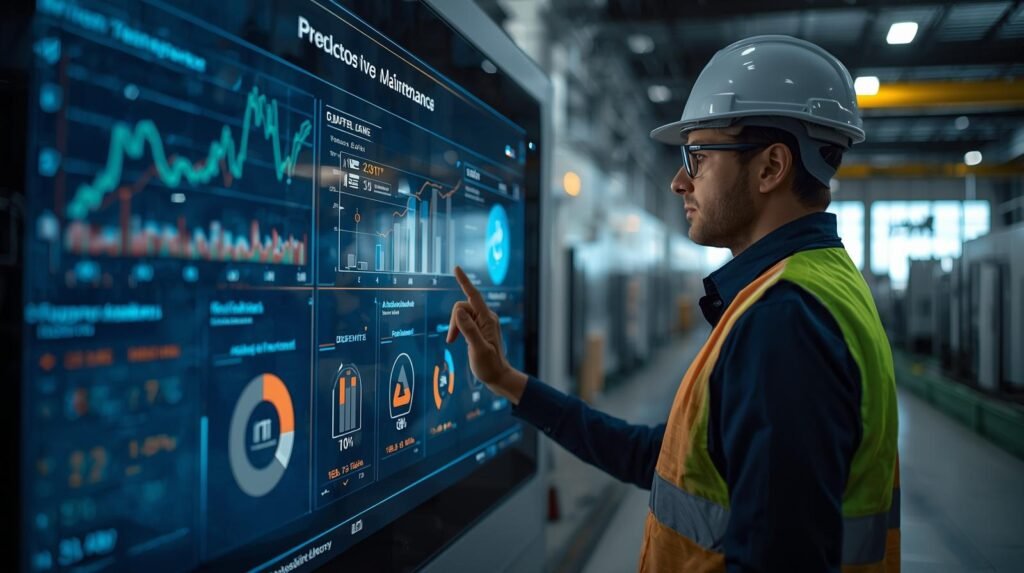
Predictive Maintenance AI uses actual equipment performance data to determine the optimal timing for routine maintenance (i.e., before equipment failures cause unplanned downtime). The AI does not call for maintenance too early; however, it also avoids unnecessary use of parts and labor.
Predictive Maintenance AI translates “signals” generated by various forms of real-world measurement (including but not limited to vibration, temperature, pressure, motor current, oil quality, acoustic features, and cycle time variability) into a comprehensive representation of the degree to which the asset is operating as intended in its operating environment.
Predictive Maintenance AI receives both streaming sensor data and historical maintenance data. In addition, Predictive Maintenance AI receives additional data on the operational environment (operating load, operating speed, production mix) and environmental conditions.
Once received, Predictive Maintenance AI defines what represents normal operation for each individual machine and identifies trends and anomalies that are generally invisible to the naked eye and often undetected by simple threshold-based monitoring systems.
Once defined, these trends and anomalies are then translated into estimates of the remaining useful life of the equipment, the likelihood of the equipment failing during a specific timeframe, and recommendations for inspections and/or maintenance. AI Equipment Failure Prediction enables this same process by identifying early warning signs of impending equipment failure (for example, changes in bearing frequencies or increases in torque ripple) that can ultimately lead to a complete system shutdown within days or weeks.
Unlike traditional PM calendar scheduling, Predictive Maintenance AI will prioritize and sequence maintenance work based on both risk and impact. Thus, as soon as the appropriate maintenance planner schedules the proper maintenance job on the correct asset at the least impactful or least disruptive time, they can have all necessary permits and labor coordinated, and parts staged in advance.
In combination with AI for equipment failure prediction, the incorporation of predictive maintenance AI into your processes can increase the efficiency of your decision-making processes:
You will be able to anticipate problems before they arise. Therefore, you can schedule your actions appropriately and adjust their timing based on the expected progression of each individual issue.
Additionally, AI-based equipment failure prediction will help reduce secondary damage. Secondary damage occurs when an initial component begins to fail, ultimately causing subsequent or more costly failures in the remainder of the machine.
Ultimately, operational advantages can include less unplanned downtime, greater uptime, enhanced safety, and more consistent product throughput. The use of Predictive Maintenance AI may also help reduce the number of “No Fault Found” work orders. This is because Predictive Maintenance AI provides links from alerts to physical evidence (which sensor was involved, when it happened, and by how much). In addition, Predictive Maintenance AI can provide suggestions regarding targeted inspection activities.
At this point, AI equipment failure prediction offers the greatest opportunity to create value. At this juncture, AI equipment failure prediction adds an additional layer of warning, allowing continued focus on the most significant areas of activity.
For the successful implementation of Predictive Maintenance AI, a reliable feed of data, a clearly defined definition of failure modes, and team collaboration involving reliability engineers, operators, and technicians are required. One possible starting point would be to begin with critical equipment items. Upon completion of the pilot testing phase, verify the accuracy of the alerts received.
Once verified, establish and test the threshold values and workflow. Finally, expand upon the previous steps to create a predictable, fact-based and production objective-driven maintenance rhythm using both Predictive Maintenance AI and AI for Equipment Failure Prediction.
#Transformative AI Technology for U.S. Digital Governance into Smart
How Does AI Learn to Spot Trouble Before It Starts?
AIs gain insight into machine behavior in the same way that humans do from patterns in data. Much like how an experienced auto technician may be able to find a problem with an automobile just by listening to the “sound” of the car’s engine (from years of hearing/analyzing other engines), an AI analyzes millions of data points collected from sensors on a machine using those same patterns found in the data.
Sensors are used to collect data from equipment. The sensors collect important data, including temperatures, vibration, and power consumption. After collecting the data, the AI uses this massive dataset to identify all digital signatures that were found to be causes of failure. When the AI detects a signature that has previously indicated a failure, it sends a message to a human operator about the failure. In some cases, the AI will also indicate the time when maintenance needs to take place.
The AI can predict potential problems by analyzing an extensive database of historical data. Historical data consists of numerous examples of normal operating conditions and the patterns created while a machine operated normally before it failed.
By reviewing thousands of operating conditions and whether they resulted in success or failure, the AI can distinguish between benign anomalous readings and warning signs of future failure. Thus, AI predicts mechanical failures through learning from past events; it doesn’t speculate, it learns.
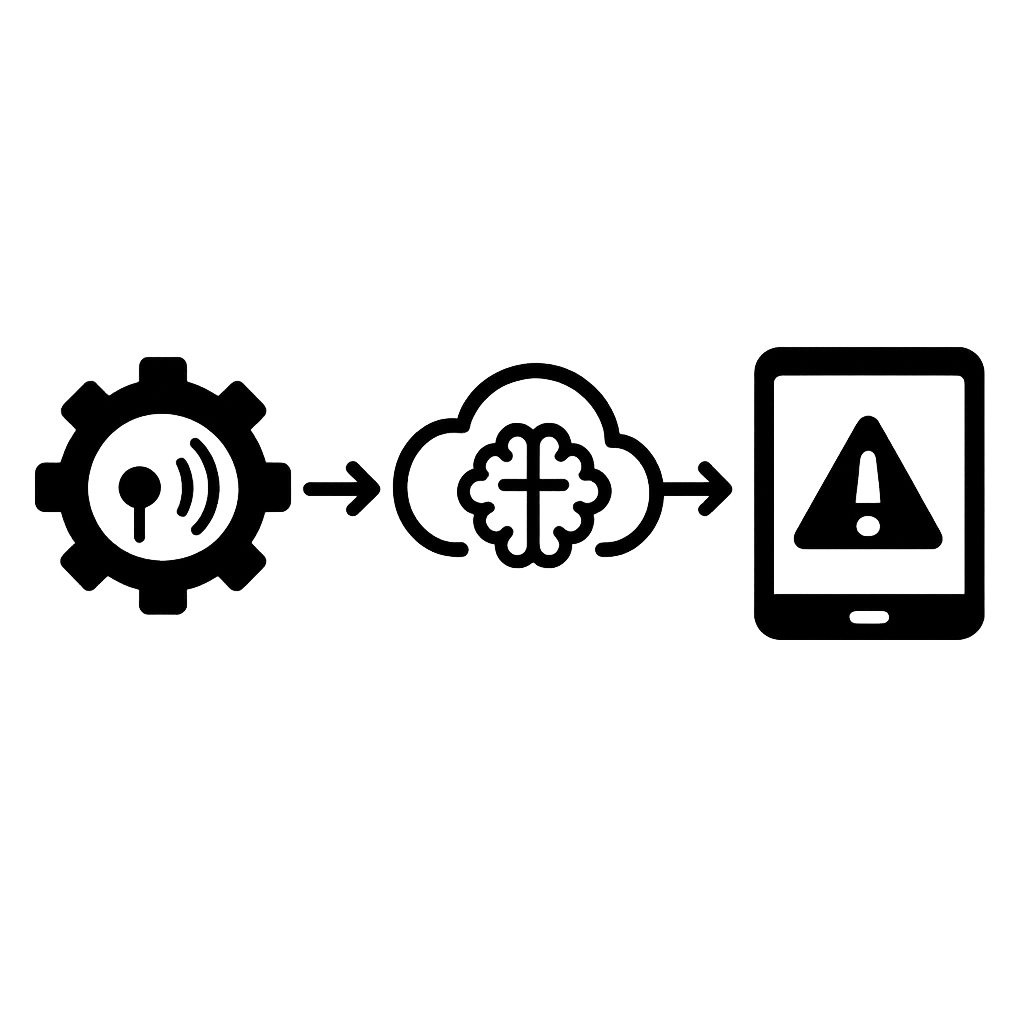
The combination of a machine’s ability to be alerted to problems through advanced sensing capabilities and a system’s decision-making capability that uses historical data will provide an effective method for the early detection of potential equipment problems. Beyond providing companies with the necessary lead time to act on an impending catastrophic equipment failure, a proactive approach affords them the opportunity to transform an impending catastrophic event into a routine maintenance or repair.
How AI Detects Failure Before It Happens
| Signal Type | What AI Monitors | Early Warning Example |
|---|---|---|
| Vibration | Machine movement | Abnormal oscillation |
| Temperature | Heat patterns | Overheating |
| Sound | Acoustic signals | Unusual noise |
| Performance Data | Output efficiency | Drop in productivity |
Source:
Machine Learning Failure: Machine learning models detect subtle failure patterns that humans might miss

The terms “machine learning failure” and “failure detection system” refer to the application of machine learning to recognize subtle signs of machine malfunction or failure that may be missed by people and/or by simplistic decision-making rules. In most cases, the failures in complex real-world machines do not arise from one single easily recognizable symptom. Instead, they develop through a progression of small changes.
Examples include slight changes in vibration rate, slight temperature increases, electrical surges or other transient malfunctions, and/or progressive degradation in performance over time that is indistinguishable from normal.
Failure prediction systems based on machine learning were designed to anticipate combinations of symptoms and trends likely to lead to a malfunction.
A typical Machine Learning Failure Prediction System would utilize sensor information about the operating parameters of a machine (vibration, acoustic emissions, temperature, pressure, flow, and/or current draw) as well as control signals, and environmental conditions (product type, load, speed, etc.) to establish a baseline for how each component of a machine should operate under optimal conditions.
After establishing what constitutes “normal” behavior for each machine component using its associated sensor data, the model utilizes the same sensor data to identify deviations from that normal behavior, which indicate known failure modes, or an increased risk to continued safe operation of the equipment.
There are essentially three possible architectures for Machine Learning Failure Prediction Systems: Supervised Training (wherein the model was trained on a set of examples where each example includes both input values and corresponding output labels); Unsupervised Training (where the model was trained on unlabeled input data and is able to predict failures based upon deviations from a pattern of normal behavior); and Hybrid Training (which combines elements of both supervised and unsupervised training architectures).
The benefits of machine learning failure are multi-signature signal detection. For example, a bearing problem may produce a slight change in vibration frequency, a slight change in temperature, and a slight increase in power use. None of the above changes alone would prompt an alarm. With machine learning failure models, you can tie those various signals together and get notified about an impending issue before it becomes a bigger issue.
Staff notification of potential equipment failure through AI Equipment Failure prediction could be based on the criticality of the failing asset(s). This way, you can prioritize the most likely affected area(s) to affect the facility’s safety, quality, and/or productivity.
Also, Machine Learning Failure can adapt and learn over time. When technicians verify a fault or note that the notification was incorrect due to false positives, the system can adjust itself to minimize noise. The reliability of AI Equipment Failure Prediction will improve as it evolves, informed by specific operational conditions, site-specific data, and historical maintenance data.
Machine Learning Failure can also help identify the root cause of an issue by showing which sensor first identified the change and how the pattern developed.
To receive immediate benefit, start with the identification of a few key critical assets, verify sensor quality, define what constitutes a “failure” for your company/business/operation (loss of quality, reduction in performance, equipment shutdown, etc.), and validate machine learning failure model predictions against technician inspection reports/work orders.
When executed properly, the combination of Machine Learning Failure and AI Equipment Failure Prediction will enable timely detection of issues before unplanned downtime and transition maintenance from reactive (fighting fires) to proactive (planned), leveraging both AI Equipment Failure Prediction and continuous learning.
AI-Driven Diagnostics: AI-driven diagnostics quickly identify faults and performance issues in complex systems
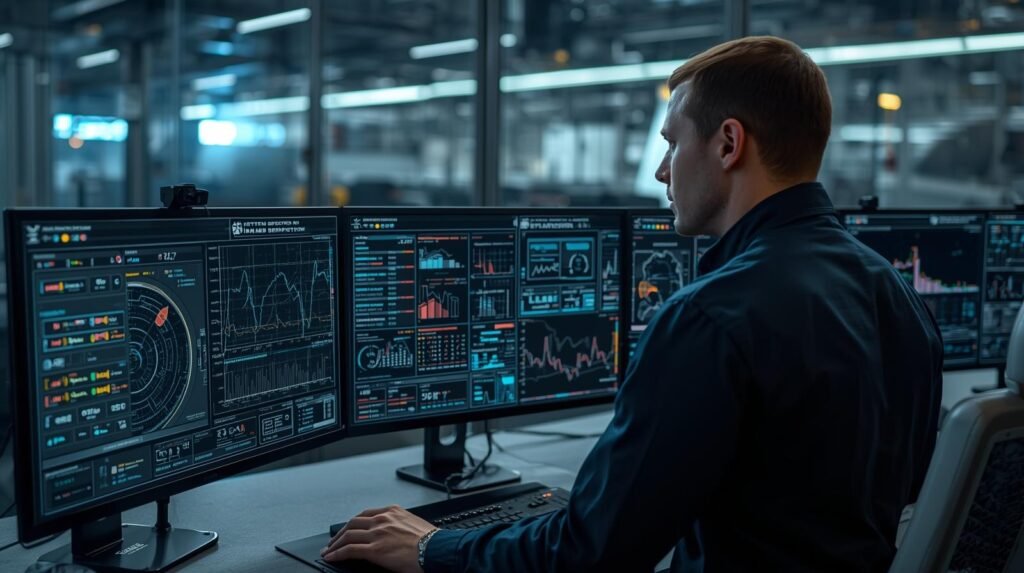
The ability to utilize Artificial Intelligence (AI)-Driven diagnostics allows organizations to rapidly determine if a problem exists with either their processes or their equipment through the analysis of large amounts of operational data. Each modern facility and fleet has many sensors monitoring every aspect of its equipment (such as vibration, temperature, pressure, flow, motor current, control settings, alarm conditions, and events).
However, the challenge for organizations is to rapidly detect trends and correlations in this data to avoid unplanned downtime and production losses.
A successful application of AI-driven diagnostics includes determining what “normal” looks like for each piece of equipment under all possible operating conditions (e.g., startup, steady state, peak load, product changes). When equipment performance starts to deviate from “normal”, AI-Driven diagnostics identifies probable faults through established patterns in sensor data (lubrication failure, bearing failure, misalignment, valve stiction, fouling, etc.), and supports these determinations with physical evidence.
It follows logically that AI Equipment Failure Prediction would complement AI-Driven diagnostics well. Although AI Equipment Failure prediction focuses on forecasting the likelihood of equipment failure and detecting early warning signs, AI-Driven diagnostics will assist reliability professionals in determining the probable cause of failures detected by the AI Equipment Failure Prediction System.
For example, if the AI Equipment Failure prediction system predicts that the risk of failure for a particular asset is rising over the next two weeks, the AI-Driven diagnostics system will identify the most significant sensor patterns associated with a likely cause of failure and enable focused maintenance.
During day-to-day operations, AI-driven diagnostics will provide reliability professionals and technicians with priority-based alerts, ranked probable causes, and recommendations for troubleshooting equipment-related problems. Furthermore, the applications of AI-driven diagnostics can span several subsystems within an operation or system.
Technicians can begin using AI-driven diagnostic tools to aid their diagnostic and repair processes. The initial use of these tools will give technicians access to diagnostic information they might otherwise be unable to obtain. This access to new sources of diagnostic information will enable the technician to identify the source of failure faster than if relying solely on his or her experience with equipment failure.
In addition to providing technicians with access to a broader set of diagnostic possibilities, AI-driven diagnostics also enables them to use diagnostic information from previous similar equipment failures (that occurred while the equipment was operating), so those types of failures can be avoided.
Technician input on the use of AI-driven diagnostic tools will directly improve the predictive accuracy of the AI Equipment Failure Prediction tool. The longer technicians are able to input historical data concerning the operation and maintenance history of equipment, including the frequency and type of maintenance performed, the extent of technician usage and/or abuse, and any other factors contributing to equipment failure, the greater will be the sophistication level of the AI Equipment Failure Prediction tool.
Therefore, as the number of historical data inputs by technicians increases, so too does the capability of both AI-Driven Diagnostics to provide accurate diagnostic results, and AI Equipment Failure Prediction to accurately predict when and why equipment failures may occur.
Therefore, the two technologies represent a continuous loop in which AI Equipment Failure Prediction identifies potential hazards, AI-Driven Diagnostics provides technicians with additional data on those hazards, and the technician confirms whether the hazards have been eliminated through proper maintenance. In doing so, AI Equipment Failure Prediction becomes increasingly capable of predicting future failures based on historical trends.
In conclusion, the continued improvement in the quality of data used in AI-driven diagnostics and AI Equipment Failure Prediction, along with technician input and feedback relative to their experiences with these technologies, will result in decreased unplanned downtime, increased safety, and maximum utilization of equipment resources – all contributing to higher total system performance.
Smart Maintenance Solutions: Reduce downtime with real-time monitoring and automation.

Smart Maintenance Solutions use real-time monitoring, automation, and data-driven decision-making, alongside traditional asset maintenance methods, to reduce unplanned downtime. Unlike other forms of maintenance, which are either fixed-schedule or break-fix, smart maintenance solutions use continuous monitoring of conditions and performance, enabling teams to intervene and determine the scope of work at the most cost-effective time and quality level.
The basis of smart maintenance solutions is the continuous flow of real-time sensor data (vibrations, temperature, pressure, flow, motor current, oil condition, control signals, etc.) and contextual data (load, speed, product mix, ambient conditions).
This continuous flow of data is then organized and analyzed using smart maintenance solutions to identify anomalous trends as early as possible, often before traditional alarms are triggered. AI equipment failure prediction will provide early warning signs of small changes that indicate an increasing risk of failure. This allows for planned vs rushed maintenance.
Another advantage of smart maintenance solutions is automation. Smart maintenance solutions can automatically create alerts, open work orders, attach evidence (trend charts, sensor snapshots), route tasks to the technicians best suited for them, and coordinate parts planning and scheduling by estimating urgency and impact.
If AI equipment failure prediction identifies a potential issue that may develop over the next days or weeks, smart maintenance solutions help convert insight into action; inspections, lubrication checks, alignment checks, and component replacement during a convenient window.
Smart Maintenance Solution helps develop a consistent way of working across all shifts and sites. Digital “playbooks” and standard responses are used to document best practices in Smart Maintenance Solution, reducing reliance upon the experience of the individual performing the task.
By using artificial intelligence (AI) to predict failure of equipment, the digital “playbook” referenced above may be triggered based upon established risk profiles – i.e., a bearing vibration signature, pump cavitation indicators, unusual motor loadings – resulting in immediate and repetitive initial response. Feedback from completed work order processes will continually enhance both Smart Maintenance Solutions and AI Equipment Failure Predictions, eliminating unnecessary alarms and improving predictive accuracy.
It should come as no surprise that there are several clear operational benefits to implementing Smart Maintenance Solutions. Specifically, these solutions reduce unplanned shutdowns; shorten diagnostic times; improve access to spare parts; and increase consistency in plant-wide production levels. Furthermore, Smart Maintenance Solutions’ ability to identify potential problems before they occur will enhance safety and quality by detecting failures that could lead to leaks, high temperatures, or deviations from product specifications.
Converting emergency repair activities into planned interventions will give maintenance personnel greater control over maintenance expenses and equipment lifespans.
In order to effectively implement Smart Maintenance Solutions, it would be wise to start by utilizing those pieces of equipment which are considered the most critical, ensuring the integrity of sensors and data, defining success metrics (i.e. total lost hours due to downtime, mean time between failures, cost of maintenance), conducting a pilot study to validate all aspects of the process, and establishing a plan for expansion to other areas of the organization.
Beyond offering a practical means of maintaining equipment uptime, Smart Maintenance Solutions and AI Equipment Failure Prediction provide a scalable solution to minimize downtime.
What Predictive Maintenance Means for Business
| Area | Benefit |
|---|---|
| Operations | Reduced downtime |
| Safety | Fewer accidents |
| Costs | Lower maintenance expenses |
| Productivity | Higher output |
Fewer Delays, Safer Factories: The Big Benefits of AI in Equipment Maintenance
Early warnings on the possibility of equipment failure could lead to a safer and more reliable world. This idea can already be seen today in many industries, such as airlines that identify engine problems days before a potential failure, allowing them to make repairs while their aircraft is down overnight instead of canceling flights at the last minute. This concept can also be applied to power generation and manufacturing facilities that provide us with services we rely on every day.
Any business, regardless of what they produce — automobiles or packaged food — unplanned shutdowns are the worst thing that can happen. Using AI to provide an early warning signal when one of its components is about to fail allows the organization to turn an unexpected crisis into a planned, scheduled fix. Organizations can realize significant cost savings by using predictive AI to anticipate when parts will need to be replaced.
One benefit of knowing ahead of time includes reducing unplanned downtime up to 50%. Reduced unplanned downtime means greater customer satisfaction and better control over inventory management.
There are significant financial advantages to predictive AI beyond just improving an organization’s reliability. Predictive AI enables an organization to strike a balance between replacing components too early and allowing those same components to fail catastrophically.
In doing so, organizations can eliminate unnecessary waste, specifically in the form of labor, while giving them clarity on how best to utilize their limited resources. By making decisions based on predictive AI data, organizations can save thousands of dollars per year in maintenance expenses (up to 30%).
While money and time represent some of the greatest value that predictive AI provides to organizations, perhaps the most valuable aspect of predictive AI concerns human safety. If a failure occurred in an energy production work environment, it could create hazardous conditions for employees. By identifying failing or structurally weak equipment before it fails, predictive AI can serve as a digital guardian, helping organizations prevent accidents.
The Numbers Behind Predictive Maintenance
| Predictive maintenance reduces downtime by 30-50% |
|---|
| Maintenance costs reduced by 10-40% |
| Equipment lifespan increased significantly |
| Unplanned outages reduced across industries |
Source:
From Wind Turbines to Hospital Scanners: Where AI Is Already Preventing Failures
Early alerts about impending equipment failures could contribute to a safer and more reliable world. Today, this concept has been implemented across multiple sectors, including the airline industry, where airlines have identified engine issues several days before they would fail. This allowed the airlines to perform engine repairs at night, rather than canceling flights at the last moment.
The concept of providing early warnings about equipment failures can also be applied across various types of manufacturing and power-generating plants, enabling us to receive essential products and/or services daily.
All businesses, regardless of what product(s) they manufacture — cars or packaged food — experience a significant negative impact if their operations shut down for unplanned reasons. Using AI, an organization can send an early warning when a component is nearing failure. When an organization uses predictive AI technology to notify them when a part needs replacement, they can turn an unexpected emergency into a planned, scheduled fix.
An additional positive impact of using predictive AI technology is the opportunity for organizations to achieve significant cost reductions by reducing unplanned downtime. Specifically, organizations can reduce unplanned downtime by up to 50%, resulting in increased customer satisfaction and improved inventory management.
In addition to improving the reliability of an organization’s operations, predictive AI offers numerous financial benefits. For example, organizations can determine when it is best to replace individual components rather than wait until catastrophic failure occurs. By determining the optimal replacement timing, organizations can remove unnecessary waste (specifically, labor) and, therefore, maximize the usage of limited organizational resources.
Additionally, organizations may save thousands of dollars annually on maintenance costs (up to 30%) by making data-driven decisions using predictive AI technologies.
The two primary areas where value exists for organizations using predictive AI are cost and time, as well as human safety.
While money and time are among the most highly valued aspects of using predictive AI technologies, employee safety is the most valuable. Equipment failures in the workplace, especially in industries that generate power, can pose hazardous working conditions to employees. Predictive AI can act as a “digital sentinel” for organizations, allowing them to proactively prevent accidents by identifying structurally weakened or failing equipment before failure.
Real-World Example: AI Preventing Industrial Failure
| Case | Siemens Wind Turbines |
|---|---|
| AI monitros vibration + temperature data | |
| Detects early component wear | |
| Schedules maintenance before breakdown | |
| Impact | Reduced downtime |
| Lower repair costs | |
| Improved energy output |
Source:
What Are the Hurdles? Why Isn’t Every Machine “Smart” Yet?
It is quite difficult to develop an artificial intelligence capable of predictive maintenance. Simply flip a switch on a computer, and you have predictive maintenance? Not even close.
The largest hurdle in developing a predictive maintenance AI is obtaining sufficient amounts of high-quality historical failure data to “train” the AI to become knowledgeable about what to predict for future failures. Just as doctors learn through the study of thousands of patient medical histories, the AI requires a similar volume of historical failure data for each type of device or equipment to be maintained.
And then there are the issues of implementation costs. In some cases, establishing a predictive maintenance system may involve outfitting every machine in your fleet with new sensor-based technologies. These sensors would provide the AI with the data (visual/auditory inputs) it needs to make predictions. That initial investment in both the required hardware and service professionals (training/support) can be high enough to limit many companies’ ability to create a predictive maintenance program, despite potential long-term cost benefits.
Lastly, although this AI has tremendous capabilities as a diagnostic tool, it does not replace human technical expertise. Although the AI may provide early warnings of impending problems, technicians remain responsible for interpreting these signals, identifying the causes of failures, and performing hands-on repairs to faulty components. Therefore, this represents a culture shift from reactive modes of operation towards proactively preventing equipment failures.
The Future of “Fixing Things”: Self-Healing Machines and Smarter Cities
Predicting potential failures is just the beginning. What will be significant about the next major development in asset management is going beyond sending a warning signal and automatically determining what went wrong.
Compare the typical vehicle check-engine light to one that reads, “The alternator is showing early indicators of premature wear-out and has a high probability of failing in approximately 200 miles”. In place of guessing or even worse, a technician would now have all the information they need prior to arriving on site, equipped with the correct tools and materials needed to complete the task.
Additionally, the technology not only identifies the cause of the problem but also acts on it. For example, if an artificial intelligence (AI) monitors a robotic process in a manufacturing facility and detects that the motor is nearing failure, the AI may not only alert personnel to the impending failure but also initiate a request for a replacement motor part and schedule necessary maintenance to avoid additional downtime.
It creates a solid foundation for an intelligent network in which equipment can manage its own maintenance needs without human intervention, thereby reducing unplanned downtime.
When applied on a larger scale, we begin to build smarter cities. Imagine a smart electrical grid in a city that can sense when a transformer is failing. As soon as the grid senses weakness in the transformer, it could divert electrical flow around the area affected by failure. Additionally, it could send out a service crew to replace/repair the failed component(s) before anyone notices a flicker in their lights.
This is the direction that AI and Asset Management are headed – developing not only predictive models for individual pieces of equipment, but building a more sustainable, self-reliant environment.
What Comes Next? The Future of Smart Maintenance
| Trend | What it Means | Impact |
|---|---|---|
| Self-healing systems | Machines auto-adjust | Less human intervention |
| IoT + AI integration | Connected devices | Real-time insights |
| Digital twins | Virtual replicas | Predict failures |
| Autonomous maintenance | AI-driven repairs | Maximum uptime |
Source:
Making Our World More Reliable, One Prediction at a Time
The reason that an immediate failure was once seen as just bad luck is no longer valid; there were always warning signs — they simply needed to be read with the appropriate information. Using powerful AI, we’ve developed a way to translate a machine’s faint vibration and temperature changes into a clear warning sign.
It completely flips the predictive maintenance model on its head. We are moving away from maintaining equipment that has already failed, and instead toward predicting which parts of equipment will fail so we can build a dependable world – safe aircraft, and a reliable electrical power grid.
We now have the ability to use AI-powered predictive maintenance, where the machines we depend on can speak in their own voices at last. And we are beginning to understand how to hear them before it is too late.
Conclusion
“Equipment Failure Prediction Using Revolutionary & Reliable AI describes how an organization can transition from reactive maintenance to proactive confidence in managing their asset base utilizing AI analytical results of an asset’s typical operational patterns, and ongoing signal analysis (vibration, temperature, pressure, acoustic and motor current) to detect early signs of potential problems which may go undetected by traditional inspection techniques and static threshold settings.
Using predictive analytics and actionable intelligence, the most viable long-term solutions will include risk-based scoring and alerting tied to specific, practical next-step actions (inspections, lube checks, alignment checks, etc.) or pre-planned component replacement.
Additionally, when the insights produced by AI are utilized within Work Order Management Systems and technicians’ feedback loops are sent back to the model(s), the models become increasingly accurate, false alarms decline, and there is increased trust amongst all departments of Operations and Maintenance.
Additionally, the financial benefits associated with implementing Equipment Failure Predictive Analytics includes reduced unplanned outages, decreased repair costs, enhanced safety, inventory of spare parts, and reliable and consistent production outputs.
With a solid Data Foundation and Phase Implementation Plans focused on key asset areas, Equipment Failure Predictive Analytics has the opportunity to evolve into a scalable solution that enhances your organization’s Uptime Today while laying the foundation for Reliability for Years to Come.
FAQs
1) What is AI equipment failure prediction?
AI predicts equipment failure using machine learning by analyzing real-time data from your equipment (e.g., vibration, temperature, pressure, motor current), providing early warning signs that help estimate the risk of failure before it occurs.
2) How is it different from preventive maintenance?
Preventive maintenance is performed on a schedule based on time or asset usage. Condition-based predictive maintenance uses AI to monitor an asset’s actual performance and recommends action when data indicates an increasing risk of failure. This helps avoid both late repairs and unnecessary early maintenance.
3) What data do we need to get started?
Most programs will start with sensor data (vibration/current/temperature), basic operating context (load, speed, product), and maintenance history (work orders, failure notes, parts replaced).
4) How accurate are these systems, and will they create false alarms?
The quality of the data used to train a model directly correlates with the Accuracy of the model’s predictions. High-quality data also improves the reliability of predictions. False alarms can be reduced through a pilot phase, threshold calibration, and technician feedback loops that continuously improve the model’s predictive accuracy.
5) How quickly can we see results?
Many teams see value in weeks on critical assets, such as earlier detection and better prioritization. Reliable results are typically available after a pilot and scaling process validates predictions against real maintenance outcomes.