
















Do you ever stop and think about the dozens of questions, the forms, and seemingly endless amounts of paperwork a person must complete just to open a new bank account? What may seem like unnecessary steps are actually part of a complicated web of rules devised to protect people’s money from crime and crime from their money. For years, banks have been playing catch-up with financial compliance, trying to keep up with recent technological developments as well.
You might look at this system of rules as “the official road signs on the world’s money highway.” It is this system that helps guard against fraud, money laundering, and other financial crimes. Sticking to these rules will help keep the whole banking system safe and running on time.
But there’s one big catch: it is too big a problem for any one bank, or even all of them combined, to put their arms around. Over $1 trillion in transactions happen every day across the globe. It’s like trying to find a burglar in a mountain-sized stack of hay just made from hay. That’s why there is so much regulatory risk for institutions if the work of implementing these anti-fraud measures isn’t observed.
Now, banks have a revolutionary new tool to help them finally deal with this overwhelming problem. For the first time, an AI is acting as a “finder of needles” to financial institutions, helping them identify issues, stay compliant with regulations, and create a safer world than ever before.
Summary
Traditionally, compliance was done manually. In this old model, many employees were reviewing every single file for each client, reviewing transactional information that was often contained in a spreadsheet, and reviewing alert information about certain types of transactions or activities on an ongoing basis. As such, the model is very slow, extremely expensive, difficult to scale (as the number of clients increases rapidly), and error-prone because it involves human review.
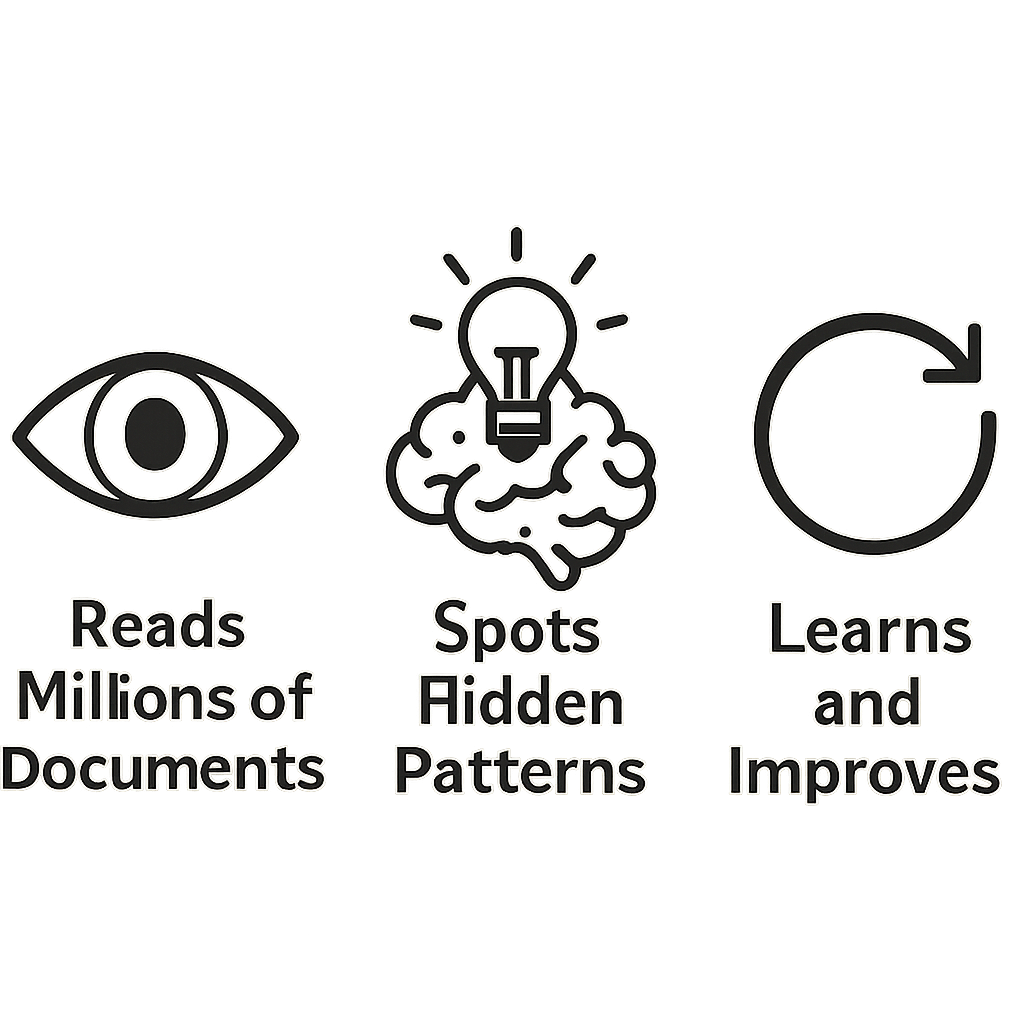
The advent of RegTech (a term coined by Deloitte Consulting’s UK head of regulatory advisory, Iain Chalmers, in March 2015) has fundamentally changed the compliance landscape by enabling software to act as a “digital rulebook checker,” enabling automatic assessment of financial activity against rules and the identification of potential issues. And this is where AI becomes critical. It allows RegTech to scan enormous volumes of data in seconds, identify patterns in transactions that are probably invisible to human eyes, and learn and adapt based on its findings.
Therefore, institutions can now proactively monitor their customers’ financial transactions in near real time, more effectively and accurately identify potentially suspicious behavior, dramatically reduce false positives, and transition from merely reviewing transactions after they have occurred to continually monitoring all of their customers’ financial activities.
AI-based RegTech solutions also provide other examples of its applications. Two of the most commonly referenced include KYC (Know Your Customer), whereby AI can use biometric technologies (such as matching a selfie to a photograph of a government-issued ID document) to rapidly verify a new customer’s identity. Another is AML (Anti-Money Laundering), where AI can identify complex laundering schemes that would almost certainly go undetected by human reviewers.
The “Human Search Engine”: Why the Old Way of Compliance Is Breaking
To explain why we need better use of new technologies to address our compliance issues with our massive regulatory documentation requirements, let’s first examine how banks have addressed compliance (adhering to financial laws) for decades.
Banks, through their compliance departments, monitor each transaction and each customer’s account to determine whether they have complied with applicable financial laws. Historically, this process was done manually by compliance officers, who were responsible for reviewing records, checking various pieces of customer data, and reviewing individual alerts.
#Advanced & Fair AI Credit Scoring – How It Works
The manual review process of compliance officers in the past resulted in what could best be described as an extremely expensive “human search engine.” This human search engine was able to find a problem (compliance issue), but it was a slow process. In addition, because of the high volume of data that compliance officers had to review, errors were common.
When compliance officers worked extended hours, there was a good chance they would miss a suspicious entry buried deep within tens of thousands of entries. Although it is highly unlikely that fraud will remain undetected for an extended period due to the non-detection of a single suspicious entry, the detection of a single error poses a risk to the bank and its customers.
Today, the manual compliance review process has reached a point where it cannot continue. There is a growing list of financial regulations and a rapidly expanding amount of electronic financial transactions.
It is unreasonable to expect compliance personnel to maintain their current productivity to meet these demands, especially when you consider the task of monitoring every vehicle on every road in the U.S. simultaneously. Because this manual review process is unsustainable, it presents a risk to the bank and its customers. Therefore, developing an automated compliance system was essential, not optional.
From Paper Trails to Smart Compliance
What is RegTech? Meet Your Bank’s New ‘Digital Rulebook Checker’
It’s not surprising then that the financial world turned to technology for a way out of its regulatory nightmare. They call this tech simply “RegTech”, short for regulatory technology. RegTech is a technology that helps banks and financial institutions navigate the avalanche of rules they must follow.
You might think of RegTech most simply as a high-tech version of the standard spelling/grammar check feature that you’ll find in word processing programs. Instead, it flags discrepancies in a bank’s course of financial activity (transactions and new accounts) against the regulatory rulebook. It was designed to catch regulatory infractions at the gate.
The incentive for the bank to use this kind of software is that it frees them from the tedious, time-consuming search for regulatory infractions and leaves them with a “digital compliance officer” working in the background. If the computer knows something the person does not, how is this so? Artificial Intelligence is behind many RegTech applications!
Regulatory Technology: Regulatory Technology simplifies complex financial compliance processes

Regulatory technology enables financial institutions to turn the complexity of regulatory compliance into simple, repeatable digital workflows. Instead of manually entering the same information over and over again in a spreadsheet, regulatory technology solutions create a central repository of all institutional policies that map to related business activities. Together with RegTech AI for Financial Compliance, this workflow creates a standardized approach for collecting the required evidentiary documentation.
Automating routine high-volume compliance tasks is another advantage of regulatory technology, including refreshing customer due diligence, triaging suspicious transactions, and preparing regulatory reports. By providing an integrated approach to gathering relevant data from core banking systems, CRM applications, and other external databases, regulatory technology solutions reduce duplication efforts and improve data quality at its source.
In addition to automating alert prioritization and reducing false positives, RegTech AI for Financial Compliance identifies context for each alert (customer history, peer patterns/risk factors) to allow investigators to make timely/informed decisions rather than waste time eliminating “noise”.
#Transformative AI Technology for U.S. Digital Governance into Smart
Compliance regulation technology supports many of the more challenging aspects of change management associated with regulatory compliance (e.g., adapting to new regulations, rules, and enforcement trends).
Regulatory technology enables tracking, assigning, and translating regulatory changes into revised controls that define who is responsible and when they need to complete those tasks.
The use of artificial intelligence (AI), in combination with regulatory technology for financial compliance purposes, provides an ability to scan voluminous amounts of regulatory text, summarize the impact of those regulations on your company, identify possible gaps between what is required by new regulations versus what you currently have in place and assist your company in being able to assess and respond to regulatory developments faster and more effectively, while maintaining your corporate governance practices.
Another major benefit of using regulatory technology is its role in achieving audit readiness. Audit-ready systems include logs of all reviews, approvals, remediation steps, and other monitoring activities that occurred within a specified time frame, making it easier to provide evidence of compliance during audits/examinations.
Using RegTech AI for Financial Compliance will also improve audit readiness by providing documentation explaining why an alert was generated, the data that determined the risk score, and how the case was eventually resolved, thereby increasing both transparency and accountability.
Therefore, regulatory technology represents a way for organizations to implement compliance through quantifiable, traceable and scalable methods. In addition to enhancing compliance implementation through RegTech AI for Financial Compliance, it allows companies to achieve real-time risk awareness, improve operational efficiency, and increase confidence in their business activities, thereby enabling them to grow while still complying with applicable regulatory standards.
How AI Gives RegTech Its Superpowers
A good way to think about the overall functions of both RegTech and AI in supporting Regulatory Compliance is to consider RegTech as an electronic version of a “checklist.” AI represents the “brain” behind RegTech. Think of AI as an extremely smart, highly efficient financial analyst who can rapidly analyze hundreds of thousands of pages of financial data every second.
Because AI never tires, never gets distracted by another task, nor ever loses focus on details, no matter how small they might seem, it can do many things better than any human can. Take, for example, a very large bank with tens of millions of transactions per day. A group of senior financial analysts could spend weeks analyzing all those transactions. On the other hand, an AI-based system can do so in mere seconds. Thus, one key advantage of employing AI in RegTech is enhanced processing speed.
Not only does AI increase the speed at which an organization can perform analysis on vast amounts of financial data, but it also greatly enhances its ability to identify subtle interrelationships in data. An AI-based system can act as a “financial detective,” identifying connections between seemingly unrelated data points.
Consider, for example, an organization where a series of relatively small, independent-looking transactions from various accounts ended up at the same destination—the classic money-laundering/terrorist-financing scheme. While experienced financial analysts may miss some of these activities because they appear too insignificant to warrant further investigation, sophisticated algorithms have been developed to detect such behaviors across larger datasets of financial data.
What is perhaps the greatest strength of the AI-based system is how much more knowledgeable it will become over time. This is due to something called “Machine Learning,” which allows an algorithmic system to learn from the financial data it is reviewing (and the patterns within the data) and improve upon prior knowledge.
As new information becomes available about a financial transaction, whether legitimate or suspect, the AI-based system will continually improve its ability to determine whether future transactions fall into a category that warrants additional scrutiny. Consequently, the frequency of false positives (i.e., alerts indicating possible fraud/suspicious behavior that did not occur) will decrease significantly.
RegTech AI for Financial Compliance: RegTech AI transforms financial compliance with intelligent automation and real-time risk monitoring

Regulatory technology (RegTech) and artificial intelligence (AI) for financial compliance are helping regulated entities, including financial institutions and fintech firms, meet an ever-changing array of obligations at a much faster pace while reducing errors. With automated RegTech, these organizations no longer have to manually review transactions, conduct occasional audits, and continuously monitor their customers’ transactional history, as well as their customer profiles, communication records, and internal compliance policies and procedures, for potential red-flag indicators of noncompliance.
This allows compliance teams to concentrate on making higher-value judgment calls versus spending most of their time reviewing and documenting routine compliance activities.
In essence, RegTech AI for Financial Compliance uses smart automation to continually assess real-time risk exposures for organizations, including applying machine learning-based models to identify anomalies within an organization’s data that may be indicative of red flag warning signs for money laundering, insider threats, sanction exposure, or fraudulent behavior (often long before such events would typically be identified through rule-based systems). In addition,
RegTech AI for Financial Compliance leverages natural language processing (NLP) to enable organizations to automatically monitor regulatory updates and apply changes internally, creating updated policies based on those updates, thereby minimizing the time and resources required to develop policies in response to evolving regulatory environments.
One of the primary benefits of using RegTech AI for Financial Compliance is its ability to deliver consistent compliance globally across regions, product lines, and customer segments – effectively eliminating the risk of inconsistent application of compliance requirements. The automated workflow delivers the same level of compliance oversight regardless of the geographic location, product line, or customer segment.
RegTech AI for Financial Compliance also assigns a risk score to each generated alert, prioritizes them for compliance personnel, and provides additional context on the nature of each alert, along with suggested next steps. As RegTech AI for Financial Compliance evolves further, gathering feedback from compliance analysts regarding model performance will be essential to continuing to minimize false positives and “alert fatigue
In addition to making the auditing process (regulatory audits) more efficient via RegTech AI for Financial Compliance, it also provides the capability for monitoring actions that have been taken at a specific date and time, which allows for complete documentation of all activity related to monitoring compliance in real-time. This includes who did the monitoring, who identified possible violations, what violation was identified, and ultimately, how the violation was remediated.
By using RegTech AI for Financial Compliance, organizations will expedite their compliance reporting and reduce disruptions caused by auditors or regulators reviewing their compliance processes.
RegTech AI for Financial Compliance offers numerous benefits to financial institutions and supports collaboration across compliance, risk, legal, and operational departments. Dashboards are shared, and automation facilitates workflow between departments when addressing compliance cases. The platform is capable of scheduling and tracking controls testing.
These technologies offer opportunities to improve efficiency and build trust; however, their implementation must be responsible, with consideration for data governance, model validation, privacy, and human oversight of the output.
In total, RegTech AI for Financial Compliance enables financial institution to move from reactive compliance to proactive risk management, allowing them to identify compliance issues early, make better-informed decisions regarding their business, and safely expand into new marketplaces as the regulatory demands continue to increase.
The Numbers Driving RegTech Growth
| Reg Tech market expected to reach $20+ billion by 2027 |
|---|
| Compliance automation reduces costs by up to 30-50% |
| AI reduces false positives in AML by 20-40% |
| Banks adopting AI compliance tools rapidly worldwide |
Source:
AI in RegTech: AI in RegTech enables smarter, faster regulatory monitoring

AI in RegTech changes how financial organizations manage the growing number of regulations and the fraud risks posed by the rapid pace of payment systems. RegTech AI enables compliance officers to use continuous activity monitoring rather than manual quarterly transaction sampling. The raw data (transactions, customer profiles, communications, and external list) of RegTech AI for Financial Compliance are converted into timely signals of potential risk.
In the course of day-to-day business, AI in RegTech supports transaction monitoring and AML investigations. The model continues to learn normal customer behavior and identifies customers whose behavior deviates from the norm and might otherwise be overlooked by rule-based systems. With Risk Scoring, investigators can focus on the most relevant alerts.
Moreover, Natural Language Processing in RegTech AI enables the extraction of entities from adverse media sources, the interpretation of sanctions updates, and improved name-matching accuracy, while further supporting RegTech AI for Financial Compliance by reducing false-positive notifications. Together with an automated case management system, RegTech AI for Financial Compliance can shorten investigation cycles and document all decisions during the process for audit reasons.
Finally, AI in RegTech has reduced the time required to manage regulatory change. Such systems can quickly scan new guidelines, map them to current controls, and present proposed updates to policies and test plans.
As such, the capability of RegTech AI for Financial Compliance to proactively detect and assign ownership of control gaps arising from regulatory changes, as well as track the status of remediations, enables regulatory change to be processed much more efficiently than ever before. Furthermore, AI in RegTech can simulate the effect of new limits or reporting obligations on historical data to facilitate better planning.
To develop an effective AI framework to support Regulatory Technology (RegTech), governance processes must be established. These processes will assist in establishing the necessary data lineage, model validation, bias testing, and escalation pathways to ensure that all automated monitoring is compliant with legal requirements and ethical guidelines.
The same regulators who review and oversee financial compliance for their respective companies utilizing RegTech AI will also have enhanced explanations, comparative case studies, and common workflow processes available when reviewing data.
Ultimately, firms expect that, through the use of RegTech AI for Financial Compliance, ongoing refinements to the system’s models will continue to reduce “noise” during operation and increase consistency across both products and regions.
Firms planning to effectively utilize RegTech AI for Financial Compliance will require clean data, robust connections to current systems, and clear accountability for how technologies interact with one another and with compliance/IT functions.
Firms will also need to continually assess whether models used for RegTech AI for Financial Compliance are drifting (i.e., changing); document the assumptions made when creating these models; and regularly perform backtesting to ensure that the performance of AI-based systems does not deteriorate over time as new products and techniques for violating regulations are developed. Robust privacy mechanisms, including logging user access and maintaining long-term retention policies, will further help ensure that confidential customer information remains secure.
When implemented properly, RegTech AI for Financial Compliance will serve as a scalable reliability layer, providing consistent global decision-making across diverse regulatory environments.
In summary, the primary objective behind integrating AI into RegTech is to create a more efficient and proactive regulatory monitoring environment where continuous detection, prioritized risk assessment, and clear evidence trails exist. Organizations seeking to leverage RegTech AI for Financial Compliance can experience reduced operational burdens, improved risk visibility, increased audit preparedness, and enhanced customer protection.
How RegTech AI Works Behind the Scenes
| Step | AI Function | Outcome |
|---|---|---|
| Data Ingestion | Collect financial data | Unified dataset |
| Pattern Detection | Identify anomalies | Risk signals |
| Rule Matching | Compare with regulations | Compliance check |
| Alert Generation | Flag issues | Actionable alerts |
| Reporting | Generate reports | Audit-ready output |
Source:
Compliance Automation: Compliance automation reduces manual effort and human error

Compliance Automation allows banks and other financial institutions to turn compliance-related activities into structured, trackable automation (e.g., collecting documentation, checking compliance, approving decisions, storing evidence) and remove manual work and human error from the compliance process of using an email chain and/or spreadsheet to accomplish these activities.
With RegTech AI for Financial Compliance paired with it, they use the right workflows, triggered by data-driven signals that inform priority levels, and continuously monitor activity rather than only a few times a year.
The main advantage of Compliance Automation is its consistency. An automated process will always follow the same set of rules across customers, products, and geographies, eliminating the risk of someone treating one customer differently from another or a product differently across geographies.
For example, Compliance Automation can automatically trigger a KYC refresh based on customer risk profiles. RegTech AI for Financial Compliance adds risk scoring to that and looks for anomalies that the review team can focus on, the most likely cases of needing assistance. RegTech AI for Financial Compliance might assist Compliance Automation by improving transaction monitoring/investigation.
Automating alert intake, case creation & evidence collection reduces time spent on administrative alerts & provides context for better decision-making; investigators can also document their rationale much faster.
RegTech AI for Financial Compliance enables feedback to improve efficiency over time by eliminating false positives that cause alert fatigue, thereby lowering the overall cost of managing Compliance Automation.
Auditing is easier with automated logs, which provide a paper trail for use during internal audits and regulatory exams. Compliance Automation will assist in scheduling control tests, tracking remedial action, and generating standard reports. RegTech AI for Financial Compliance adds transparency (explainability) and traceability to model-driven decisions, helping organizations demonstrate that their monitoring practices are fair, effective, and governed.
To be responsible with Compliance Automation, firms must have solid data governance practices, proper access controls, and accountability. The automated workflow should include human review for high-risk decision-making and define policies for escalation and exception handling.
RegTech AI for Financial Compliance must be continuously validated, monitored for drift, and documented to ensure that system changes are controlled and auditable.
Compliance Automation improves accuracy & speeds processes while reducing operational burdens. RegTech AI for Financial Compliance helps create continuous oversight, better prioritization & improved reporting to support safer growth within an increasingly demanding regulatory environment.
AI Regulatory Tools: AI regulatory tools streamline complex reporting requirements

AI Regulatory Tools help the financial services industry prepare difficult reports to meet financial obligations by automating the collection, validation, and submission of reports. AI Regulatory Tools take this mundane area of report preparation that had previously required manually extracting the right data from various systems, reconciling the information extracted into a report format, and then completing and submitting the report, and automates the extraction of this required information directly from an organization’s existing systems, providing consistent formats and data checks.
When linked with RegTech AI for Financial Compliance, report preparation improves significantly in speed and accuracy, and in maintaining documentation of compliance activities during the audit and examination phases.
Data quality is one of the biggest challenges in preparing a regulatory report. Missing identifiers, inconsistency, and discrepancies in customer data, and duplicate transactions slow the resolution of errors found late in the report preparation process. AI Regulatory Tools minimize this obstacle by identifying anomalies and gaps in data being prepared for submission and suggesting how to address them before finalizing a report.
RegTech AI for Financial Compliance supports this area of work with data-quality controls that use machine-learning algorithms to monitor and flag anomalous data points that may indicate potential misclassification or incomplete onboarding, as well as other emerging risk areas.
AI Regulatory Tools, insofar as they address data quality issues, also help minimize the operational burdens of regulatory change. While it is routine for regulators in numerous jurisdictions to promulgate changes to their regulations, and while it is routine for many of the rules to require, at most, only the most minimal updates to reporting templates and business logic, in order to reap the productivity gains from those minimal updates, AI Regulatory Tools must also address and ease the sometimes-extensive time and resources required for updating templates and business logic.
AI Regulatory Tools enable organizations to map regulatory requirements to specific data sources in an organization, track either full rule changes or changes to specific portions of a rule, and experiment with updated reporting workflows based on different versions of that requirement. RegTech AI for Financial Compliance uses natural language processing (NLP) to mine and analyze new regulatory guidelines, summarize the changes to prior regulations, and identify which policies and reporting requirements are affected by those changes.
AI Regulatory Tools provide firms with a complete audit trail from start to finish. All changes to the data will be documented, along with the individual(s) responsible and the specific validation checks performed before submitting the information to regulators. In the event that a firm needs to address any issues with the submission to regulators, having these documents provides evidence that the issue was addressed in accordance with company policies and procedures, thereby limiting potential interaction with regulators regarding such matters.
Additionally, AI Regulatory Tools include Risk-Based Prioritization, which ensures that the largest impact issues are resolved first and that each escalation is handled consistently. AI Regulatory Tools require governance. To achieve this, firms should establish how they obtained their data, verify their model results, limit access to the tools, and test the tools’ output against known input values.
Although some high-risk items may still require human intervention, RegTech AI for Financial Compliance may assist reviewers by providing explanations of ratings, comparing historical cases involving similar situations, and offering prompts to support decision-making.
Firms utilizing RegTech AI for Financial Compliance must continually assess for “model drift” and periodically evaluate the rule-based automations built into the tools to ensure they remain current and functional over time.
Ultimately, AI Regulatory Tools reduce the complexity of regulatory requirements for firms by eliminating manual labor involved in compliance, increasing the accuracy of regulatory filings, and shortening regulatory compliance timelines.
With AI Regulatory Tools paired with RegTech AI for Financial Compliance, firms will have continuous readiness and therefore be able to quickly adapt to new or evolving regulatory requirements, submit accurate information to regulators, and have greater confidence in their ability to meet regulatory requirements as regulatory environments continue to expand and change.
Risk Management AI: Risk Management AI predicts threats before they impact operations

Risk Management AI enables financial services companies to anticipate disruptions before they occur through risk detection using large amounts of disparate data and to signal impending disruptions.
Rather than reactively responding to disruptions after they occur, Risk Management AI proactively identifies where future risks are likely to arise by analyzing factors such as customer activity, operations, transactions, and other external signals.
When combined with RegTech AI for Financial Compliance, Risk Management AI enables financial services companies to make timely decisions to support the implementation of effective controls and regulatory compliance.
In practical terms, Risk Management AI is an important component of preventing financial crimes by identifying patterns of activity that traditional rule-based systems may miss.
For example, models can quickly identify a number of things that are considered unusual activity, including a rapid increase in the volume of transactions, an atypical path taken during a payment transaction, or sudden changes in a customer’s behavior, which could indicate some form of fraudulence, money laundering, or sanctions violation.
Additionally, Risk Management AI can prioritize alert levels so that investigators can focus on investigating the highest-risk and most urgent threats first.
Prioritizing risk-based alerts helps RegTech AI for Financial Compliance by decreasing false positives, reducing time spent investigating alerts, and ensuring resources are directed toward the alerts that pose the greatest risk.
Finally, Risk Management AI can help maintain operational resilience.
By tracking outages of key systems, processing delays, customer complaints, and third-party vendor performance, Risk Management AI can spot when outages are likely and recommend preemptive action.
For instance, Risk Management AI may provide you with an early warning of instability at a vendor or a growing backlog that could cause a contract to fail to meet a regulatory deadline.
These early warnings enable RegTech AI for Financial Compliance to remain continuous, as controls and reports rely on consistent, reliable processes and data.
Another value of forward-looking risk assessment is that Risk Management AI can do scenario analyses using current and historical data, helping teams to estimate losses from market fluctuations, liquidity problems, or the implementation of new products. When Risk Forecasting is integrated with policy and control testing, RegTech AI for Financial Compliance can proactively strengthen controls, set exercise thresholds, and increase vigilance before a risk manifests.
For Risk Management AI to be trustworthy, governance will be critical. The models will need to be validated, monitored for “drift” (that is, the model is no longer functioning according to specifications), and reviewed for bias and explainability. Data lineage, data access controls, and audit logs need to be readily available to back up the results. RegTech AI for Financial Compliance will be most effective when two conditions are met: humans retain responsibility for high-risk decisions, and Risk Management AI continues to provide scores, drivers, and recommended next steps.
In short, Risk Management AI spots potential threats to an organization’s operations before they strike through continuous monitoring, smarter prioritization, and predictive analytics. In concert with RegTech AI for Financial Compliance, Risk Management AI makes organizations less likely to be surprised, helps them better oversee their businesses, and keeps their customers and the marketplace better protected, faster.
Compliance Protection Layers
| Layer | Purpose | Benefit |
|---|---|---|
| AML (Anti-Money Laundering) | Detect illegal transactions | Prevent cirme |
| KYC (Know Your Customer) | Verify identity | Reduce fraud |
| Transaction Monitoring | Track activity | Real-time alerts |
| Reporting Compliance | Meet regulations | Avoid penalties |
| Data Security | Protect information | Build trust |
Source:
Intelligent Compliance: Intelligent compliance adapts to evolving financial regulations

Intelligent Compliance helps financial services firms stay compliant despite a dynamic regulatory landscape through automation, data analytics, and well-defined governance. Instead of periodic checkbox compliance, Intelligent Compliance weaves appropriate controls into the fabric of daily operations, updating them as underlying regulations change. Organizations that use RegTech AI for Financial Compliance can continuously monitor and respond more quickly to regulatory changes and provide more reliable evidence to auditors and regulators.
Continuous Improvement is one of the defining characteristics of Intelligent Compliance. AML, Sanctions, Consumer Protection, Privacy, and Cyber regulations change frequently and may differ by jurisdiction. The Intelligent Compliance platform tracks obligations for its customers, maps them to its clients’ internal policies and control frameworks, and helps identify gaps between those frameworks and obligations.
Using Natural Language Processing (NLP) to scan regulatory updates for its customers, RegTech AI for Financial Compliance adds to the Intelligent Compliance Platform’s ability to scan for regulatory changes, summarize the impact of regulatory updates, and help identify regulatory gaps between the latest guidance and the customer’s current business processes and related workflows.
The second benefit of using Intelligent Compliance is a sharper “Risk Detection” capability. Historically, Risk Monitoring has primarily relied on static rules, resulting in a high volume of alerts. “Using machine learning models to score risk, detect anomalous activity, and provide contextual information such as typical customer behavior changes, peer comparison information, a shortlist of known typologies, etc. RegTech AI for Financial Compliance helps its customers identify “true risk” amid the noise typically generated by static rules. So RegTech AI for Financial Compliance shares its customers’ improved efficiency and consistency in their Risk Monitoring, but also reduces human error.”
In addition to the above benefits of Intelligent Compliance, another benefit is greater confidence in controls.
Automated workflows using RegTech AI for Financial Compliance can implement approval processes, document requirements, and separate duties, while dashboards can deliver near-real-time reporting on the performance of compliance controls.
RegTech AI for Financial Compliance can also provide predictive insights, enabling teams to see evolving trends that might call for tighter compliance limits, changes to regulatory policy, or other employee training.
When something goes wrong, Intelligent Compliance provides clear escalation guidance, tracks responses, and provides measurable evidence that response actions are complete.
Governance needs to be baked into the Intelligent Compliance, ” the Trust Factor” in, if they expect to trust the Technology and verify that the application is compliant itself. To do this, firms need to have implemented Quality Controls, Access Management, Model Validation, and clear Accountable Decision Parties.
RegTech AI for Financial Compliance should be dynamically monitored, not monitored to … ‘Drift’ on regulatory compliance, tested to ensure that it’s “not biased,” and documented so that stakeholders will have legal authority to explain the basis for why it reached a decision to appropriate regulators.
Intelligent Compliance tools should enable complex judgment-making (and judgment calls) that impact your business to move faster, be better, and consistently align across the organization. Ultimately, Intelligent Compliance supports organizations prepared to respond to a dynamic regulatory environment through Continuous Monitoring, Rapid Change Management, and Auditable Workflows.
Firms go from a mode of throwing everything they know at a heightened risk of failure to proactively entering compliance management, using the speed and agility of RegTech AI for Financial Compliance to mitigate exposure while charting a path to new long-term success.
Spotting the Bad Guys: How RegTech AI Stops Money Laundering (AML) and Verifies Identity (KYC)
There are a variety of methods in which AI-based RegTech protects the financial system. One of the most important concerns two legal duties that banks have. Although there is little chance you know them by name, these jobs occur behind the scenes in the banking industry, so the banking system operates safely for all users. They could also be seen as the “high-tech” version of airport or shopping mall security checkpoints.
There are also two main concepts at its core: the use of two commonly used acronyms:
KYC (Know Your Customer) is the purpose of the Know Your Customer regulations: to identify customers for banks, prevent fraud, and ensure they are not unknowingly providing services to criminals.
AML (Anti-Money Laundering) is the identification of potential money laundering by analyzing transactions. An Anti-Money Launderer is, in essence, a security officer who monitors thousands of cameras and identifies any activity that deviates from the norm compared to previous transactions.
When you take a selfie online to verify your driver’s license when opening a bank account, that’s a regtech solution for KYC (Know Your Customer) at work. The system won’t need a human to manually review the two photos; instead, AI compares them instantly to verify that you are who you say you are. The AI-backed verification enhances verification speed for you and makes it tougher for an imposter to impersonate you.
AI is often a pattern spotter and is crucial to Anti-Money Laundering (AML). The AI can review millions of transactions and flag many transactional schemes that are difficult for the human eye to detect. If someone used AI to launder money through numerous e-transfers from several accounts that look completely random but all land in a single final account, the AI would see this as a pattern and flag it as a red alert.
With automated, enhanced KYC and AML, AI not only helps banks to meet regulations; it fortifies their outer wall against crime. This is a whole new way of doing business, light-years ahead of the last one.
Real Case: AI Stopping Financial Crime
| Case | HSBC AML Monitoring |
|---|---|
| AI analyzes millions of transactions daily | |
| Flags suspicious activity patterns | |
| Reduces flase positives significantly | |
| Impact | Improved fraud detection |
| Faster compliance reporting |
Source:
Old Way vs. New Way: Why AI Compliance is a Game-Changer
You understand the leap en masse AI technology describes when you think about how life was done before. Picture a bunch of employees at compliance departments across town wading through paperwork by hand to verify who people were. Groups of people who work day and night to review a minuscule percentage of a bank’s transactions for suspicious activity. That is how business was done, and the work was both painfully slow and painfully expensive. And keeping up with the deluge of documents and information inundating banks, well, that was never going to happen – drinking out of a fire hose.
With AI-powered RegTech systems, banks will automate compliance monitoring and transform the regulatory landscape. One AI-powered system will complete the work of hundreds, perhaps thousands, of manual compliance monitors at astonishing speed and accuracy. There isn’t going to be a comparison between traditional compliance procedures and new, AI-based compliance procedures in terms of:
- Speed: Analysts could spend days reviewing one document or transaction. Using AI means that documents or transactions can now be evaluated within seconds.
- Accuracy: Human beings are bound to get tired and make mistakes. There is no chance that an artificial intelligence (AI) system will become tired or raise flags for potential issues due to its own bias.
- Scale: An individual analyst can never evaluate more than a limited sample of information. But with an AI, there is nothing preventing it from evaluating every transaction at a bank.
- Intelligence: In contrast to simply being able to detect fraud that was recognized as fraudulent before, AI systems can find fraud types that were completely unknown before.
A key aspect of this conversation is that while an AI system can complete the same task significantly faster, it will do so with greater accuracy. In addition to simply being able to perform tasks faster than humans, there are other benefits from using AI RegTech systems. Because AI can view all of a bank’s transactions, it can identify relationships in its dataset that a human analyst may miss due to limited access to only a small amount of data.
Old Compliance vs AI Compliance
| Experience | Old system | AI-Powered System |
|---|---|---|
| Speed | Slow | Instant |
| Accuracy | Moderate | High |
| Cost | High | Reduced |
| User Experience | Complex | Smooth |
What Does This Mean for You and Your Money?
The advantages that large banking institutions gain from their use of RegTech solutions supported by artificial intelligence (AI) will also benefit you as a consumer/customer. Your daily banking experience will be faster, safer, and improved through the quiet operation of AI, which provides back-office support to banking operations.
Banks will provide better service to customers due to the increased efficiencies provided by AI. Think of the lines you stand in, the length of time you spend waiting for service, and the number of hours it takes to complete paperwork when opening an initial deposit at a new bank or applying for a loan.
Due to the ability of AI to verify identification documents and check your credit in real-time, within minutes versus days, the amount of time required to open a new account or receive loan approvals has decreased dramatically.
AI can also help you be smarter than the average person when protecting your account(s). Has your credit card been declined while traveling because an otherwise valid purchase was flagged as suspicious by a fraud detection system?
As AI has the capability to learn and better understand your specific patterns of spending, it will make a much better assessment of a questionable transaction; i.e., whether the transaction is in fact a fraud or simply a normal purchase that happened during a recent trip. As such, there are fewer instances of those annoying false alarms from poorly designed fraud systems; therefore, providing you with a smoother and more efficient way to do business.
Most importantly, AI-based technologies are enabling a safer financial environment for both bank customers and banks. The banks have developed tools to identify and stop money laundering and other forms of illicit financing, thereby protecting the overall integrity of the banking industry and keeping your money safe. So, the safest part about this type of technology is how it protects your money.
From Confusing Rules to Intelligent Protection: Your RegTech Recap
Banking regulations have historically been as difficult to understand as a spider’s web. Having a human “search engine” has helped with navigating them. However, we’ve come to realize that this method of ensuring our financial system is as secure as possible is also very time-consuming.
This is the answer: Revolutionary & Reliable RegTech. Powered by a powerful “Super Assistant”, which utilizes Artificial Intelligence (AI), RegTech AI for Financial Compliance utilizes AI to rapidly scan, absorb, and identify risk. What was previously a manual, labor-intensive task has been transformed into an automated security layer for your financial systems.
The next time you go through a digital bank’s application process quickly, you’ll understand that it wasn’t just magic. Future technologies that assist with financial compliance work in the background to ensure your finances are protected and make managing your financial life much simpler. You’re no longer simply a customer of banking services; you’re now more aware of the technological backbone of those same services.
Conclusion
RegTech AI for Financial Compliance represents a tipping point for financial institutions seeking to protect their customers’ interests while meeting their regulatory obligations. Regulatory environments have become much more complex with an exponential increase in the volume of digital transactions. Therefore, traditional methods of compliance monitoring and reporting are becoming less viable due to escalating compliance costs, rising error rates in the compliance process, and declining timeliness.
As such, RegTech has provided a foundation for building the practical application of the “regulatory rule book” through automated compliance checks across every aspect of a bank’s daily operations.
More fundamentally, however, today’s RegTech has been transformed by the incorporation of Artificial Intelligence (AI). By continuously reviewing vast amounts of data and identifying subtle patterns using machine learning techniques, AI provides a new level of compliance sophistication that goes far beyond simple checkboxes.
For example, many financial regulatory agencies require financial institutions to implement Know-Your-Customer (KYC); Anti-Money-Laundering (AML); and other similar regulatory compliance programs. The speed and accuracy with which these systems identify potential non-compliance issues often determine whether fraudulent or illicit activities are stopped before causing any harm.
From a regulatory compliance oversight perspective, RegTech AI enables ongoing oversight of compliance functions. It reduces the number of false positives produced during the compliance process. Finally, it creates stronger audit trails than would exist under traditional compliance methodologies. Additionally, from a customer experience perspective, RegTech AI facilitates faster account onboarding and streamlined transaction processing.
Perhaps most importantly, RegTech AI protects customers’ accounts and identities better than ever before. In summary, RegTech AI does not replace the role of humans in assessing risk and exercising judgment. Rather, it supports and strengthens this assessment and decision-making process by establishing clear indicators of areas requiring additional scrutiny. As adoption increases, RegTech AI will further transform financial compliance from reactive and passive to proactive and trusted.
FAQs
1) What is RegTech?
RegTech, also known as Regulatory Technology, is a technology used by financial organizations to meet regulatory requirements through automated checks and activity monitoring, and to create documentation demonstrating compliance.
2) What does “RegTech AI for Financial Compliance” mean?
Using Artificial Intelligence (AI), RegTech is the use of AI within those tools to help companies recognize potential risk factors, monitor transactional activity, and support compliance functions such as Know Your Customer (KYC) and Anti-Money Laundering (AML).
3) How does AI improve AML (Anti-Money Laundering) monitoring?
Unlike the manual review process, AI can quickly scan thousands of transactions in real time, identify unusual patterns across multiple accounts, and determine notification priorities—thereby enabling teams to discover suspicious activity that rule-based systems and/or manual reviews might miss.
4) How does RegTech AI help with KYC (Know Your Customer)?
Additionally, AI can rapidly verify an individual’s identity by comparing ID documents, photos of the individual, and other customer information, alerting to potential impersonation or document issues, and accelerating onboarding while reducing the risk of fraud.
5) Will RegTech AI reduce false fraud alerts for customers?
Generally, yes. As AI identifies normal behaviors, it will be better able to distinguish legitimate activity from fraud, resulting in fewer unnecessary declines or “Is this you?” verification requests.