




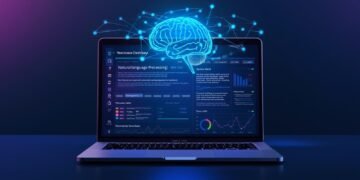







“What if you were in a doctor’s office waiting to find out what the results of your tests said? What if you had absolutely no clue what those results would reveal? That waiting can feel like pure agony. But then think about having a doctor who uses an intelligent system to review test results instantly and alert him/her to early warnings of potential problems (in about 5-10 years). This isn’t Star Trek – this could be the future of AI technology transforming medicine.
Physicians today are swimming in mountains of information about each of their patients. Each individual patient can produce hundreds of laboratory test results, many different imaging studies (such as scans), and a whole lifetime of history and background. While all this information enables doctors to deliver care to their patients, the sheer volume of data makes it difficult for them to make the right connections each time. Therefore, giving doctors the tools they need to practice good medicine has never been more important.
Next, we will utilize “Transformative” (AI) to help physicians make decisions in clinical medicine. When I refer to “Transformative,” I mean capable assistants – not “robot doctors.” Capable assistants will act as a second pair of knowledgeable eyes when looking at thousands of images or reports to look for relationships and risk factors that the human eye may miss.
They will also be able to link together multiple symptom patterns that appear unrelated and bring them before the physician for his/her expert opinion. Utilizing “Transformative” (AI), we are not trying to replace physician knowledge — we are enhancing it. Ultimately, our goal is to give your physician more time and quality information. By taking away the burden of data analysis from a physician, he/she can focus on what he/she does best — understand you, discuss your treatment options, and give you the highest level of medical care possible.
#AI for Personalized Treatment: Breakthrough Care and How It Works
AI for Clinical Decision: How Intelligent Systems Support Doctors
The AI for Clinical Decision-Making (AI CDM), represents a new era of clinical decision-making. The integration of artificial intelligence into clinical decision-making will transform healthcare and provide physicians with quicker, more precise decision-making capabilities.
The AI CDM System utilizes advanced technology to analyze vast amounts of information and generate relevant clinical insights to support the delivery of high-quality patient care. By using AI for Clinical Decision Making, physicians can leverage advanced algorithms to enhance the quality of care they deliver to their patients while improving operational efficiency within their practices.
There are numerous benefits to using AI in clinical decision-making. A primary benefit is the ability to rapidly analyze significant volumes of complex medical information. For instance, an AI system can analyze medical imaging (e.g., X-rays and MRIs) and identify disease-related patterns that might not be visually apparent.
Because it can process large amounts of data at a much faster rate than humans, the likelihood of providing inaccurate diagnoses is significantly reduced. This allows physicians to create treatment options based on reliable information. Additionally, the implementation of AI in clinical diagnostics has enhanced physicians’ confidence by providing access to up-to-date, accurate information to support their professional evaluation.
AI for clinical decision making is a predictive analytics tool. With this technology, you can review past patient data, identify trends that may indicate health issues, assign a risk score to each patient, and notify the doctor of potential complications so he/she can take action.
There are many advantages to using AI for clinical decision-making, such as improving patient safety by reducing human error, using resources more efficiently in hospitals and clinics, and promoting teamwork among healthcare staff and between staff and patients.
Using AI for clinical decision-making also supports continuing education for those working in healthcare. For example, when new technologies are developed for clinical decision-making, these technologies learn from additional experiences and data, and clinicians can stay up to date with current research and best practices to better treat patients.
As stated above, AI for clinical decision making has greatly impacted the healthcare field. With the tools available today that allow doctors to have a base of information that is data driven and predictive models; they are now able to make informed decisions regarding their patients. This has increased patient safety and provided an alternative means of providing quality patient care.
How AI Thinks Alongside Your Doctor
| Input | AI Action | Doctor Benefit |
|---|---|---|
| Patient records | Pattern recognition | Faster insights |
| Lab results | Risk scoring | Early alerts |
| Medical history | Trend analysis | Better decisions |
| Clinical guidelines | Recommendation engine | Evidence-based care |
Source:
Clinical Decision Support: Turning Medical Data into Action

Clinical Decision Support (CDS) systems are now a key part of the health care system, as they transform large volumes of medical information into usable knowledge. CDS systems that use AI for clinical decision-making provide health care practitioners with the timely information needed to make well-informed decisions regarding patient care.
A key role of using AI in clinical decision-making is to enable the examination and interpretation of complex data sets, including a patient’s history, laboratory test results, and radiological imaging studies.
Clinical Decision Support systems employ advanced algorithmic methods to analyze large volumes of clinical data, identify relationships or patterns within that data, and highlight potential concerns that may require further evaluation or assessment by practicing clinicians. In turn, clinicians can rapidly and effectively address these issues to improve patient outcomes and the quality of care delivered.
In addition to enhancing patient outcomes, Clinical Decision Support Systems improve operational efficiency in providing health care services. By employing automation in data analysis, Clinical Decision Support Systems reduce clinicians’ workload associated with the cognitive processing of extensive clinical data. Therefore, clinicians can focus their professional efforts on providing high-quality patient care rather than spending significant time reviewing large volumes of clinical data.
AI for clinical decision-making provides health care professionals with the most relevant information in an easily accessible format, enabling them to make evidence-based decisions quickly.
Clinical Decision Support systems (CDS), when used in a clinic setting, also promote lifelong learning. CDS are continually updated and improved in response to emerging data, research, and guidelines. This evolving approach to learning allows health care workers to deliver state-of-the-art, evidence-based practices to their patients and continue improving the quality of care they provide.
The use of Clinical Decision Support systems powered by AI for clinical decision making is revolutionizing the way health care is today. These systems take medical data and turn it into information, or “insight,” that enables physicians to make better-informed clinical decisions, manage their workflow, and deliver higher levels of patient care. As technology continues to advance, Clinical Decision Support systems will be key to effective and efficient health care delivery.
From Data to Decision: How AI Reaches a Diagnosis
| Step | AI Process | Outcome |
|---|---|---|
| Data Collection | patient + clinical data | Unified dataset |
| Analysis | Pattern recognition | Insights |
| Risk Prediction | Probability modeling | Alerts |
| Recommendation | Suggest treatments | Decision support |
| Validation | Doctor review | Final decision |
Source:
What If Your Doctor Could Read Every Medical Study in Seconds?
We demonstrated how AI could be used to analyze clean data, including lab tests and heart rate data, but there is also a great deal of the humanity of your medical care contained in other areas of your medical record.
Your doctor’s notes, taken during your visit(s) with your doctor, will include the doctor’s observation(s), of you; what you tell the doctor about yourself, during your visit; and the doctor’s own gut feelings — all of which are important for the doctor to make a diagnosis or develop a treatment plan.
Unfortunately, these types of data are very difficult to represent using standardized formats that a computer program can simply utilize and understand. Thus, reading and understanding this type of language has always represented the greatest barrier for computers in attempting to utilize and interpret the unstructured content within medical records.
However, until recently, this represented the state of the art. A recent advancement in artificial intelligence has enabled processing that allows it to read and understand written language at a near-human level.
The field of artificial intelligence that makes this possible is known as Natural Language Processing (NLP). Using NLP, an artificial intelligence can rapidly assess many years’ worth of a doctor’s written comments and generate a one-page summary of the new patient’s complete medical history.
In addition, rather than having a physician spend 30 minutes reviewing a long medical history of a new patient, an artificial intelligence can immediately produce a one-page summary of a patient’s history, along with extracting the most critical components from those same historical records — including, etc.:
• Key diagnoses and past surgeries
• Current medications and allergies
• Family history of disease
The most significant advantage of this reading skill is that it is also utilized in many different ways outside of your papers. It becomes much clearer when considering how artificial intelligence (AI) is used within a healthcare provider’s clinical workflow. For example, a physician may be evaluating a patient who is presenting with a completely new combination of symptoms that has never been seen before.
A physician could spend countless hours reviewing numerous medical journals to find similar patient case studies to the one they are currently assessing. However, with AI, the physician can easily request from the AI to retrieve ALL medical journal articles around the world, and the AI will function as a “never-ending” research assistant by providing the physician with the information needed instantly, which is exactly what enables the use of AI-based tools to provide quicker diagnoses.
Ultimately, the objective is to provide the physician with access to the entire medical library at their fingertips, exactly when they need it, to assist them in making informed decisions. While the AI will provide the physician with relevant data and patterns, the physician will provide the insight, the compassion, and the decision-making authority.
Given the vast amount of knowledge now readily available, the next logical step is to progress beyond accurate diagnosis and determine the most effective treatment plan for you.
#Revolutionary AI in Hospitals – From Life-Saving Diagnosis to Intelligent Delivery Robots
AI Clinical Decisions: Enhancing Accuracy and Confidence

In addition to improving diagnostic and treatment planning in healthcare, the application of AI Clinical Decision Making has greatly improved the reliability and accuracy of both. The use of advanced algorithms and statistical techniques on large amounts of individualized patient data allows healthcare professionals to make more informed decisions about treatment options.
One of the greatest advantages of using AI Clinical Decision Making is its ability to quickly analyze large volumes of data in real time. An AI system can instantly scan thousands of individual patient medical records, lab tests, and imaging studies to find patterns and connections in the data that may be missed by humans.
Physicians are able to provide better and faster care to their patients as a direct result of the enhanced analytical capabilities of an AI Clinical Decision Making System. As a result, physicians will have greater capability to recognize early warning signs of health issues, and consequently treat them sooner. In addition, AI for Clinical Decision Making will enable physicians to create treatment plans tailored to each patient.
The integration of AI for Clinical Decision-Making increases clinicians’ confidence in their processes and provides them with the information needed to make the most appropriate, informed decisions. As such, clinical decision-making will result in better patient care and a more timely application of the current scientific knowledge base.
For example, another way that the continued development of AI Clinical Decision Making will enhance healthcare providers’ ability to deliver quality care through improved accuracy and efficiency is by reducing diagnostic errors.
Moreover, the continued development of AI Clinical Decision Making will create environments where AI for clinical decision-making and the experience and expertise of healthcare providers will collaborate for clinical decision-making. In turn, this collaboration between humans and machines will result in a more effective and affordable healthcare delivery system, ultimately improving both patient and provider welfare.
Additionally, AI Clinical Decisions are an important advancement in medical science; therefore, AI Clinical Decisions represent an important first step towards improvement in diagnostic accuracy and increased confidence among clinicians when diagnosing or providing treatment to patients. Furthermore, AI Clinical Decisions will also allow healthcare professionals to provide optimal patient care, thereby improving patient health outcomes.
The Numbers Behind AI in Clinical Decisions
| AI diagnostic accuracy can reach 90-95%+ in some domains |
|---|
| Decision-making speed improved by 30-50% |
| AI reduces hospital readmissions significantly |
| Physicians using AI report higher confidence in complex cases |
Source:
AI-Driven Healthcare: Smarter Systems, Better Outcomes

Modern medicine is evolving rapidly due to AI-driven healthcare and the use of smart AI systems. These smart systems enable better patient outcomes by using sophisticated algorithms that enhance data processing. AI for clinical decision support enables healthcare providers to deliver more effective, timely, and efficient patient care based on a patient’s entire medical history.
The advantages of using AI-driven healthcare include the ability to review and access large amounts of data from an individual’s medical history. Clinicians have access to a patient’s total medical history which includes lab results as well as all relevant images. This information can be used to identify trends or patterns within the data that were not identifiable prior to analysis.
By identifying these trends and patterns early, clinicians can detect potential health issues and provide timely interventions. Timely interventions result in higher-quality care for each patient.
Studies have also demonstrated that AI-Driven Healthcare can streamline the workflow for healthcare professionals by providing automation of repetitive processes and the ability to analyze vast amounts of data. As such, AI-Driven Healthcare reduces the workload for healthcare professionals, resulting in additional opportunities to spend time interacting with and caring for patients
In addition to this, AI for clinical decision-making at the fingertips of clinicians so they can make decisions based on the latest research available.
When used together, AI-Driven Healthcare and clinicians’ experience create an environment of collaboration in which technology and professional knowledge are combined to produce high-quality, individualized treatment plans designed to meet the unique medical needs of every patient. When using AI as part of their clinical decision-making, clinicians receive guidance from the technology on diagnoses and treatment options for their patients; therefore, the quality of the diagnostic and treatment processes improves.
As a whole, AI-Driven Healthcare offers many opportunities to shape the future of medicine by creating new ways to improve patient health outcomes, reducing barriers to efficient, streamlined care processes for both clinicians and patients, and increasing the level of care clinicians can provide.
AI for Diagnostics: Detecting Disease Earlier and Faster

AI for Diagnosis will be a revolutionary way to diagnose and treat illness, enabling quicker diagnosis and treatment. AI for Clinical Decision Making uses advanced algorithms and Machine Learning to enhance clinical decision-making, leading to improved patient outcomes.
One of the biggest advantages of AI for Diagnosis is its ability to analyze vast amounts of data at an incredible rate compared to humans. AI systems can quickly review medical images, lab test results, and patient histories to detect trends or patterns that may go undetected by clinicians. Earlier detection of serious diseases such as cancer and cardiovascular diseases enables healthcare providers to act sooner, increasing the chances of successful treatment.
Another major advantage of AI for Diagnosis is the assistance it provides to clinicians in their decision-making. Evidence-based recommendations and support are generated from AI for Clinical Decision Making. Clinicians can use evidence-based best practices and clinical guidelines in real time while making diagnostic decisions, leading to greater diagnostic accuracy and increased confidence in clinical decision-making.
Reduced diagnostic errors made by humans is another positive effect on healthcare resulting from using AI in Diagnostic decision-making. AI used in Diagnosis provides a “second pair of eyes” to validate diagnoses and alert clinicians to abnormalities requiring additional evaluation. Reducing diagnostic error rates through AI-assisted clinician decision-making ultimately reduces missed diagnoses and ensures timely, appropriate care for patients.
Overall, AI for Diagnosis has changed the practice of healthcare by providing earlier and more accurate diagnoses of diseases. By utilizing AI for Clinical Decision Making, clinicians can provide better health outcomes for their patients, reduce the time required to complete diagnostic tests and procedures, and help create a more streamlined healthcare delivery system. As continued advancements occur within the field of AI, we expect its contributions toward enhancing diagnostics will result in improved healthcare for all patients worldwide.
AI’s Second Pair of Eyes: How It Spots Trouble Sooner on Medical Scans
We have all been there – holding our breath in a cold room while the machine takes the picture of what is going on inside us. Then, the radiologist, who has spent years studying medicine and completing additional training to become a specialist, will evaluate the results of the X-ray, CT scan, or mammogram to determine whether any abnormalities are present.
Radiologists are extremely talented individuals, but like anyone, they get fatigued after reviewing hundreds of images daily. Also, some early indications of disease can be very subtle and therefore may appear, at best, as one or two pixels on a monitor. This is exactly where artificial intelligence (AI) comes into play – providing another set of eyes for radiologists.
But, how does an AI tool that can view medical images as well as an experienced radiologist become trained? Just as people learn from examples, so too does the AI tool. Researchers use millions of medical images that have already been reviewed by a physician to train the AI tool. They then tell the AI tool which images contain small tumors in their early stages, and which images are totally normal.
The AI tool continues to examine a massive amount of labeled examples (known as “training”) to learn to identify the specific characteristics, textures, and shapes of possible issues.
The end result is an artificial intelligence system that never becomes fatigued. A radiologist can use AI-based scan analysis to create a “soft” border around areas where the radiologist needs to take a closer look at smaller abnormalities, thereby bringing them to the radiologist’s attention.
AI in radiology image analysis serves as a secondary review or safety net to detect abnormalities that would otherwise go undetected by a single reviewer. Therefore, using AI in medical diagnostics provides radiologists with another method to verify their findings, thereby improving overall accuracy.
Radiologists are currently using hospital-based AI-powered diagnostic systems for faster diagnosis. The AI itself does not make a diagnosis. Rather, it acts as a watchful co-pilot, identifying potential problem areas in the images reviewed by the radiologist that may require further evaluation.
If we could apply this analytical capability to consider all scans taken for a particular patient and their complete medical history to start making connections between the data points and clues found in each, the possibilities for new applications would be vast.
The Health Detective: How AI Connects the Dots to Predict a Crisis
While a single scan represents a significant advancement over attempts to identify issues, a person’s health story has multiple chapters. All of a person’s previous medical records — every laboratory test, every vital sign measured by a healthcare professional, and every doctor’s note — are all saved digitally into what is known as an Electronic Health Record (EHR), which allows a physician to quickly access them.
A human doctor could never sift through years of data to identify subtle patterns or connections. But for computers using artificial intelligence (AI), this is an ideal task for a sophisticated detective. When EHRs are continuously connected to AI, the AI can track a patient’s entire chart in real-time.
In addition to being a copilot, AI now serves as a scout. Rather than merely looking back at historical events, the AI now identifies combinations of small, seemingly unconnected changes that might signal the onset of a problem.
Consider the example of a detective who recognizes when there is a minor increase in body temperature in conjunction with a minor increase in heart rate and a specific laboratory result — and then realizes that these three indicators together represent a dangerous combination.
In summary, this new level of sophistication, referred to as predictive analytics for patient risk scoring, allows the AI to create a “risk score” for each patient based on the unique factors related to that individual — and to inform physicians about those patients most likely to develop some type of issue.
A clinical decision support system (CDSS) would allow the clinician to access information about a specific disease process (e.g., a child with a new rash who presents with fever), which can be used to help make a timely diagnosis. Once the CDSS makes a recommendation, the clinician is responsible for verifying its accuracy and determining the best course of treatment.
For example, the CDSS might tell a physician, “You should consider prescribing antibiotic therapy.” In many cases, when using a CDSS, the time from making a decision to treating the patient will be much shorter than it would be without one.
In addition, because most clinicians do not know everything there is to know about medicine, a CDSS can serve as an electronic resource to assist them. They can look up information on medications, diagnoses, and treatments. Because this information is contained within a computerized database, it will be current and comprehensive.
Another advantage of CDSS systems is their ability to recognize patterns and alert providers to situations that require immediate attention.
Real Case: AI Preventing a Medical Crisis
| Case: | Sepsis Prediction with AI |
|---|---|
| AI monitors patient vitals continuously | |
| Detects early warning signs of sepsis | |
| Alerts doctors hours before symptoms escalate | |
| Impact: | Reduced mortality rates |
| Faster intervention |
Source:
Beyond a ‘One-Size-Fits-All’ Cure: How AI Helps Tailor Your Treatment
In recent years, we’ve seen firsthand how trial-and-error-like the medical system can sometimes seem. There are people out there whose bodies respond very well to a given medicine for an illness or injury, but the medicine has no effect on someone else with the exact same illness or injury, despite being diagnosed with the same illness.
Each of us is born unique (right down to our DNA); therefore, over time, the ultimate goal has been to transition away from a “one-size-fits-all” approach to patient care and toward a personalized form of medicine in which treatment is based on a patient’s own needs. The use of artificial intelligence (AI) in healthcare has made the ultimate goal of personalized medicine a reality.
In order to see how AI has helped create a reality where personalization in medicine exists, think about this analogy: When you receive standard care from a physician, it’s as if you’re purchasing an off-the-rack suit. Many folks who shop for suits will find an off-the-rack suit adequate for their needs. However, no matter which style of off-the-rack suit you choose, it will never exactly fit your body in every way.
Therefore, in order to obtain a suit that specifically meets your body measurement requirements, you must have a custom suit made for your body. Similarly, artificial intelligence (AI) serves as the master tailor in healthcare, enabling healthcare providers to analyze and assess thousands of pieces of information about a patient’s health history, lifestyle choices, genetics, and more. To help healthcare providers provide each patient with the most effective therapy options available to treat each patient’s body individually.
This tech is so powerful because of machine learning; ML allows the creation of personalized treatment plans for individual patients. The a.i. The system analyzes all data from millions of previous patients treated by the same healthcare providers (treatments, genetic markers associated with each patient, and treatment outcomes) anonymously to provide highly accurate predictive insights to doctors & nurses.
For example, when treating cancer patients, the a.i. May identify genetic information associated with a particular type of tumor, which would recommend a new targeted drug that would be unlikely to effectively treat tumors with different genomic characteristics. This allows many patients to avoid multiple rounds of traditional chemotherapy.
The above example illustrates what the future holds for a.i. In patient care. As stated earlier, this does not mean the doctor is replaced by the a.i., instead it provides the doctor with tools to consider.
Those tools are lists of potential treatment options tailored to each patient’s needs. The a.i. Provides data-driven solutions for doctors to evaluate. At the end, the doctors will work together with the patient to choose the best course of action.
Clinical AI Solutions: From Hospitals to Everyday Care

Clinical AI Solutions are helping to revolutionize the delivery of healthcare by combining cutting-edge technologies with patients’ real-world concerns.
The integration of Clinical AI Solutions to enhance the efficiency, accessibility, and quality of care will have an impact across the continuum of care for patients, from hospitals to individual physicians’ offices and clinics.
A major advantage of using Clinical AI Solutions is their ability to quickly process large volumes of patient data. The advanced algorithms process data from electronic health records (EHRs), laboratory tests, and diagnostic images to identify potential relationships or trends indicative of a patient’s health problem.
Clinical AI Solutions provide data-driven insights for healthcare providers, enabling them to utilize AI to inform clinical decision-making based on the best current evidence, resulting in improved patient outcomes.
Clinical AI Solutions have also been incorporated into outpatient care through Telemedicine and by primary care physicians. Clinical AI Solutions offer an additional way for remote monitoring and symptom assessment. It can expand access to health care services for individuals who may reside anywhere. As a result, Clinical AI Solutions eliminates or lessens several barriers that prevent individuals from accessing care, particularly those living in underserved communities.
Additionally, clinical AI solutions will allow providers to maximize their time and be more efficient than traditional methods by automating non-clinical tasks, such as data entry and appointment scheduling. By reducing administrative burdens on providers’ schedules, clinical AI solutions will give providers more time to focus on patient care and less time on paperwork.
There is a vast opportunity for future development of Clinical AI Solutions. They will continue to grow in sophistication, enabling them to enhance diagnostic capabilities, develop customized treatment plans for each patient, and deliver the best possible care. The integration of Clinical AI Solutions with Healthcare Delivery systems will ultimately produce the most effective, efficient, and personal health care system ever developed.
#AI in Drug Discovery: A Breakthrough Approach to Faster and Smarter Drug Development
The Elephant in the Room: Will an AI Ever Replace Your Doctor?
In addition to helping us see patterns, computers are unable to take over the role of physicians because they lack two of the three core components of medicine. These components are Wisdom (knowing what matters), Compassion (concerning oneself with patients and their lives rather than just their data), and Experience (the knowledge developed through time spent practicing medicine).
Instead of replacing doctors, a different and more efficient approach has emerged for using technology to aid in health care. This method is commonly called “Human-in-the-Loop” technology. The Human-in-the-Loop model involves an artificial intelligence working together with a physician as a co-pilot.
As such, it can provide you with millions of pages of medical literature and/or scan images and view them at a level of detail that would be impossible for a human to do; however, the physician is still in control and uses the information provided by the AI to make the final decision regarding your treatment.
A substantial disparity exists between how a computer system would analyze whether a patient has a particular condition and how a physician would assess the patient for that same condition. A computer system can identify the potential risk of a given illness based upon historical probability statistics; however, a computer system cannot sit down and talk with you, nor could a computer system possibly appreciate your fear, anxiety, or apprehension when considering the various treatment options available to you.
A computer system also is unable to interpret your nonverbal behavior (e.g. body language), or possess an intuition regarding the presence of additional variables affecting your overall health status. It is these unique aspects of being human that represent the essence of practicing medicine and ultimately will define the level of service provided to you as a patient.
The purpose of utilizing computers in healthcare is not intended to replace the human aspect of healthcare delivery, but instead, provide physicians with sufficient time to focus on what they were trained to do (listen to you, think critically about your health issues, connect with you) while performing all administrative tasks (i.e. redundant data entry and analysis) associated with practicing medicine.
Thus, the ultimate goal of developing AI-assisted patient care systems is to create a collaborative process that enables a doctor to work in concert with a computer system, thereby better serving you, their patient. This partnership will only succeed if we can rely upon our “co-pilot
Doctor vs AI vs Teamwork
| Capability | Doctor | AI | Together |
|---|---|---|---|
| Diagnosis | Experience | Data-driven | Best accuracy |
| Speed | Moderate | Fast | Optimal |
| Empathy | High | None | Balanced care |
| Decision | Final authority | Support tool | Strongest outcome |
Can We Really Trust an Algorithm With Our Health? A Look at Safety and Bias
The problem with training an AI on bad information is that it learns the flaws in that information and uses them to make mistakes. If you train an AI to identify “fruit” and show it pictures of fruit, but only show it pictures of apples, then when you ask it to find pictures of bananas or oranges, it won’t know what they look like.
There is a major ethical issue with using AI in medicine because if an AI system is trained on data from just one demographic group, we don’t know how well or poorly it will perform for other demographic groups.
Therefore, built-in bias means that before implementing many medical AI systems into hospitals, these systems first need to go through the FDA (which regulates and approves drugs and medical devices) review process. Before approving a new drug or device, the FDA reviews how the AI was developed, what data was used to develop it, and how well it performs across all demographics. The FDA’s review of the creation of an AI adds an extra layer of protection for patients and ensures that an AI designed to help patients doesn’t contain hidden biases that could put patients’ health at risk.
I do think that no matter how much regulation occurs to help prevent accidents caused by AI-based diagnostics, the most important safety feature will still be your doctor. The fact is, an artificial intelligence (AI) tool will never come up with a definitive diagnosis – it will always take a “team” effort between the doctors and an AI tool.
In this team effort, the AI tool will review the data, and the doctor will use that information, along with their physical examination, laboratory results, and years of medical training, to determine a final diagnosis. This means that patients can get a second opinion without worrying about losing the benefit of the physician’s diagnostic expertise.
To build confidence in AI tools, we will need to implement a multi-faceted approach: Developers will have to use large amounts of representative and diverse data to train the algorithms used in the AI tool; Regulatory agencies will have to monitor the development of AI tools closely; and health care systems will have to ensure that they allow physicians to interact with AI tools. If we follow these three steps, the “co-pilot” in the exam room will be both extremely effective and trustworthy for each patient.
Trusting AI in Healthcare: What Matters Most?
| Factor | Why it Matters | Risk if Missing |
|---|---|---|
| Accuracy | Correct diagnosis | Misdiagnosis |
| Transparency | Explainable results | Low trust |
| Bias Control | Fair treatment | Inequality |
| Data Security | Patient privacy | Data breaches |
| Human Oversight | Doctor validation | Over-reliance |
Source:
A Glimpse into a Faster, Smarter, More Human Future of Healthcare
When we think about artificial intelligence (AI) assisting with healthcare services at hospitals, we can see this as something completely new to us; impersonal, possibly confusing, and potentially intimidating.
We can envision how these systems will assist physicians through highly advanced support systems.
Your next visit to the physician may look entirely different than your visit there today.
The moment before you walk into the physician’s office, an AI system will have reviewed all of your medical records, generated a single page that summarizes your medical history to include only the most relevant to your physician, and an AI system will have previously analyzed a standard scan you had done last week, and found a small section of which a radiologist should take another look, utilizing their skill and knowledge to act as additional digital eyes to make sure nothing was missed.
By integrating data seamlessly into their workflow, your physician walks into the examination room without worrying about collecting data or the many hours of paperwork and documentation that are part of current-day medical practice.
The appointment no longer has to be a marathon of gathering all your information before developing an assessment or treatment plan. Instead, this appointment will be a personalized conversation with your physician about your health, concerns, and the course of treatment that best fits your needs. The benefits of Clinical Decision Support Systems (CDS) are clear; CDS will allow physicians to focus on their patients while they manage patient information.
In essence, the story of how clinical decision support systems will affect how we practice clinical decision-making is less about the technology that will support us and more about using those technologies to aid us in returning to a humanistic approach to medicine that we have lost as a result of our reliance on technology.