
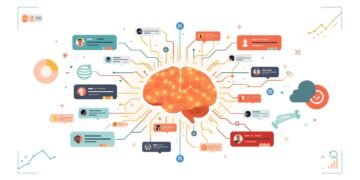







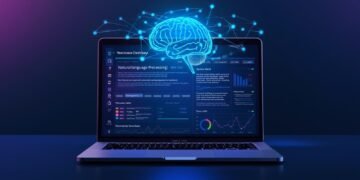







Artificial intelligence (AI) is transforming how we govern digitally in the United States. AI is creating new possibilities to increase efficiency and improve decision-making processes.
The use of AI technology for U.S. Digital Governance is not merely a trend. It has the power to revolutionize how the public sector operates. The U.S. Government is using AI technology for U.S. Digital Governance initiative. Using AI this way will enable it to provide better services and encourage citizen engagement.
It is critical that ethical considerations be taken into account when implementing AI technology for U.S. Digital Governance. Ethical implementation promotes transparency, accountability, and fairness in the decision-making process. Public trust relies on these elements being present.
By automating administrative functions, AI technology for U.S. Digital Governance will help reduce costs and create a smoother experience for service users. Additionally, AI will enable enhanced data analysis to inform policy development.
As an example, digital governance in the United States is rapidly changing. At the forefront of this change are AI technologies. AI offers many advantages and opportunities in this area.
Use of smart government technology can support infrastructure management and urban planning. The potential to influence AI technology for U.S. digital governance is immense.
While there is potential to improve digital governance through Artificial Intelligence (AI), many issues need to be addressed before we can move forward. Some of those major obstacles include: data security risks, ethical concerns about AI, and the Digital Divide. If we can overcome some or all of those obstacles, we will see greater success with our transition to AI-based digital governance systems.
To ensure that the successfully integrates AI technology for U.S. digital governance system, it needs to create policies and regulations governing its use. The creation of these policies and regulations will help to protect citizens’ personal information and prevent others from misusing AI technology. In addition, they will assist governments in creating an environment that allows them to develop and implement AI systems ethically.
Artificial Intelligence has the potential to provide personalized services to citizens, which could increase their level of satisfaction with local, state, and federal agencies. Additionally, AI could be used as a tool to help support crisis management and emergency response activities. Collaboration between the public and private sectors will be required for the U.S. to successfully implement AI systems. Governments will also have to invest in training their employees so they are able to effectively adapt to new technologies like AI.
The future of AI Technology for U.S. digital governance will be defined by the advancements.
The Evolution of Digital Governance in the United States
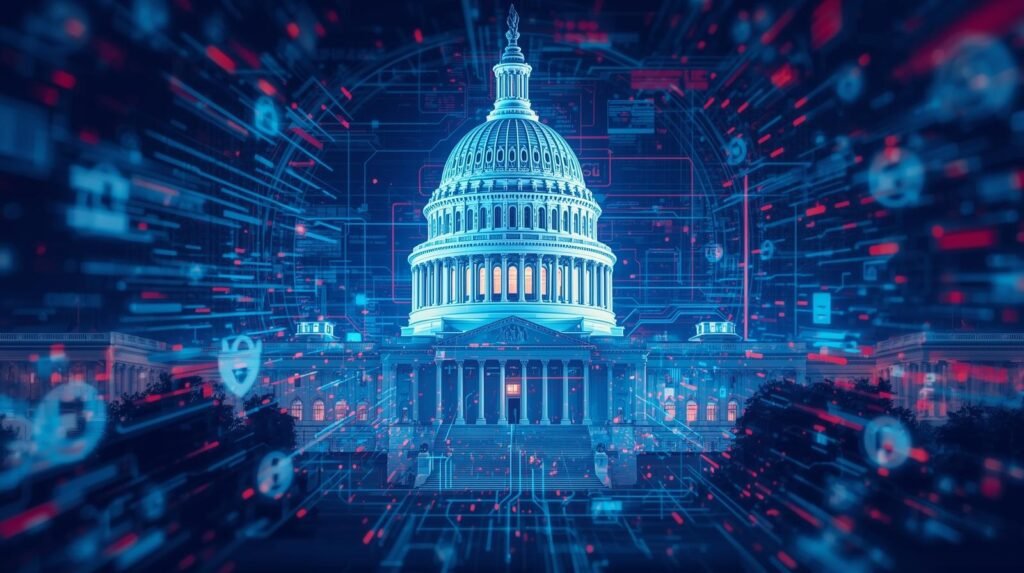
From its early stages of development, digital governance in the United States evolved in response to advances in both technology and society.
At first, digital governance efforts in the United States were limited to providing transparency through very basic digital tools. As time went by, however, digital governance technologies became much more complex.
#https://ai.nezzhub.com/ai-technology-for-u-s-digital-governance/
In its formative years, digital governance in the United States primarily included basic services. The most common service was providing information via an electronic portal that also enabled communication with citizens.
Digital governance in the United States was transformed once again as governments adopted more complex e-governance systems. E-governance systems have significantly simplified processes and enhanced citizen access.
AI technology for U.S. digital governance is now entering a new phase (the AI phase). AI systems are enabling digital governance in the United States to make decisions that are faster and more data-driven than previously possible.
Public Sector Implications of AI Technologies
The Public Sector has several options regarding AI technology. The primary areas affected by this are as follows:
Resource Management Efficiency
Policy Making through Data Analysis
Service Delivery Enhancement
AI technologies have been used increasingly in governmental functions in the past few years. AI helps governments manage environmental issues and crises. The use of AI is changing how the public sector operates.
There are many different ways that use AI Technology for U.S. digital governance to provide new solutions for society’s problems. With these solutions, the public sector can provide more responsive and adaptive services.
Smart technology has made it easier to manage smart infrastructure and develop smart cities. As such, by shaping how a city develops its urban space, the quality of life for all residents of that community will increase.
As we move forward as a nation in digital governance, we continue to evolve. We are at the forefront of our evolution by adopting AI (Artificial Intelligence) technologies. Our country’s commitment to adopting AI technologies will result in greater efficiency in the public sector.
We are experiencing rapid growth in the pace of digital governance evolution. The use of AI offers great potential for innovation within government agencies. For governments to serve their citizens’ needs, they must be able to respond to new challenges posed by emerging technologies.
In addition to responding to current technological trends, AI will play a much larger role in the future. To ensure that the level of public services provided by governmental entities continues to grow and improve over time, we must embrace new technological developments.
From Paper to AI: The U.S. Digital Governance Evolution
| Era | Key Shift | Technology | Impact |
|---|---|---|---|
| Pre-2000 | Paper-based systems | Manual processes | Slow services |
| 2000-2015 | E-Government | Online portals | Improved access |
| 2015-2020 | Data-driven gov | Cloud + analytics | Better decisions |
| 2020+ | AI-powered gov | Machine learning | Smart services |
Source:
Foundations of AI Technology for U.S. Digital Governance

The use of artificial intelligence (AI) by the federal government has its roots in the desire to increase governmental operational efficiency. Data-driven decision-making has become an integral part of how the public sector operates; this transformation from a traditional approach to a data-driven one has occurred gradually yet dramatically.
The government’s ability to process large amounts of data and use it to develop and implement policies is facilitated by AI. Therefore, AI provides the foundation for a “smarter” government.
Essential Components of AI Technology for U.S. Digital Governance in Government.
Several essential components of AI technology are within the framework for integrating AI into government operations.
- 1. Data Infrastructure: A strong data system is required to effectively support AI.
- 2. Algorithm Development: Developing intelligent algorithms is vital to analysis using AI.
- 3. Human-Computer Interaction: Providing a seamless human-computer interface will enhance the usability of AI tools.
- 4. Regulatory Frameworks: Policies are needed to provide a legal/ethical framework for deploying AI.
Data infrastructure – the foundation of all AI systems. All governments have numerous data collection points that require secure, efficient storage to enable AI processing.
Development of algorithms — developing intelligent solutions. Complex analysis results from developing these algorithms. Real-time decision-making is driven by these solutions.
Human-computer interaction (HCI) — another core area. For an AI system to be used effectively by users, it must provide intuitive HCI. Users’ overall experience is enhanced by effective HCI, leading to higher levels of user acceptance and satisfaction.
Comprehensive regulatory frameworks — ensure ethical use of AI. AI will only be used ethically when the government creates regulatory frameworks that dictate how AI can be deployed in sensitive government areas, protect citizens’ private information, and prevent its misuse.
The collective synergy of the above foundational areas enables the success of AI in government. Each area has its own specific role within the larger AI ecosystem. Together, they form a unified infrastructure to support smart governance.
Foundations necessary for the role of AI technology for U.S. Digital Governance. As AI evolves, continued refinement of each of the above foundational areas will remain necessary. Continued adaptation to future technological advancements will lead to a more productive public sector.
Key Applications of AI in Government Services
Government Services have been significantly improved by using artificial intelligence (AI). The new methods being developed for delivering public services with AI will lead to more effective, faster government service delivery.
Two important examples of AI used in government include data analysis and decision-making tools. AI’s ability to analyze large amounts of information allows it to identify valuable insights that enable better-informed decision-making.
Another example is the use of AI to enhance public safety. Predictive policing uses AI to help prevent crime. Crime prevention is aided by identifying trends and patterns using AI. Communities are safer when resources are allocated more efficiently for public safety.
The use of AI has been essential to developing smart transportation systems. Governments can create and implement strategic plans for urban transportation development using smart traffic management systems and AI.
Healthcare Improvements
Predictive analysis for disease outbreak management
Personalized treatment plans through data analytics
Automation in administrative healthcare tasks
Similarly, AI will help make public administration better and faster. By automating administrative duties, it reduces costs and helps eliminate mistakes that humans are prone to making. Furthermore, digital assistants help citizens interact with government services more effectively, ultimately leading to greater customer satisfaction and more efficient service delivery.
With respect to education, AI can tailor educational materials for each student’s unique learning style. Additionally, AI assists students in developing a personalized pathway toward their educational goals, thereby enhancing overall academic performance. Therefore, this personalization is critical for allowing educators to adapt the curriculum to accommodate the many different types of learners.
Finally, AI has dramatically changed how governments monitor and manage the environment. Regarding energy efficiency programs, smart grids enable governments to track and reduce energy consumption.
Environmental and Energy Management
Smart energy grid implementation
Data-driven environmental monitoring
Enhanced resource allocation strategies
AI can be applied to the realm of governmental finance. The use of AI allows for the prediction of future economic conditions. Additionally, AI can assist in developing and maintaining budgets.
The enhanced ability to analyze large volumes of data has enabled finance departments to allocate resources more effectively. Furthermore, the use of AI-based tools provides for precise and transparent financial reporting.
AI also supports emergency response systems within the U.S. Government. Agencies can gather real-time data, enabling them to both prepare for and respond to emergencies. AI is an important asset in crisis management, enabling timely and appropriate intervention.
In addition to the many other areas where AI may be used, one area where AI can potentially improve citizen communication with governments is in customer service. AI-based chatbots can operate around the clock, providing assistance and answering citizens’ questions.
Overall, there are multiple ways that AI technology is being utilized within government services. Whether AI is being used to optimize traffic flow, enhance healthcare delivery, or provide greater transparency into government finances, the effects of this technology on government services are significant.
Benefits of AI Technology for U.S. Digital Governance
The AI technology for U.S. digital governance offers several positive contributions to its development. The development of these technologies has significantly increased the effectiveness and accessibility of public service delivery.
A first major contribution has been to enhance the quality of decision-making at all levels within a federal agency. Because AI systems can process large amounts of data quickly and with high accuracy, policymakers may make decisions based on a much larger body of information than was previously available.
Secondly, the implementation of AI has improved efficiency throughout many areas of federal government agencies. The use of AI in automated work processes eliminates human errors that employees performing repetitive tasks might make. As such, agencies can use their human resources to pursue long-term planning objectives.
Thirdly, one other significant advantage of AI-based solutions is cost savings. Automated processes reduce the expense associated with labor. Government entities may redirect the funds saved from operational expenses toward projects or programs that provide a greater social good.
- Government Functions Improved by AI:
- Enhanced data-driven decision-making
- Increased efficiency and productivity
- Significant cost savings and resource optimization
AI will also be very important in facilitating public engagement. In an effort to respond appropriately to citizens’ needs through personalized communication, this response builds trust among citizens and strengthens citizen-government relations.
Further, AI has positive impacts on environmental sustainability. Through the use of AI, governments can more effectively track and manage their natural resource use; smart technologies help reduce environmental footprints.
Moreover, AI contributes to the development of innovative businesses and economic growth. AI enables entrepreneurs to develop new products and services using data-driven business models and government culture.
Also, AI contributes positively to transparency within government. Transparency within government increases through AI-enabled open data initiatives. Increased availability of data facilitates citizen involvement and trust in government.
As such, the integration of AI Technology for U.S. digital governance provides a number of benefits. These include improved operational efficiency and contributions to economic growth. Integration of AI into the United States public service represents a significant change toward more efficient government operations.
The Numbers Behind AI in Government
| us U.S. federal AI spending exceeds $3+ billion annually |
|---|
| AI can improve government efficiency by 20-30% |
| Over 50% of agencies are adopting AI tools |
| Automation reduces administrative workload significantly |
Source:
Ethical AI in Government: Principles and Challenges
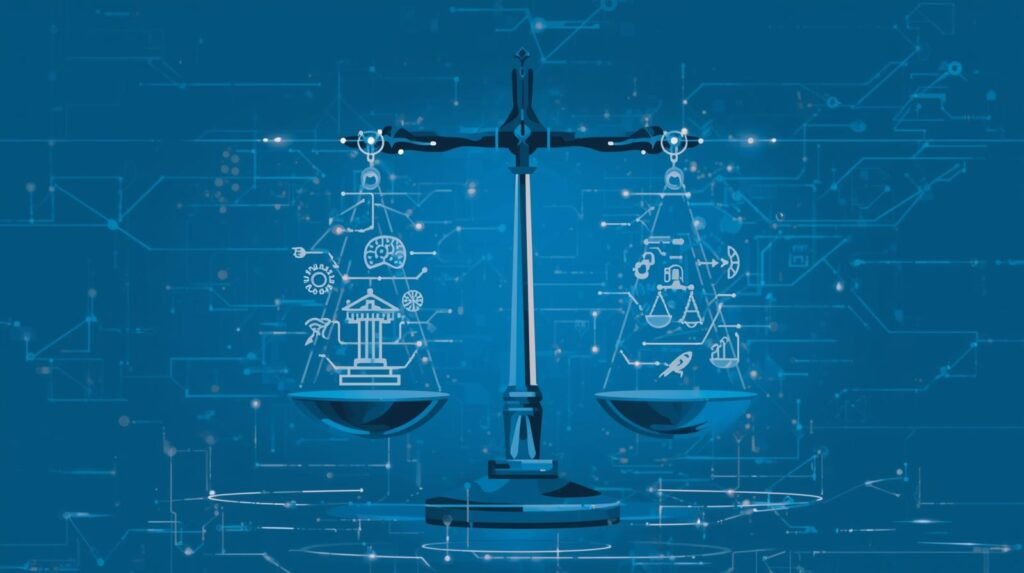
Ethical considerations regarding artificial intelligence (AI) in the public sector are rapidly becoming a focus. As such, it will become increasingly important for government agencies to ensure that AI is both fair and responsible. In addition, this responsibility will provide an opportunity to build or maintain the public’s confidence in government institutions.
To implement ethical AI in Government, several key principles must be followed. If these principles are followed during the design, development, and implementation phases, they will help promote the fair and responsible use of AI in government agencies.
One of the first principles to follow is fairness. Fairness means that when designing a system, you must ensure it does not discriminate against any particular group based on race, gender, age, or socioeconomic status. Therefore, in developing your system, you must consider ways to avoid or eliminate biases that may lead to unfair treatment of individuals from any demographic group.
Another major principle is transparency. Transparency involves providing citizens with information about how an AI system arrived at its decisions. By being open and transparent about how AI makes decisions related to citizen interactions, citizens can gain greater trust and understanding of how their concerns were addressed during their interaction with the AI system.
Finally, another important principle is accountability. Accountability requires governments to take ownership of the data used by an AI system, including who developed it and under what circumstances the data was collected. Additionally, mechanisms need to be put in place to monitor and evaluate how well the AI system performs.
Core Principles
Fairness and non-discrimination
Transparency and openness
Accountability and oversight
The realization of these principles will involve some difficult obstacles. One such obstacle is bias in data. Historical data may contain many types of biases that could continue to be embedded within current data. To develop equitable AI, it is necessary to address these challenges.
Another challenge is privacy. To function effectively, many AI systems need large amounts of information, or “data,” which is often personal. It is therefore important to find ways to protect individuals’ privacy when using AI systems to provide services to the public.
Key Challenges
Data bias and discrimination
Privacy and data protection
Ensuring transparency in AI decision-making
Governments have a responsibility to thoughtfully address each challenge. Ethical use of AI demands robust frameworks to guide its application. Creating specific policies or guidelines for the ethical use of AI will be essential.
Continued evaluation is required for an ethical AI in government system. The continued evaluation process allows the system to continue to meet the changing societal values. Government bodies need to accept and utilize adaptable strategies when governing AI.
The complexity of creating an ethics AI strategy for government can be mitigated by developing new problem-solving approaches while maintaining a commitment to core principles. With this commitment and innovation, AI can create benefits for all citizens.
Ethics vs Innovation: The AI Governance Balance
| Principle | Why It Matters | Risk if Ignored |
|---|---|---|
| Transparency | Public trust | Lack of accountability |
| Fairness | Equal treatment | Bias in decisions |
| Privacy | Data protection | Citizen distrust |
| Accountability | Responsibility | Misuse of AI |
| Security | Safe systems | Cyber threats |
Source:
AI Policy and Regulation: The U.S. Approach

Balancing the development of new technologies with regulations is important for the development of artificial intelligence (AI) and its use within government. In order for the United States to successfully develop an environment where technology can grow while also being overseen by the appropriate governing bodies, such as Congress and State Governments, we need a balanced approach to how this is done.
To date, many initiatives have been put forth by the Federal Government to regulate the use of Artificial Intelligence. Many of these initiatives were developed to help ensure that AI is used ethically and responsibly throughout all areas of society.
One of the primary goals of national AI strategies is to involve the public sector in AI. National AI Strategies provide guidelines and frameworks for using AI in both the private and public sectors. National AI Strategies seek to create a unified way of thinking about AI at all levels of government (federal, state, local).
Transparency is another main component of AI policy. Transparency includes open data policies and the requirement that developers explain their algorithms. Both are essential in building trust in AI and keeping citizens engaged.
Regulatory Focus Areas
Encouraging innovation alongside robust oversight
Ensuring transparency and accountability
Establishing ethical guidelines for AI deployment
Another key aspect of U.S. policy efforts is protecting individuals’ privacy regarding their use of AI. To accomplish this goal, these policies require that data be treated and stored in accordance with very specific guidelines.
Effective regulation of AI can only occur through collaboration among all parties involved. The U.S. government will need to work closely with technology providers (tech companies) and other stakeholders to develop practical yet protective laws.
The process of developing laws that regulate AI has many obstacles. Often, the rapid pace of AI development creates an obstacle to enacting new laws. Therefore, it is necessary to continually assess and modify AI-related laws as they are developed.
Policies related to the development of AI need to be multifaceted because of the complexity of its applications. For example, a coordinated approach provides uniformity in how governments regulate AI. In addition, a coordinated approach ensures that the application of AI aligns with national security and economic interests.
To develop an effective set of policies regarding the use of AI, input from multiple stakeholders is required. Consultations with stakeholders from diverse areas of society help create a comprehensive framework of rules. As such, the laws developed through this type of consultation better represent the views of many different stakeholders.
In summary, U.S. lawmaking regarding AI is aimed at ensuring that the benefits of AI technologies can be realized by individuals in the public sector, while also protecting the public interest. These lawmaking activities are continuing and adapting to address emerging challenges.
Case Studies: AI in Action Across U.S. Public Sector
U.S. public sector agencies have found many ways to use artificial intelligence. Many public sector agencies are using AI to make their services more efficient. The examples below show how AI has changed the way public sector agencies do business.
Many cities around the world are starting to use AI for urban management. One example is San Francisco, which is utilizing AI to help optimize its traffic and improve mobility. According to the City’s own data analysis, this program has increased the efficiency of the public transportation system.
- Healthcare AI Applications:
- Predicting patient outcomes
- Automating administrative tasks
- Enhancing diagnostic accuracy
In police departments, AI helps predict crimes. The Chicago Police Department utilizes a predictive policing model to help allocate departmental resources effectively. The goal of this type of model is to lower crime rates through understanding and predicting patterns associated with illegal activities.
FEMA (Federal Emergency Management Agency) uses AI technology to aid in assessing disaster damage. AI analyzes satellite imagery to assess the extent of damage and the areas affected by a disaster. This will help expedite the coordination of recovery efforts.
In addition, public school systems are utilizing AI to enhance their students’ educational experience. Public school districts utilize AI to tailor each student’s educational curriculum to meet the needs of individualized learning. By providing customized learning experiences for students, public school systems hope to increase both students’ engagement and achievement.
Educational AI Applications
Personalized learning experiences
Virtual tutoring systems
Administrative process automation
AI has already begun to be used by a variety of cities across the globe for various aspects of environmental monitoring; for example, Los Angeles uses AI to track and monitor air quality data and to develop new policies based on that data. The data collected by AI models will also help determine how to create better urban environments for citizens.
These examples demonstrate how diverse the application areas of AI are in government. Whether the focus is on healthcare, law enforcement, or education, there are many areas where AI can improve efficiency and enhance service delivery to citizens.
Government public sector agencies continue to explore the possibilities regarding AI. Case study after case study provides lessons learned that can be applied to future projects. By studying what was successfully implemented with AI in previous project efforts, other public sector agencies can take advantage of AI’s capabilities.
To summarize, the use of AI within the public sector is rapidly expanding. Some of the most valuable information for understanding real-world, practical applications of AI is contained in the case studies listed above. Government agencies can implement changes to their operations and engage citizens much more effectively than before by leveraging AI features.
Real Government Use Case: AI in Public Services
| Case | Internal Revenue Service (IRS) |
|---|---|
| Uses AI to detect tax fraud patterns | |
| Processes large datasets quickly | |
| Flags suspicious filings automatically | |
| Impact | Increased fraud detection accuracy |
| Faster tax processing |
Source:
Overcoming Barriers: Data, Security, and the Digital Divide
Significant obstacles persist in the application of AI in governance. The most prominent obstacles include: (1) the digital divide and its impact on accessibility to technology by many communities, (2) potential cyber threats to AI systems that could compromise their integrity and public confidence, and (3) the current state of data quality and collection practices within governments. These are necessary issues to address to enable the successful use of AI in governance.
A primary area of concern regarding AI is the quality of available data. To achieve effective results and enable informed decision-making through AI, it is necessary to collect high-quality data. If data is poor or of limited quality, it will likely produce inaccurate or misleading information and decision-making. Therefore, governments need to develop strategies to effectively collect and manage large amounts of data.
Cybersecurity is another key area of concern. As governments begin to implement AI, they also need to protect those systems from cyber threats. Those types of attacks could undermine an organization’s ability to maintain the integrity of AI-based systems, which would negatively affect public trust. Protecting against such threats requires implementing strong security measures.
The digital divide limits how broadly AI can be applied across communities. Access to modern technology varies greatly among communities. Due to this disparity, some communities will not experience the same benefits resulting from the applications of AI as other communities do. Therefore, bridging this gap is essential for promoting equality and fairness in AI-driven governance.
Several strategies can help overcome these barriers:
- Improving data infrastructure to ensure reliability and completeness.
- Enhancing cybersecurity frameworks to protect AI systems.
- Promoting digital literacy and access to technology in underserved areas.
Government partnerships with the private sector can have a significant impact on AI development. Private industry can help accelerate the adoption of safe and effective AI technology. Additionally, public-private partnerships provide an opportunity for government agencies to tap into the private industry’s valuable experience in managing and securing data for public projects.
As well as collaboration, it is also important that there is transparency in how citizens’ data is being used. When citizens are assured about what happens to their data, they build trust, which enables them to support and embrace new AI initiatives.
Ultimately, the key to overcoming the current challenges associated with implementing AI is to use a multifaceted strategy. The quality, security, and equity of citizen data must be ensured in order to unlock the full value of AI. In doing so, governments will establish a more modern, streamlined, and inclusive digital governance system.
Building Smart Government Technology: Infrastructure and Workforce
Building a smart government technology depends on having a strong (adequate) infrastructure and a trained workforce. Both are key to successfully implementing AI in government.
Infrastructure is the backbone of AI. Infrastructure encompasses both physical and digital technology. Key to an effective infrastructure will be high-speed Internet access and cloud computing. In addition, large-scale data center facilities can meet the demands of AI applications.
In addition to infrastructure, a well-trained workforce is also needed. The use of AI in government requires a well-versed and educated workforce. Therefore, it is important to provide training and education, or “up-skilled” government employees with the knowledge to best utilize AI.
To build smart government technology, focus on these key areas:
- Develop an advanced IT infrastructure for AI implementation.
- Foster government-private sector partnerships to leverage expertise.
- Promote education and training for a tech-savvy workforce.
Implementing partnerships between the private sector and the government will accelerate the construction of new infrastructure. The collaboration with the private sector has introduced many new ways that are better suited to creating solutions and sharing resources than in the past. These collaborative efforts have leveraged the private sector’s agility and creativity.
The investment in education is one of the most important investments to prepare the workforce for jobs that use AI. The government can support educational programs by encouraging students to study STEM (Science, Technology, Engineering, and Math). Programs such as scholarships, workshops, and AI literacy initiatives can expand career options for individuals interested in working with AI. These programs help prepare employees for changing roles related to AI.
Adopting technology also means adopting a culture shift inside the various government agencies. To become a data-driven agency, there needs to be a willingness to use technology to inform decision-making. Implementing AI will take much more than a simple upgrade to an agency’s existing technology.
Creating “smart” government technology is a long-term process. Creating “smart” government technology takes time. Governments need to invest strategically in both infrastructure and personnel to implement AI successfully and improve the delivery of public services.
What Powers Smart Government?
| Capability | Technology | Purpose |
|---|---|---|
| Data Analytics | Big data platforms | Policy insights |
| Automation | RPA | Reduce manual work |
| AI Models | Machine learning | Decision support |
| Cloud infrastructure | GovCloud | Scalability |
| Cybersecurity | AI security tools | Data protection |
Source:
The Future of Public Sector Artificial Intelligence
Public Sector AI is expected to improve significantly. More than likely, there will be a greater role for AI in Government Operations and Public Interaction. There appears to be an expectation of increased productivity and customer service through the use of AI.
There will also be many opportunities to use AI for predictive analytics, enabling governments to make better policy decisions. With the ability to analyze trends in available data, governments will be able to anticipate when to respond to public issues before they arise. The result may be quicker response times related to emerging challenges.
In addition to enhancing policymaking through predictive analytics, AI has the potential to revolutionize how governments interact with their constituents. Through chatbots and virtual assistants, we will see many of our government-to-citizen (G2C) communications transitioned online. Through these types of personalizations, we will receive information about government services in real time and at an expedited pace.
Governments must focus on three key areas for AI’s potential:
- Fostering innovation through research and development.
- Ensuring data security and public trust.
- Nurturing public-private collaborations for resource-sharing.
Public Sector AI is expected to improve significantly. More than likely, there will be a greater role for AI in Government Operations and Public Interaction. There appears to be an expectation of increased productivity and customer service through the use of AI.
There will also be many opportunities to use AI for predictive analytics, enabling governments to make better policy decisions. With the ability to analyze trends in available data, governments will be able to anticipate when to respond to public issues before they arise. The result may be quicker response times related to emerging challenges.
In addition to enhancing policymaking through predictive analytics, AI has the potential to revolutionize how governments interact with their constituents. Through chatbots and virtual assistants, we will see many of our government-to-citizen (G2C) communications transitioned to online. Through these types of personalizations, we will receive information about government services in real time and at an expedited pace.
What’s Next for AI in Government?
| Trend | What it Means |
|---|---|
| AI-assisted policymarking | Data-driven laws |
| Smart cities | Connected infrastructure |
| Digital identity systems | Secure citizen services |
| Predictive governance | Prevent issues early |
Conclusion: Charting the Path Forward for AI Technology for U.S. Digital Governance
It has reached an important point for the integration of AI technology for U.S. digital governance. The implementation of AI could be revolutionary in how we deliver public services. However, this will take dedication to ethical practices as well as strong policy guidelines.
We have the opportunity to create a future that uses AI to improve government performance. To achieve success, there needs to be commitment from stakeholders towards transparency, innovation, and collaboration. Together, these three areas can help create an environment in which AI can serve the best interests of citizens and develop a more responsive governmental model. As long as we maintain our focus on these three areas, we are poised for a revolutionary period in the use of AI technology for U.S. digital governance.