









Introduction to Supervised and Unsupervised Learning

Why Understanding Learning Paradigms Matters
Understanding the difference between supervised and unsupervised learning provides a significant first step to entering the field of Machine Learning (ML). Both supervised and unsupervised learning are fundamental frameworks upon which additional ML techniques will be developed; they also represent different types of problems that require very different methods to solve them within unique domain areas. The purpose of this paper is to identify differences between the supervised and unsupervised learning paradigms; advantages/disadvantages associated with both forms of learning; and how both can be applied practically.
Article Overview and Learning Objectives
Summary SL is highly reliable and accurate because it can learn from millions of labeled training data points. In addition to being reliable and accurate, SL is also resource-intensive for labeling and has a greater chance of overfitting.
Unsupervised Learning offers the researcher the opportunity to explore and discover unknown relationships within unlabeled datasets through clustering or dimensionality reduction, thereby increasing our knowledge of the dataset. The major issue with Unsupervised Learning is the difficulty in determining if your results are correct.
As mentioned previously, many industries, including Healthcare, Financial Services, Retail, Security, and Bioinformatics, use both Supervised and Unsupervised Learning to improve their day-to-day operations. The combination of both Supervised and Unsupervised Learning will allow users to identify unsupervised features in their dataset and then use those features as inputs into an SL model, increasing the overall performance of the model.
#Algorithms in AI: A Beginner’s Guide to Core Concepts
Supervised vs Unsupervised Learning Comparison Table
| Feature | Supervised Learning | Unsupervised Learning |
|---|---|---|
| Data Type | Labeled | Unlabeled |
| Goal | Predict outcomes | Find patterns |
| Algorithms | Regression, SVM | K-Means, PCA |
| Use Case | Spam detection | Customer segmentation |
| Complexity | Lower | Higher |
Source:
Fundamentals of Supervised Learning (SL)
What Is Supervised Learning?
Supervised Learning is a Machine Learning Paradigm. In SL, the Model is trained on labeled data. Therefore, Each Example in the Training Set is Paired with an Output Label. The Model will learn to Map Inputs to desired outputs.
In other words, SL is similar to having a teacher guide you through the learning process.
The Role of Labeled Data in Supervised Learning
Labeled data is where SL begins. To train on the labeled data, each data point has an Input-Output pair.
Therefore, the model will know exactly how to interpret the input (i.e., what the output should be for the given input).
The most important aspect of the labeled data is that it provides the model with knowledge of the relationship between every input feature and its corresponding output(s). Without labeled training data, the model could never make meaningful predictions or classification decisions.
Challenges and Costs of Data Labeling
Time-consuming and costly, labeling data requires a person’s input. The cost of creating labeled data is justified by the extremely high accuracy and reliability of supervised models. Using labeled data enables continuous evaluation and improvement of models over time, helping ensure they adapt to new patterns.
Importance of Labeled Data in High-Stakes Industries
Labeled data is crucial for many industries, including healthcare, finance, and autonomous vehicles. For example, medical diagnostic images are used to train models to identify diseases. The model needs to be highly accurate, as patient outcomes and treatment plans depend on it.
Machine Learning Usage Statistics
| Metric | Insight |
|---|---|
| ML adoption in businesses | 60%+ organizations |
| Supervised learning usage | 70% of ML projects |
| Data Preparation time | 80% of project time |
| AI market growth | Rapid expansion globally |
Source:
Supervised Learning Algorithms and Their Use Cases

Standard Algorithms Used in Supervised Learning
Many forms of SL exist, each with its own algorithms, and there are many different applications depending on the type of application and the form of the data. A few examples of common supervised learning algorithms include Linear Regression, Logistic Regression, Decision Trees, and Support Vector Machines. Choosing which type of algorithm to utilize will depend on what specific problem you’re attempting to solve and the benefits of each type of algorithm.
Linear Regression for Continuous Prediction
One of the most common ways to utilize linear regression is to forecast a continuous outcome (for instance, forecasting sales or predicting temperature) because this model creates a function describing the relationship between the input variables and a constant output variable, thereby allowing users to understand the impact that input variable(s) have on the output variable.
Classification Using Logistic Regression and Decision Trees
Classification tasks generally employ either a decision tree, logistic regression, or a support vector machine (SVM). Specifically, if a classification problem has two possible outcome categories, logistic regression is commonly employed. If a decision tree is used for classification or regression, it produces a simple-to-understand decision-making process based on the input data.
Support Vector Machines for High-Dimensional Data
Supervised Machine Learning models are very good at finding patterns in data, whether linear or nonlinear. Thus, they are a great option for people whose datasets have an extremely large number of attributes or whose data involve complex relationships.
Algorithms Comparison Table
| Algorithm | Type | Use Case | Strength |
|---|---|---|---|
| Linear Regression | Supervised | Price prediction | Simple & Fast |
| Decision Trees | Supervised | Classification | Easy interpretation |
| K-Means | Unsupervised | Clustering | Fast grouping |
| PCA | Unsupervised | Dimensionality reduction | Data simplification |
| Neural Networks | Both | Complex tasks | High accuracy |
Source:
Advantages and Challenges of Supervised Learning
Benefits of SL Models
There are several advantages to semi-supervised learning, most notably the ability to create high-quality models. Using labeled data creates specific prediction and classification models. For example, this could include predicting machinery failures in reliability-critical systems.
Limitations and Overfitting Risks
However, as with all forms of machine learning, semi-supervised learning also has some serious limitations. First, we require labeled training data to build our models, which can be time-consuming and costly. Second, we may train our models so well on our labeled data that they fail to perform well on new “real-world” data. This is known as overfitting.
Improving SL Through Advancements
Even though supervised learning has disadvantages, the advantages generally outweigh them, especially when accuracy and dependability are important. As SL continues to evolve, so do the techniques used for labeling data and training models. This evolution has contributed greatly to eliminating many issues related to SL. Consequently, we get better SL systems.
Fundamentals of Unsupervised Learning

What Is Unsupervised Learning (SL)?
By contrast, unsupervised learning is based on working with unlabeled (i.e., unidentified) data. Therefore, one goal of unsupervised learning is to determine the intrinsic organization or structure of a group of data points. In addition to supervised learning, unsupervised learning could also be compared to navigating an uncharted region. When you travel through such a region, you don’t have a map to guide you; however, you use your own sense of what exists in the area and how the things in it are connected.
The Importance of Unlabeled Data
UL begins with unlabeled data as the basic input source for building a model. Because of the lack of labeled output information (as is present with SL), the algorithm generates its own internal connections and/or patterns within the data.
Opportunities and Challenges of Learning Without Labels
The advantages of unsupervised learning provide access to a vast amount of readily available, unlabelled data. This provides a major advantage over labeled data, which is difficult to collect; therefore, unsupervised learning is well-suited to large-scale data analysis. The availability of a vast amount of unlabelled data does, however, pose additional challenges for deriving meaningful results, since the lack of predefined labels limits what machine learning can accomplish with this type of data.
Use of Unsupervised Learning in Insight Discovery
There are many ways unlabelled data can be used, including identifying clusters within very large data sets, finding anomalies or outliers, and identifying relationships between multiple variables that would never have been discovered using supervised methods. Therefore, UL is critical for discovering new knowledge in fields such as customer segmentation, market research, and bioinformatics.
Unsupervised Learning Algorithms and Techniques
Clustering Algorithms in Unsupervised Learning
There are several algorithms in unsupervised learning (UL), each suited to different aspects of data analysis. A type of clustering algorithm (grouping similar data points) is called K-means. Another type of clustering algorithm is called hierarchical clustering, which creates a tree-based hierarchy of the smallest groupings and then uses this to create larger and larger groupings.
K-Means Clustering for Pattern Grouping
The primary difference between hierarchical clustering and K-means is that hierarchical clustering creates groupings based on both feature similarity and the size of the data being grouped. However, K-means uses feature similarity to determine the number of groups and assign all data points to these groups. As such, K-means has a wide range of applications, including but not limited to market segmentation, image compression, and organizing computing clusters. Additionally, because K-means is quick and easy to perform, it is a good first step in exploratory data analysis.
Hierarchical Clustering for Relationship Analysis
Hierarchical Cluster Analysis produces a dendrogram that visualizes the process of forming a tree-based hierarchy of clusters. It will provide a representation of how related each data point is to other data points at different levels, from the highest or widest level down to individual cluster levels. Hierarchical Methods are typically used when there is a hierarchical relationship among the data points.
Dimensionality Reduction Techniques
Dimensionality reduction techniques (t-Distributed Stochastic Neighbor Embedding, t-SNE, and Principal Component Analysis, PCA) are also used. Dimensionality reduction takes many variables and reduces them to fewer, more relevant ones, so they can be more easily examined or analyzed. For example, in genomics, it is typical to see datasets with tens of thousands of variables. Thus, dimensionality reduction has become an important technique within many types of research.
Advantages and Challenges of Unsupervised Learning
Strengths of Unsupervised Learning
The most significant advantage of Unsupervised Learning (UL) is its ability to leverage unlabeled data. Labeled data can often be difficult or expensive to obtain; however, unlabeled data tends to be plentiful. Therefore, using unlabeled data enables the identification of patterns and relationships that would otherwise go unnoticed due to the lack of labeled data in the database.
Evaluation Challenges in Unsupervised Models
Labeled data is advantageous; however, it also presents challenges. Due to the absence of explicit labels in the data, assessing the accuracy of an unsupervised learning model is complicated, as most evaluation methods commonly used in SL cannot be applied when labels are absent. Consequently, alternative evaluation methodologies need to be created. An example of this would include evaluating cluster groupings using Silhouette scores and assessing the quality of dimensionality reduction based on the amount of reconstructed input data.
Role of Unsupervised Learning in Data Exploration
Unsupervised Learning presents certain constraints; nevertheless, it continues to provide value by allowing users to explore their data, formulate hypotheses, and serves as a foundational analytical tool for identifying trends and associations that will ultimately inform future SL projects and enable strategic decisions across both research and business communities.
Advantages vs Challenges Table
| Aspect | Supervised Learning | Unsupervised learning |
|---|---|---|
| Accuracy | High (with labels) | Lower |
| Data Requirement | Needs labeled data | No labels needed |
| Scalability | Moderate | High |
| Interpretability | Easier | Harder |
| Challenge | Data labeling cost | Pattern validation |
Source:
Practical Applications of Supervised and Unsupervised Learning
SL Applications Across Industries
There are many possible uses of both supervised and unsupervised machine learning to address real-world problems. However, depending on the nature of the problem(s) being addressed, there may be limited applicability of one over the other. Therefore, understanding when to use supervised versus unsupervised machine learning will help determine whether supervised machine learning should be used to address a particular problem or set of problems.
SL in Finance, Healthcare, and E-Commerce
One of the key applications of supervised machine learning in financial markets is predicting future events (i.e., event forecasting). The accuracy of these forecasts can be critical to making informed risk assessment decisions. Supervised machine learning has been utilized in the financial industry for purposes including credit scoring, fraud detection, and predictive analytics regarding stock prices.
The healthcare industry uses supervised machine learning to develop diagnostic tools and create treatment plans for patients. This process involves developing models to forecast how a patient’s medical conditions will evolve based on their collected data. These models then provide treatment options to best meet the unique needs of each patient.
E-commerce companies also utilize supervised machine learning to provide consumers with product recommendations. In this case, these recommendations are made based on customer data and purchasing history. Providing relevant product recommendations based on each customer’s shopping habits and interests creates a better experience for the customer and increases the likelihood of converting them into a sale.
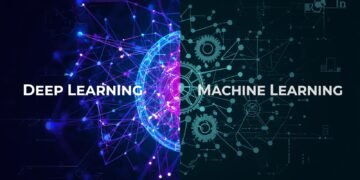
#Deep Learning vs Machine Learning: The Key Differences You Must Know
Unsupervised Learning in Retail, Security, and Bioinformatics
Organizations may use Unsupervised Learning as an analytic tool to analyze large amounts of unlabeled data when labeled data is insufficient to build a model. In Retail, Unsupervised Learning is used to separate customer groups based on demographics such as age and gender, as well as purchase history. Companies can use these customer segments to create targeted marketing campaigns.
Network Security uses Anomaly Detection Models to provide real-time notifications about potential malicious network traffic by monitoring anomalous behavior within the company’s network operations. Using these anomaly detection models allows organizations to protect themselves through proactive measures before experiencing the actual threat or damage.
Bioinformatic Researchers are utilizing Unsupervised Learning to study gene expression and predict protein structure from gene sequence information. The use of Unsupervised Learning in bioinformatics will provide researchers with additional methods for identifying hidden relationships in large-scale biological datasets. Additionally, understanding how disease-causing genes cause disease and developing potential treatment options will become possible.
Real-World Example: Supervised vs Unsupervised
| Example | Banking Industry |
|---|---|
| Supervised Learning: Detects fraudulent transactions using labeled data | |
| Unsupervised Learning: Identifies unusual spending patterns without labels | |
| Result | Improved fraud detection accuracy |
| Early anomaly detection |
Source:
Hybrid Approaches Combining Supervised and Unsupervised Learning
Why Hybrid Learning Approaches Are Effective
The best way to develop an appropriate solution is typically to combine supervised and unsupervised learning. By combining supervised and UL, you can capitalize on the advantages of each model type and produce a much more thorough examination of your data.
Real-World Examples of Hybrid Learning Workflows
For example, an unsupervised method could be used initially to explore your data and determine which factors/variables are important; after that, a supervised method could be used to build on the knowledge gained from the exploratory phase by improving prediction/classification accuracy for these variables.
There is clearly a symbiotic relationship between supervised and unsupervised models in other disciplines, too, such as NLP, wherein unsupervised models are often used to create word embeddings and semantic relationships with respect to words; however, supervised models are subsequently applied to refine this understanding for applications like sentiment analysis and/or language translation.
Hybrid Learning Workflow Table
| Step | Approach | Outcome |
|---|---|---|
| Data Clustering | Unsupervised | Group patterns |
| Label Assignment | Semi-supervised | Add labels |
| Model Training | Supervised | Accurate predictions |
| Optimization | Hybrid | Improved performance |
Conclusion: Choosing the Right Learning Approach
Key Differences and Decision Factors
Supervised Learning (SL) and Unsupervised Learning (UL) represent two distinct approaches within the field of Machine Learning. While each has its own advantages and disadvantages, they can be used in tandem to determine the best possible approach based on an individual’s needs or industry. By understanding the characteristics of SL and UL, practitioners can use these approaches effectively in their work with Machine Learning..
Q&A
Question: What are the primary differences in supervised and Ul methods?
Answer: It utilizes labeled information that produces a known outcome (i.e., class or a continuous value) from input information. Therefore, this method is most useful for accurately predicting an outcome.
Unsupervised Learning does not use labeled data and instead infers patterns or relationships from unlabeled data, such as through clustering or dimensionality reduction. This type of learning helps uncover underlying structures in the data, enabling exploration, segmentation, and pattern identification when no labels are available.
Question: When would you decide on a Supervised Learning model over an Unsupervised Learning model?
Answer: You could use a SL model if you had some labeled examples of your problem and needed high accuracy in your predictions or classification (e.g., diagnostic testing, credit risk assessment, fraud prevention).
If you did not have many or any labeled examples of your problem and wanted to learn about your data, identify segments within your customer base, discover anomalies in your data, or find ways to reduce the number of variables in your data set, then you may want to use an UL model.
You will also want to consider that while training a model with labeled data can take more time and cost more money, it is typically worthwhile because it yields more reliable results. Unlabeled data are plentiful, inexpensive, and easier to collect; evaluating the quality of a model trained on such data can be much more difficult than training a model using labeled data.
Question: What are some typical algorithms to use for supervised and UL, and what types of issues do those algorithms solve?
Answer: Supervised: Algorithms include Linear Regression (continuous outcome prediction, e.g., sales), Logistic Regression (binary classification), Decision Trees (Classification and Regression, rules are easy to interpret), Support Vector Machines/SVMs (Effective in high-dimensional space for both linear and non-linear Classification).
Unsupervised: Algorithms include K-Means (Fast Clustering for Segmentation/ Image Compression), Hierarchical Clustering (Tree of Clusters to determine Multi-Level Relationships), PCA (Dimensionality Reduction for Visualization of High-Dimensional Data), and t-SNE (Dimensionality Reduction for Analysis of High-Dimensional Data).
Question: How do you measure your model’s effectiveness in comparison to supervised vs unsupervised learning?
Answer: For a supervised model, you will be able to apply standard label-based measures of model performance, such as accuracy, precision/recall, and ROC-AUC, along with practices that prevent overfitting, such as using cross-validation to monitor generalization.
You would then need to find other methods to evaluate an unsupervised model based on cluster quality (e.g., using a silhouette score) and/or the model’s ability to reconstruct or embed data in a lower-dimensional space (e.g., via reconstruction error). The quality of your model may also depend on whether you have domain knowledge of your data, as well as on how well it performs toward your end goal.
Question: How can Supervised and UL Be Combined Effectively?
Answer: A typical Hybrid Workflow combines Unsupervised Methods for Data Exploration & Feature Extraction and then SL for Better Predictions with Those Features.
Examples Include Using PCA or Learned Embeddings to Summarize Complex Inputs Before Training a Classifier, Or Clustering to Discover Segments That Inform a Targeted Supervised Model.
This Synergy Is Found Frequently In NLP (Unsupervised Embeddings + Supervised Fine-Tuning) And Other Domains Where Feature Discovery Enhances Supervised Performance.