

















Do you think about how many questions, forms, and what seems to be a never-ending amount of paperwork a person has to fill out to open a new bank account? It may seem like there are many unnecessary steps, but those questions and paperwork are part of a complex set of rules designed to protect people’s money and prevent crime in the financial system. Banks have struggled to keep up with financial compliance for years.
These rules can be thought of as “the official road signs” for the world’s money. This financial compliance system exists to help prevent crimes such as fraud and money laundering. Adhering to these extensive rules will help ensure that the entire banking system remains a safe and reliable place for everyone.
However, there is one major obstacle: it is simply too large an issue to manage in isolation. Over $1 trillion in transactions occur every day around the globe. Finding one or two illegal transactions can be like finding a small needle in a mountain-sized haystack. As a result, there is significant regulatory risk if financial institutions fail to report suspicious transactions.
Banks finally have a revolutionary new tool to help them manage this overwhelming problem. For the first time, Artificial Intelligence (AI) is being used as a “needle finder,” helping financial institutions identify potential issues, comply with regulations, and create a safer environment than ever before.
Summary
AI in RegTech is changing how the banking and financial services industries allocate resources to comply with rules designed to prevent fraud and money laundering and to maintain the integrity of the financial system. The traditional compliance model involved large teams reviewing individual customer files, transactional data (often in spreadsheets), and transaction alerts on an ongoing basis; this model is slow, expensive, difficult to scale, and prone to errors due to human oversight.
RegTech (regulatory technology) has changed the compliance paradigm by using software to serve as a digital “rule book checker,” automatically assessing financial activity against the rules and identifying potential issues. This is where the power of AI comes into play: it enables RegTech to scan vast amounts of data quickly, identify patterns in transactions that may be hidden to humans, and learn and adapt based on what it finds.
As a result, institutions can monitor transactions in real time, detect suspicious behavior more accurately, reduce false positives, and shift from reviewing transactions after they occur to continuously monitoring all activity.
In addition to these benefits, the article presents two examples of the ways that RegTech is being utilized: KYC (Know Your Customer); where AI can be used to quickly validate the identity of a new customer using identification documents (for example, a selfie matched to a photo ID) and AML (Anti-Money Laundering); where AI can be used to identify complex laundering patterns that would likely go unnoticed by human reviewers.
For customers, this represents several positive changes: faster onboarding and approval processes, fewer unnecessary declines due to suspected fraud, and a safer overall environment, as a better compliance tool will help protect the integrity of the financial system and safeguard individuals.
The “Human Search Engine”: Why the Old Way of Compliance Is Breaking
To understand why new technology is so important, let’s look at how banks have historically handled their massive regulatory documents. Compliance is the process by which banks adhere to all applicable financial regulations. Compliance can be thought of as a bank acting as a “detective,” continually reviewing each transaction and customer record to ensure no financial regulations are violated. For decades, compliance was not amenable to automation; it relied on human compliance officers.
#Advanced & Fair AI Credit Scoring – How It Works
Banks met this challenge with large teams of compliance officers who spent most of their time manually reviewing spreadsheets, cross-checking customer information, and individually reviewing alerts. While this “human search engine” was very expensive and slow, it was also susceptible to simple human mistakes. A compliance officer working long hours may overlook a suspicious entry buried in tens of thousands of rows of data. While this would likely not allow fraud to go undetected for long, it does create a risk for both the bank and its customers.
Today, this process has reached a dead end. The number of financial regulations is increasing daily, and the number of electronic financial transactions is exploding. As such, it is unrealistic to expect compliance personnel to maintain their current pace, which is akin to expecting someone to count every vehicle on every road in the United States simultaneously. Because this process is unsustainable, it poses a risk to the bank and its customers. Therefore, it was necessary to implement a smarter, automated compliance program, and not a luxury.
What is RegTech? Meet Your Bank’s New ‘Digital Rulebook Checker’
It’s no wonder the financial industry turned to technology to find a way out of its regulatory nightmare. The term for this technology is simply “RegTech”, which is short for Regulatory Technology. In essence, RegTech is a technology designed to help banks and financial institutions navigate the overwhelming number of rules they must comply with.
RegTech is most easily described as a high-tech version of the typical spelling/grammar check feature found in word processing programs, but instead of identifying misspelled words or grammatical errors, it identifies discrepancies in a bank’s financial activity (i.e., transactions and new accounts) against the existing regulatory rulebook. It was developed to identify regulatory infractions immediately.
The benefits of using this type of software include eliminating the time-consuming manual search for regulatory infractions and having a “digital compliance officer” working in the background to ensure the institution remains compliant. How can such technology be so effective at detecting issues that may go unnoticed by a human? Artificial Intelligence is often the driving force behind many forms of RegTech.
Regulatory Technology: Regulatory Technology simplifies complex financial compliance processes

Regulatory technology enables financial institutions to convert the complexity of regulatory compliance into simple, repetitive digital workflows. Regulatory technology solutions replace reliance on manually entered information in a spreadsheet format by providing a single location where all institutional policies are stored and mapped to related business activities. The resulting workflow provides a standardized approach for collecting required evidentiary documentation when combined with RegTech AI for Financial Compliance.
An additional benefit of regulatory technology is the automation of routine, high-volume compliance-related tasks, such as refreshing customer due diligence, triaging suspicious transactions, and preparing regulatory reports. Regulatory technology solutions provide an integrated approach to gathering relevant data from core banking systems, CRM applications, and other external databases, minimizing duplicative efforts and enhancing data quality at its point of origin. In addition to automating the process of alert prioritization and reducing the number of false positives, RegTech AI for Financial Compliance also identifies the context for each alert (e.g., customer history, peer patterns, and risk factors) to enable investigators to make more timely and informed decisions rather than wasting their time identifying and eliminating “noise”.
#Transformative AI Technology for U.S. Digital FGovernance in to Smart
Regulatory technology supports several elements of the change management process that are typically among the most difficult aspects of compliance (such as managing change in response to new regulations, guidelines, and enforcement trends). The tracking, assignment, and translation of these changes into updated controls with defined responsibilities and timelines can be managed through regulatory technology.
The use of Artificial Intelligence (AI) to support regulatory technology for financial compliance will allow for the scanning of large volumes of regulatory text, summarizing the impact of the regulations on the organization, identifying potential gaps between new regulations and current policies and procedures and provide the organization with the tools needed to identify and implement responses to regulatory developments more quickly and efficiently, while maintaining their governance processes.
Another key advantage of Regulatory technology is its support for audit readiness. Systems that are properly designed provide a log of all monitoring, review, approval, and remedial actions taken over a specific period, making it easier to demonstrate compliance during audits or examinations. Additionally, the use of RegTech AI for Financial Compliance can enhance the system’s audit readiness by providing documentation explaining the rationale for generating an alert, the data used to determine the risk score, and how the case was ultimately resolved, thereby improving transparency and accountability.
In summary, Regulatory technology provides a means of implementing compliance through measurable, trackable and scalable methods. When combined with RegTech AI for Financial Compliance, it enables real-time risk awareness, improves operational efficiency, and enhances assurance over the firm’s business activities, allowing firms to expand while meeting the regulatory requirements governing their operations.
How AI Gives RegTech Its Superpowers
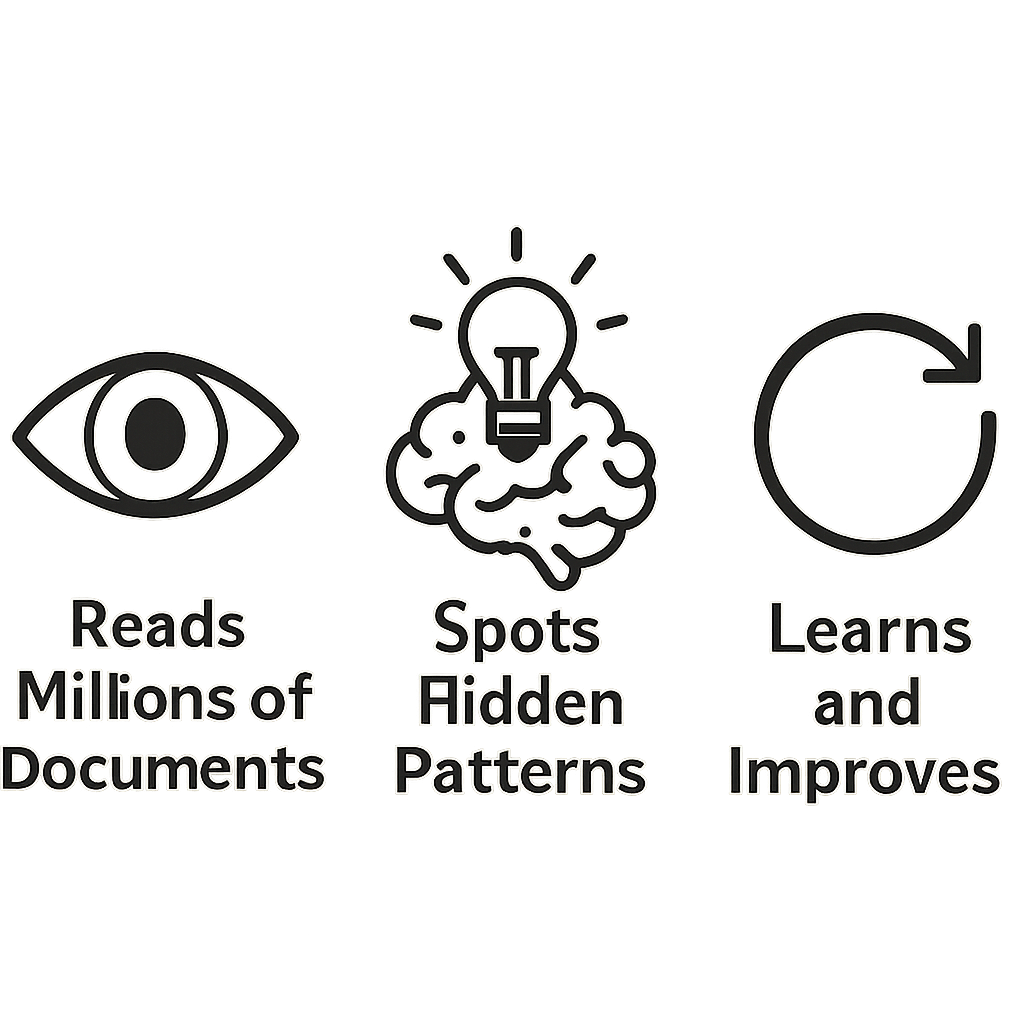
The Financial Sector has two major components to support regulatory compliance: RegTech, which acts as a digital “rule book” checker, and Artificial Intelligence (AI), which serves as the “super intelligent” mind behind RegTech. In essence, AI will be the equivalent of a financial analyst who can process millions of pages in a single second, never get tired, and never forget even the smallest detail. Compared with a team of experienced professionals taking weeks to review transactions, AI can complete the same task in seconds for a large bank. Speed is the first benefit of using AI for RegTech.
In addition to increasing speed, AI provides significant power to detect hidden relationships in data. AI can serve as a “detective,” connecting what appear to be unrelated points of interest within a dataset. For instance, AI can identify a pattern in which a group of small, unrelated transactions from different accounts ultimately end at a single address – a classic example of money laundering and/or terrorist financing. Experienced professionals may overlook some of these smaller schemes; however, AI algorithms have been developed to identify them in large datasets.
The most compelling aspect of this approach is how much smarter the system will become over time. Machine Learning is a process in which a system learns from the financial data (and patterns) it has been exposed to, just as we have learned throughout our lives. With each new piece of financial information the AI analyzes, it will become more proficient at determining whether a transaction is legitimate or suspicious. Therefore, the AI should generate fewer false alerts, thereby reducing the number of annoying messages about potential fraudulent activity you didn’t participate in.
With its rapid assessment, intelligent pattern recognition, and continuous self-improvement through machine learning, AI enables RegTech to manage tasks that are too large, too fast, and too complex for humans to handle alone. The collective benefits of these capabilities are particularly important when addressing two of the largest problems facing the global financial community: eliminating criminal money laundering and verifying the identities of a bank’s customers.
RegTech AI for Financial Compliance: RegTech AI transforms financial compliance with intelligent automation and real-time risk monitoring

RegTech AI for Financial Compliance is transforming how regulated entities, such as financial institutions and fintech companies, meet their obligations in a rapidly changing environment by enabling them to move faster with fewer errors. Rather than being forced to rely on manual transaction reviews and sporadic audits, automated RegTech systems can continuously review a company’s transaction activity, customer profiles, customer communications, as well as its compliance policies and procedures for red flags indicative of non-compliance, allowing compliance professionals to focus on high-value judgments rather than routine monitoring and documentation.
In essence, RegTech AI for Financial Compliance uses intelligent automation to monitor risks in real-time, including the use of machine learning-based models to detect anomalies in a firm’s data that could represent red flags indicative of money laundering, insider threat, sanctions exposure, or fraudulent activities (and often before such events are detected through the use of rules-based systems). Additionally, RegTech AI for Financial Compliance uses natural language processing (NLP) to enable organizations to automatically monitor regulatory changes and update internal policies to reflect them, reducing the time and resources required to develop new policies in response to evolving regulations.
A key advantage of using RegTech AI for Financial Compliance is the ability to maintain consistent compliance throughout all regions, product lines, and customer segments, thus eliminating the risk of inconsistent application of compliance requirements. The automated workflow will provide the same level of compliance oversight across all regions, product lines, and customer segments. RegTech AI for Financial Compliance can prioritize alerts for compliance personnel based on a risk score assigned to each alert, providing investigators with more information about the alert’s nature and suggesting appropriate actions. As RegTech AI for Financial Compliance continues to evolve, it will become increasingly important to gather feedback from compliance analysts on the model’s performance to reduce false positives and minimize “alert fatigue”.
In addition to improving audit-readiness through RegTech AI for Financial Compliance, the ability to track activities with a date and time stamp enables comprehensive activity-based documentation, including who monitored, who flagged potential issues, who reviewed the issue, and ultimately how each issue was resolved. Using RegTech AI for Financial Compliance will accelerate and improve compliance reporting, reducing disruption during auditors’ or regulators’ reviews.
RegTech AI for Financial Compliance offers many advantages for financial institutions, supporting collaboration among compliance, risk, legal, and operations functions. Dashboards are shared, and automated workflows keep all parties on the same page for tracking compliance cases. Controls testing can be scheduled and tracked by the platform. While these technologies can create efficiencies and build trust, they should be implemented responsibly, with due consideration for data governance, model validation, privacy, and human review of outputs.
Overall, RegTech AI for Financial Compliance enables financial institutions to transition from reactive compliance to proactive risk management, thereby facilitating earlier issue identification, making more informed decisions, and enabling safer expansion into new markets within an increasingly demanding regulatory environment.
AI in RegTech: AI in RegTech enables smarter, faster regulatory monitoring

AI in RegTech is transforming how financial institutions comply with a growing number of regulations and address the increased fraud risks associated with faster payments. AI embedded in RegTech platforms enables compliance professionals to continuously monitor activity rather than manually reviewing and sampling transactions quarterly; therefore, RegTech AI for Financial Compliance converts raw data (i.e., transactions, customer profiles, communications, and external lists) into timely signals that identify potential risks.
As part of daily operations, AI in RegTech enhances transaction monitoring and AML investigations. The models will continually learn typical customer behaviors and highlight customers who exhibit behaviors that would be missed by traditional rule-based systems. Additionally, Risk Scoring enables investigators to concentrate their efforts on the most impactful alerts. In addition, natural language processing within RegTech AI enables the extraction of entities from Adverse Media, the interpretation of sanctions updates, and more accurate name matching, thereby strengthening RegTech AI for Financial Compliance and reducing false-positive alerts. When coupled with an automated Case Management system, RegTech AI for Financial Compliance can reduce investigative cycle times and document each decision made throughout the process for auditing purposes.
Lastly, AI in RegTech has transformed the speed at which regulatory change is managed. Systems can scan new guidelines, map them to existing controls, and provide proposed updates to policy and testing plans. Therefore, the ability of RegTech AI for Financial Compliance to proactively identify and assign ownership of policy gaps, and to track remediation progress, enables regulatory change to be managed more efficiently than ever before. AI in RegTech can also simulate the effects of new thresholds or reporting requirements on historical data to enable better planning.
AI supporting Regulatory Technology (RegTech) must be built with robust governance. This will help establish the required data lineage, model validation, bias testing, and escalation pathways to ensure that all automated monitoring is conducted within the bounds of the law and ethics. In addition to continuing to provide the required human oversight, reviewers using RegTech AI for Financial Compliance will benefit from explanations, comparable case histories, and standard workflows. Ultimately, it is expected that through use of the system, feedback loops will continuously refine the models; remove “noise” from their operation; and promote consistency in both product and region.
To successfully implement RegTech AI for Financial Compliance, firms will need clean data, robust integration with existing systems, and clarity on how technology, compliance, and IT are accountable to one another. As such, firms should monitor for model drift, document the assumptions used, and run regular backtests to ensure the performance of AI-based systems does not change over time as products and methods of committing crimes evolve. Additionally, strong privacy controls, access logs, and retention policies will help ensure that sensitive customer information is appropriately protected. When completed correctly, RegTech AI for Financial Compliance will be a scalable layer of reliability that provides consistent decision-making globally across various regulatory regimes.
The ultimate goal of implementing AI in RegTech is to enable smarter, faster regulatory monitoring by combining continuous detection, better prioritization, and clearer evidence trails. By leveraging RegTech AI for Financial Compliance, organizations can reduce operational burdens, enhance risk visibility, improve audit readiness, and strengthen customer protection.
Compliance Automation: Compliance automation reduces manual effort and human error

Compliance Automation enables banks and other financial institutions to automate routine compliance-related activities (e.g., collecting documentation, checking compliance, approving decisions, storing evidence) in a structured, trackable format; thereby eliminating the need for manual efforts and minimizing human errors inherent in the process of using e-mail chains and/or spreadsheets to accomplish such activities.
When combined with RegTech AI for Financial Compliance, these structured workflows use data-driven signals to determine priority levels and continuously monitor activity rather than periodically.
One key advantage of Compliance Automation is the consistency it provides, as an automated process will always follow the same set of rules across all customers, products, and geographic locations; thus, reducing the potential for inconsistencies or “gaps” that may arise due to differences in the treatment of customers/products/regions.
For example, Compliance Automation can automatically trigger KYC refreshes based on customer risk profiles, ensure all required fields are completed prior to approval, and route exceptions to the appropriate reviewer. RegTech AI for Financial Compliance builds on this by providing additional capabilities, including risk scoring and anomaly detection, enabling review teams to focus on cases most likely to require attention.
RegTech AI for Financial Compliance can support Compliance Automation by enhancing transaction monitoring and investigation activities.
Automating alert intake, case creation, and evidence collection reduces time spent on administrative alert management. In addition, RegTech AI for Financial Compliance can provide context for alerts, such as the customer’s historical behavior, similar customer behavior, common typology indicators, and other relevant information, enabling investigators to make quicker decisions and provide more detail on their decision-making rationale. Providing feedback to the system over time can also improve Compliance Automation efficiency by reducing false positives that can cause alert fatigue, thereby lowering the overall cost of Compliance Automation management.
Another key advantage of compliance automation is audit preparedness. The automated logs record “who,” “what,” “when,” and “why” actions were performed, providing a paper trail of evidence for use during internal audits and regulatory examinations. Compliance automation will also assist in scheduling control tests, tracking remedial action, and generating standard reports. RegTech AI for financial compliance adds transparency (explainability) and traceability to model-driven decisions, helping organizations demonstrate that their monitoring practices are fair, effective, and governed.
For responsible compliance automation, firms require solid data governance practices, proper access controls, and accountability. The automated workflow needs to include human review for high-risk decision-making and define policies for escalation and exception handling. Additionally, RegTech AI for financial compliance must be continuously validated, monitored for drift, and documented to ensure changes to the system are controlled and auditable.
Overall, compliance automation reduces operational burdens, improves accuracy, and accelerates processes. RegTech AI for financial compliance enables continuous oversight, better prioritization, and improved reporting to support safer growth in an increasingly demanding regulatory environment.
AI Regulatory Tools: AI regulatory tools streamline complex reporting requirements

AI Regulatory Tools assist the financial services industry by improving how they prepare complex reports to meet regulatory obligations by automating data collection, validation, and submission. Unlike traditional reporting methods, where data was manually extracted from various systems and then reconciled into a report format before submission, AI Regulatory Tools automate the extraction of required information directly from an organization’s existing systems and provide consistent formats and data checks. In conjunction with RegTech AI for Financial Compliance, report preparation is significantly improved through increased speed and accuracy, as well as the documentation of compliance activities that aid audit and examination processes.
Data quality is a major challenge in preparing regulatory reports. Issues such as missing identifiers, inconsistencies in customer data, and duplicate transactions can significantly delay error resolution in the final report. AI Regulatory Tools improve this area of challenge by identifying anomalies and gaps in data being prepared for submission and providing recommendations for correction before finalizing a report. RegTech AI for Financial Compliance provides additional data-quality controls by using machine-learning algorithms to monitor and flag anomalous data points that may indicate misclassification, incomplete onboarding, or emerging risks.
In addition to addressing data quality issues, AI Regulatory Tools also minimize the operational burdens associated with regulatory changes. Changes to regulations occur frequently across jurisdictions, and many require minimal updates to reporting templates and business logic; however, the time and resources required to update templates and logic can be significant. AI Regulatory Tools enable organizations to map regulatory requirements to specific data sources, track rule changes, and update reporting workflows based on specific versions of those requirements. RegTech AI for Financial Compliance uses natural language processing (NLP) to review and analyze new regulatory guidelines, summarize changes to prior regulations, and identify which policies and reporting requirements are affected by the regulatory changes.
Beyond preparing final filing submissions, AI Regulatory Tools help build an end-to-end audit trail. The automated logs will record the data source, the person who authorized the data modifications, and the validation criteria used for the regulatory submission. These logs are important for maintaining a defensible position when reporting to regulators and for minimizing interactions with regulators to resolve submission issues.
RegTech AI for Financial Compliance also includes risk-based prioritization to ensure that the most impactful discrepancies are identified first and that all escalations are handled consistently. To build confidence, AI Regulatory Tools need to be properly governed. To accomplish this, firms should document the provenance of their data, validate their models, implement access controls for tool access, and test tool outputs against known inputs. However, human oversight is still required for high-risk decisions. RegTech AI for Financial Compliance can support the reviewer with explainable ratings, comparative historical examples of similar situations, and structured prompts to assist in decision-making.
In addition, firms using RegTech AI for Financial Compliance should regularly monitor for “model drift” and periodically review the automation rules developed to ensure the tools’ performance remains stable over time.
Ultimately, AI Regulatory Tools simplify the complexities of meeting regulatory requirements by reducing manual effort, improving the accuracy of regulatory submissions, and shortening regulatory compliance cycles. When combined with RegTech AI for Financial Compliance, AI Regulatory Tools enable continuous readiness – so organizations can respond rapidly to new or changing regulatory requirements; report accurately and confidently to regulators; and maintain greater levels of assurance related to the control environment as regulatory requirements continue to grow and evolve.
Risk Management AI: Risk Management AI predicts threats before they impact operations

Risk Management AI enables financial services organizations to identify potential disruptions before they occur by detecting risks using data from all sources (voluminous and rapidly changing) and signaling impending risks.
Instead of responding to disruptions as they occur, Risk Management AI anticipates where risks will develop by analyzing transactions, customer behavior, operational events, and other external indicators.
Together, when used with RegTech AI for Financial Compliance, Risk Management AI delivers the timely decision-making capabilities needed to support effective controls and regulatory compliance.
In practice, Risk Management AI enhances financial crime prevention by identifying patterns that traditional rule-based systems cannot detect.
Models can quickly identify unusual increases in transaction volume, irregular payment paths, or sudden changes in customer behaviors indicative of fraudulent activities, money laundering or sanctions violations.
Risk Management AI can also rank alerts by likelihood and urgency, enabling investigators to address their highest-priority threats first.
This prioritization benefits RegTech AI for Financial Compliance by minimizing false positives, accelerating investigation timelines, and directing resources to the most significant threats.
Risk Management AI can also help maintain operational resilience.
By tracking outages of key systems, delays in processing, complaints from customers and the performance of third-party vendors, Risk Management AI can provide the ability to predict the occurrence of service disruptions and recommend proactive measures.
For instance, Risk Management AI may provide early warnings of instability within a vendor or a growing backlog that will result in a failure to meet regulatory deadlines.
These early warnings enable RegTech AI for Financial Compliance to remain continuous, as controls and reports rely on reliable, uninterrupted processes and data.
Another value of forward-looking risk assessment is that Risk Management AI can conduct scenario analyses using historical and current data to help teams estimate potential losses from market volatility, liquidity crises, or new product launches. When Risk Forecasting is linked to policy and control testing, RegTech AI for Financial Compliance can also act proactively by increasing controls, adjusting thresholds, and enhancing monitoring before a risk escalates.
For Risk Management AI to have trustworthiness, governance will be important. The models will need to be validated, the models monitored for “drift” (i.e., the model is no longer performing as originally intended), and reviewed for bias and explainability. Data lineage, access controls, and audit logs must be available to support the results. RegTech AI for Financial Compliance will benefit when humans retain responsibility for high-risk decisions and Risk Management AI continues to provide transparent scores, drivers, and recommendations on next steps.
Ultimately, Risk Management AI identifies potential threats before they impact an organization’s operations through continuous monitoring, smarter prioritization, and predictive analytics. In conjunction with RegTech AI for Financial Compliance, Risk Management AI enables organizations to reduce surprises, enhance oversight, and protect their customers and the marketplace more effectively and sooner.
Intelligent Compliance: Intelligent compliance adapts to evolving financial regulations

Intelligent Compliance enables financial services firms to remain compliant in an ever-changing regulatory environment, using automation, data analytics, and defined governance. Rather than checking boxes periodically to maintain compliance, Intelligent Compliance embeds controls into day-to-day operations and updates them as regulations change. Organizations that use RegTech AI for Financial Compliance can continuously monitor, respond more quickly to regulatory changes, and provide stronger evidence for auditors and regulators.
One of the primary characteristics of Intelligent Compliance is adaptability. AML, Sanctions, Consumer Protection, Privacy, and Cybersecurity regulations change frequently and can vary by jurisdiction. The Intelligent Compliance platform tracks obligations for its customers, maps them to their internal policies and control frameworks, and identifies where those frameworks may no longer meet those obligations. Using Natural Language Processing (NLP) to scan regulatory updates for its customers, RegTech AI for Financial Compliance enhances the Intelligent Compliance Platform’s ability to identify regulatory changes, summarize their impact, and identify potential regulatory gaps between new guidance and the customer’s current business processes.
The second benefit of utilizing Intelligent Compliance is improved Risk Detection capabilities. Traditionally, Risk Monitoring has been limited to static rules, resulting in a high volume of alerts. Using machine learning models to score risk, detect anomalous activity, and provide contextual information such as customer behavior changes, peer comparisons, and known typologies, RegTech AI for Financial Compliance helps customers identify true risk through meaningful review rather than noise generated by static rules. Therefore, RegTech AI for Financial Compliance provides customers with greater efficiency and consistency in their Risk Monitoring activities, thereby reducing human error.
In addition to the previously mentioned benefits of Intelligent Compliance, another key advantage is greater confidence in the effectiveness of compliance controls.
Automated workflows using RegTech AI for Financial Compliance can implement approval processes, documentation requirements, and separation of duties, among others, while dashboards can provide near real-time reporting on the performance of compliance controls.
RegTech AI for Financial Compliance can also provide predictive insights, enabling teams to identify emerging trends that may require tighter compliance limits, changes to regulatory policies, or additional employee training.
When an incident occurs, Intelligent Compliance provides response tracking, clear escalation guidance, and measurable proof that remedial actions have been completed.
To establish trust in the implementation of Intelligent Compliance, governance must be embedded throughout the system. To support this, firms need to have implemented data quality controls, access management, model validation, and clearly defined decision-making accountability.
RegTech AI for Financial Compliance should also be continually monitored to ensure that it does not “drift”, tested to ensure that it is unbiased, and documented so that stakeholders will have the ability to explain the basis for the outcomes to the appropriate regulatory bodies. However, human oversight is still required to support higher-impact judgment-making tasks. Intelligent Compliance tools should enable these judgments to be made faster, more informed, and consistently across the organization.
Ultimately, Intelligent Compliance enables organizations to adapt to changing regulatory environments through continuous monitoring, rapid change management, and auditable workflows. Organizations can use RegTech AI for Financial Compliance to shift from reactive to proactive compliance management, reducing risk while supporting long-term growth.
Spotting the Bad Guys: How RegTech AI Stops Money Laundering (AML) and Verifies Identity (KYC)
There are many ways that an AI-based RegTech protects the financial system. Most importantly, it concerns two legal obligations that banks must fulfill. As much as you probably don’t know what they’re called, these tasks go on in the background of the banking industry to make sure the banking system works safely for everyone. They can be considered the “high-tech” equivalent of airport or mall security checkpoints.
Two key ideas that are central to this include the use of two common acronyms:
• KYC (Know Your Customer): The goal of KYC is to confirm the customer’s identity so the bank can prevent fraudulent transactions and make sure it is not inadvertently conducting business with someone who has been convicted of a crime.
• AML (Anti-Money Laundering): This refers to identifying potential money laundering through the analysis of transactions. In other words, an AML is essentially a security officer who monitors hundreds of cameras and identifies behavior that deviates from the typical norms of each transaction.
When you take a selfie online to verify your driver’s license when opening a bank account, that is a regtech solution for KYC (Know Your Customer) at work. The system does not require manual review of the two photos; instead, it uses artificial intelligence to compare them instantly and verify your identity as accurately as possible. This allows for quicker verification for you and makes it harder for an imposter to fake your identity.
AI is a powerful tool for spotting patterns and is critical to Anti-Money Laundering (AML). The AI can monitor millions of transactions and flag many transactional schemes that are difficult for humans to spot. For instance, if someone were to use AI to launder money through numerous e-transfers from several accounts that appear completely random yet all land in a single final account, the AI would recognize this as a pattern and flag it as suspicious activity requiring further investigation.
Through automated, enhanced KYC and AML processes, AI not only helps banks meet regulatory requirements but also strengthens their defenses against financial crime. This new way of doing business is light-years ahead of how things were done before.
Old Way vs. New Way: Why AI Compliance is a Game-Changer
The idea of AI as a significant leap forward is easier to understand when you consider how things were done before. Picture a bunch of employees in compliance departments all over town going through paperwork by hand to confirm people’s identities. Now imagine groups of people working day and night to review just a tiny percentage of a bank’s transactions for suspicious activity. That is what used to happen, and those processes were both very slow and very expensive. And as far as keeping up with the sheer volume of documents and information coming into banks, that was simply impossible — like drinking out of a fire hose.
With AI-powered RegTech systems, banks can automate compliance monitoring and significantly reshape the regulatory landscape. One AI-powered system can complete the work of hundreds or thousands of manual compliance monitors at incredible speed and accuracy. There is no comparison between traditional compliance procedures and new AI-based compliance procedures in terms of:
- Speed: It may have taken analysts days to review a single document or transaction. With AI, a document or transaction can be reviewed in seconds.
- Accuracy: Humans will always tire and make errors. An AI will never tire or flag a potential issue based on its own biases.
- Scale: A single analyst will never be able to review more than a small sampling of data. However, an AI can review 100% of a bank’s transactions.
- Intelligence: The old way of relying on catching previously identified forms of fraud, AI can identify new, previously unknown forms of fraud.
A major point of this discussion is that AI not only does the same job much quicker, but also does it better. The advantages of AI-powered RegTech systems extend beyond simple efficiency. Since AI can see everything — every single transaction, it can find connections in data that would be unseen by an analyst who is only looking at a minuscule amount of data. Therefore, AI provides banks with a proactive tool to stay one step ahead of cybercriminals, rather than reacting to damage after it occurs.
What Does This Mean for You and Your Money?
How will this all “high-tech” regulatory compliance affect how you bank every day? The large-scale benefits of the use of artificial intelligence (AI) powered Regulatory Technology (RegTech) platforms by banks are equally beneficial to you as a customer. The AI-based technology operates quietly in the background, providing a faster, safer, and more improved financial experience for you.
The increased efficiency from AI will lead to better service from banks. Think about the long lines, long wait times, and the many hours of paperwork associated with opening a new account or obtaining approval for a loan.
With the ability of AI to validate identification documents and perform credit checks on you within minutes rather than days, the process of opening a new account or approving a loan is being greatly reduced. As a result, you have less time spent waiting and more time spent using your new account or accessing your loan funds.
In addition to speed, AI provides greater intelligence and sophistication in securing your accounts. Have you ever had your credit card declined abroad because a legitimate purchase was incorrectly flagged as fraudulent by a fraud detection system?
Since AI can learn and understand your individualized spending habits, it can more accurately determine whether a suspicious transaction is fraud or a legitimate purchase made during a recent vacation. Consequently, there are fewer instances of the frustrating false alarms generated by a poorly designed fraud detection system, resulting in a more efficient and seamless user experience.
Most importantly, the use of AI-based technologies is creating a safer financial environment for all customers and banks alike. Since banks are able to more successfully prevent money laundering and other types of illicit financing activities, the overall stability of the banking system is protected, along with the safety and security of your money. Therefore, the safest aspect of this technology is the protection it provides for your money.
From Confusing Rules to Intelligent Protection: Your RegTech Recap
Banking regulations were once as complex as a tangled web. We see the value of having a human “search engine” to help us navigate them. But we’ve learned that this can be a frustratingly slow way to make sure our financial system is as secure as possible.
This is the answer: Revolutionary & Trusted RegTech. This is powered by a powerful “super assistant” using Artificial Intelligence (AI). RegTech AI for Financial Compliance uses AI to quickly read, learn, and recognize risks. This transforms what used to be a manual challenge into an automated defense for your financial system.
The next time you speed through a digital bank’s application process, you will know that there is not just magic at work. The future of technology in financial compliance is working behind the scenes to protect your money and make your financial life easier to manage. You are no longer simply a consumer of banking services; you are now aware of the technologies that underpin them.
Conclusion
RegTech AI for Financial Compliance represents a turning point for financial institutions in protecting customer interests while meeting regulatory requirements. The expansion of rules and rise in digital transactional activity are making manual compliance methods increasingly unworkable due to rising compliance costs, increased errors in compliance processes, and the lack of timeliness in these processes. RegTech is providing the foundational element required to convert the “regulatory rule book” into practical, automated compliance checks embedded in all aspects of a bank’s daily operations.
The true revolution of today’s RegTech is the integration of artificial intelligence (AI) into its development. AI’s ability to analyze large volumes of data, identify subtle patterns, and use machine learning to continually improve analysis enables a level of compliance sophistication beyond simply checking boxes. This is particularly important when considering the need to identify risks related to Know Your Customer (KYC), Anti-Money Laundering (AML), and other similar regulatory requirements, where the speed and accuracy of identifying potential issues may be the difference between stopping fraudulent or illicit activity before it causes harm.
Institutionally, RegTech AI allows for continuous oversight, fewer false positives, and stronger audit trails. From a customer perspective, RegTech AI enables faster account onboarding, smoother transactions, and stronger protection for customers’ accounts and identities. Ultimately, RegTech AI does not eliminate the need for human judgment — it enhances it by providing compliance professionals with clearer indicators and enabling them to focus their efforts on the cases with the greatest impact on their organization. As adoption grows, RegTech AI will continue to transform financial compliance into a more proactive, trusted, and resilient process.
FAQs
1) What is RegTech?
RegTech, also known as Regulatory Technology, is a technology used by financial organizations to meet regulatory requirements through automated checks and monitoring of activities, and to create documentation demonstrating compliance.
2) What does “RegTech AI for Financial Compliance” mean?
Using Artificial Intelligence (AI), RegTech is the use of AI within those tools to help companies recognize potential risk factors, monitor transactional activity, and support compliance functions such as Know Your Customer (KYC) and Anti-Money Laundering (AML).
3) How does AI improve AML (Anti-Money Laundering) monitoring?
Unlike the manual review process, AI can quickly scan thousands of transactions in real time, identify unusual patterns across multiple accounts, and determine notification priorities—thereby enabling teams to discover suspicious activity that rule-based systems and/or manual reviews might miss.
4) How does RegTech AI help with KYC (Know Your Customer)?
Additionally, AI can rapidly verify an individual’s identity by comparing ID documents, photos of the individual, and other customer information, alerting to potential impersonation or document issues, and accelerating onboarding while reducing the risk of fraud.
5) Will RegTech AI reduce false fraud alerts for customers?
Generally, yes. As AI identifies normal behaviors, it will be better able to distinguish legitimate activity from fraud, resulting in fewer unnecessary declines or “Is this you?” verification requests.