



























Artificial Intelligence (AI) is reshaping digital governance in the United States. It offers new ways to enhance efficiency and decision-making.
AI technology is not just a trend. It’s a transformative force in public sector operations. The government is embracing AI technology for U.S. Digital Governance to improve services and engage citizens.
Ethical AI in government is crucial. It ensures transparency, accountability, and fairness in decision-making processes. This is vital for public trust.
AI can streamline administrative tasks. This reduces costs and improves service delivery. It also enhances data analysis for informed policy decisions.
Digital governance in the United States is evolving. AI technologies are at the forefront of this transformation. They offer numerous benefits and opportunities.
Smart government technology can improve infrastructure management. It also aids in urban planning. AI’s potential in digital governance is vast.
However, challenges exist. Data security, ethical considerations, and the digital divide are significant hurdles. Addressing these is essential for successful AI integration.
AI policy and regulation are necessary. They address privacy concerns and prevent misuse. This ensures AI’s ethical use in governance.
Public sector artificial intelligence can personalize citizen interactions. This improves satisfaction and engagement. It also supports crisis management and emergency response.
Collaboration between public and private sectors is vital. It ensures successful AI implementation. Training government employees is also necessary for adaptation.
The future of digital governance in the U.S. will be shaped by AI advancements. This article explores AI’s transformative impact on U.S. digital governance.
The Evolution of Digital Governance in the United States
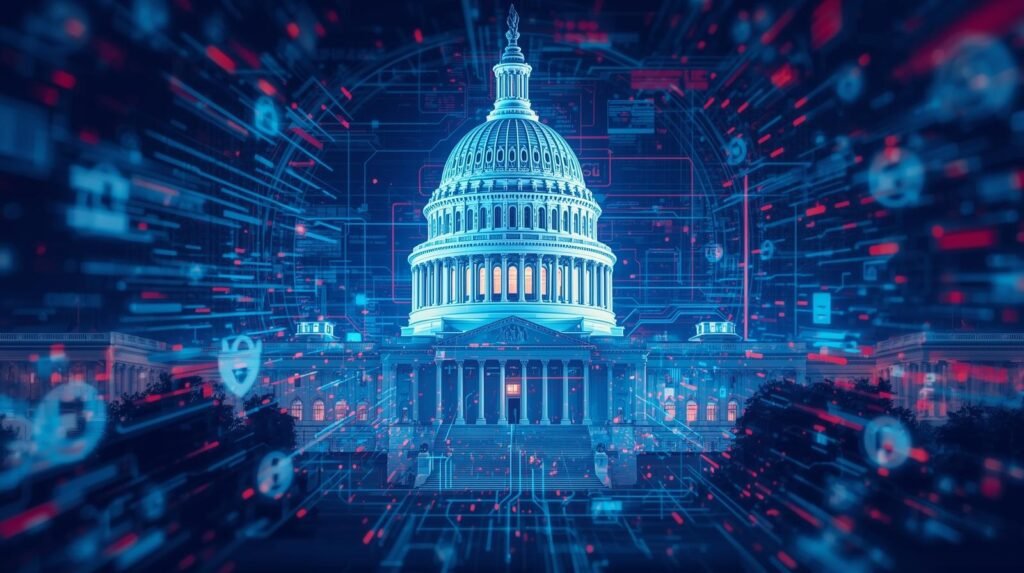
Digital governance in the United States has undergone significant changes. These changes reflect advancements in technology and societal needs.
The journey began with simple digital tools. These tools aimed at improving government transparency. Over time, technology has become more sophisticated.
Initial digital governance efforts focused on basic services. Simple online portals provided information and facilitated communication. This was just the beginning.
As technology advanced, so did governance structures. Governments adopted e-governance platforms. These platforms streamlined operations and improved accessibility.
AI technology for U.S. Digital Governance has marked a new era. It enables more efficient, data-driven decision-making. This represents a significant shift from previous approaches.
AI technologies offer numerous possibilities for the public sector. Some key areas impacted include:
Efficient resource management
Data-driven policy-making
Enhanced service delivery
In recent years, AI’s role in governance has grown. AI supports environmental sustainability and crisis management. The integration of AI is transforming public sector operations.
AI technology for U.S. digital governance offers innovative solutions. These solutions address complex societal challenges. This has led to more responsive and adaptable government services.
Moreover, smart technologies enhance infrastructure management. They facilitate urban planning. Such applications improve the quality of life for citizens.
Digital governance in the United States continues to evolve. The integration of AI technologies is key to this transformation. This evolution promises a more efficient and effective public sector.
The pace of digital governance evolution is accelerating. AI offers substantial opportunities for public-sector innovation. Governments must adapt to these changes to meet citizens’ needs.
Looking forward, AI will play an increasingly critical role. The future of governance depends on embracing technological advancements. This ensures continued improvement in public service delivery.
Foundations of AI Technology for U.S. Digital Governance

The incorporation of AI technology in government is rooted in the need for enhanced efficiency. Data-driven decision-making is now at the core of public sector operations. This shift has been gradual but transformative.
Artificial intelligence enables governments to process and analyze vast amounts of data. This capability is crucial for informed policy development and implementation. Consequently, AI lays the groundwork for a smarter government.
Foundational elements of AI technology for U.S. Digital Governance
in government include several essential components. These components ensure the successful integration of AI in governance processes.
- Data Infrastructure: Strong data systems are necessary to support AI.
- Algorithm Development: Creating intelligent algorithms is key to analysis.
- Human-Computer Interaction: Seamless interaction enhances the usability of AI tools.
- Regulatory Frameworks: Policies ensure the ethical deployment of AI.
A robust data infrastructure underpins AI systems. Governments collect data from various sources. This data must be stored securely and efficiently to enable AI processing.
Algorithm development focuses on crafting intelligent solutions. These algorithms perform complex analyses. Such solutions drive decisions in real-time.
Human-computer interaction is another cornerstone. AI systems must interact intuitively with users. Effective interfaces increase user adoption and satisfaction.
Establishing comprehensive regulatory frameworks ensures the ethical use of AI. Regulations govern the deployment of AI in sensitive government operations. They protect data privacy and prevent misuse.
The synergy of these foundational elements propels AI’s success in government. Each aspect plays a unique role in the broader AI ecosystem. Together, they create a cohesive infrastructure for smart governance.
These foundations are essential for AI technology for U.S. Digital Governance role in government. As AI continues to evolve, refining these elements remains critical. Adapting to technological advancements will enhance the effectiveness of the public sector.
Key Applications of AI in Government Services
AI technology has become indispensable in enhancing government services. Through innovative applications, AI is reshaping how public services are delivered. This transformation is creating more responsive and efficient governance.
One major application of AI in government is in data analysis and decision support. AI algorithms process vast datasets, extracting actionable insights. These insights help government agencies make better, evidence-based decisions.
Another significant application is in public safety. AI supports crime prevention through predictive policing. By analyzing patterns, AI helps allocate resources efficiently, enhancing community safety.
AI technology also plays a crucial role in improving transportation systems. Smart traffic management systems optimize traffic flow and reduce congestion. With AI, governments can plan urban transportation strategies more effectively.
Healthcare Improvements
Predictive analysis for disease outbreak management
Personalized treatment plans through data analytics
Automation in administrative healthcare tasks
Similarly, AI facilitates more efficient public administration. Automation of administrative tasks reduces costs and minimizes human error. Digital assistants streamline citizen interactions, improving service delivery and satisfaction.
In the education sector, AI tailors educational content to individual learning needs. It supports personalized learning paths, which enhance education outcomes. Such customization is pivotal in adapting curricula to diverse learner profiles.
AI has also revolutionized environmental monitoring and management. Through smart grid technologies, AI supports energy efficiency initiatives. This technology aids in tracking energy consumption and reducing emissions.
Environmental and Energy Management
Smart energy grid implementation
Data-driven environmental monitoring
Enhanced resource allocation strategies
In financial management, AI predicts economic trends and assists in budgeting. Enhanced data analysis capabilities make finance departments more adept at allocation. AI-driven tools ensure precise and transparent financial reporting.
Government emergency response systems have been bolstered by AI. Real-time data analysis helps agencies prepare for and respond to disasters quickly. AI is a valuable tool in crisis management, ensuring timely and effective intervention.
One of the most promising applications of AI is in improving communication with citizens. AI chatbots provide 24/7 service, handling inquiries efficiently. This availability ensures citizens receive timely information and support.
Overall, AI technology is transforming government services through diverse applications. Whether optimizing traffic, enhancing healthcare, or ensuring financial transparency, AI’s impact is substantial. As AI technology evolves, its contribution to public services will only grow, paving the path to smarter governance.
Benefits of AI Technology for U.S. Digital Governance
AI technology offers numerous benefits to U.S. digital governance. These advantages are transforming the efficiency and reach of public services.
One of the primary benefits is enhanced decision-making processes. AI systems analyze complex datasets quickly and accurately. Such capability allows policymakers to base decisions on comprehensive data insights.
Moreover, AI improves operational efficiency across government agencies. By automating repetitive tasks, AI reduces human error. This automation frees up human resources to focus on strategic functions.
Another major benefit is cost reduction. AI solutions automate various processes, lowering operational costs. Governments can allocate saved resources towards more impactful initiatives.
In public safety, AI enhances proactive measures. Predictive analytics help to anticipate and mitigate potential threats. Agencies can deploy resources where they’re needed most, protecting citizens more effectively.
- Government Functions Improved by AI:
- Enhanced data-driven decision-making
- Increased efficiency and productivity
- Significant cost savings and resource optimization
AI technology also plays a critical role in public engagement. By personalizing communication, governments can better address citizen needs. This responsiveness fosters trust and strengthens community relations.
Environmental sustainability efforts also benefit from AI advancements. Governments can utilize AI to monitor and manage natural resources efficiently. Smart technologies contribute to reduced environmental footprints.
In addition, AI supports economic growth and innovation. By fostering a data-driven government culture, AI spurs entrepreneurship. Businesses harness AI insights to drive new products and services.
The integration of AI also boosts transparency in governance. Open data initiatives, supported by AI, ensure public accountability. Citizens gain access to data, promoting trust and engagement.
All in all, AI technology offers transformative benefits for digital governance. From improving operational efficiency to fostering economic growth, its impact is wide-ranging. The integration of AI in U.S. public services marks a pivotal shift towards more effective governance.
Ethical AI in Government: Principles and Challenges
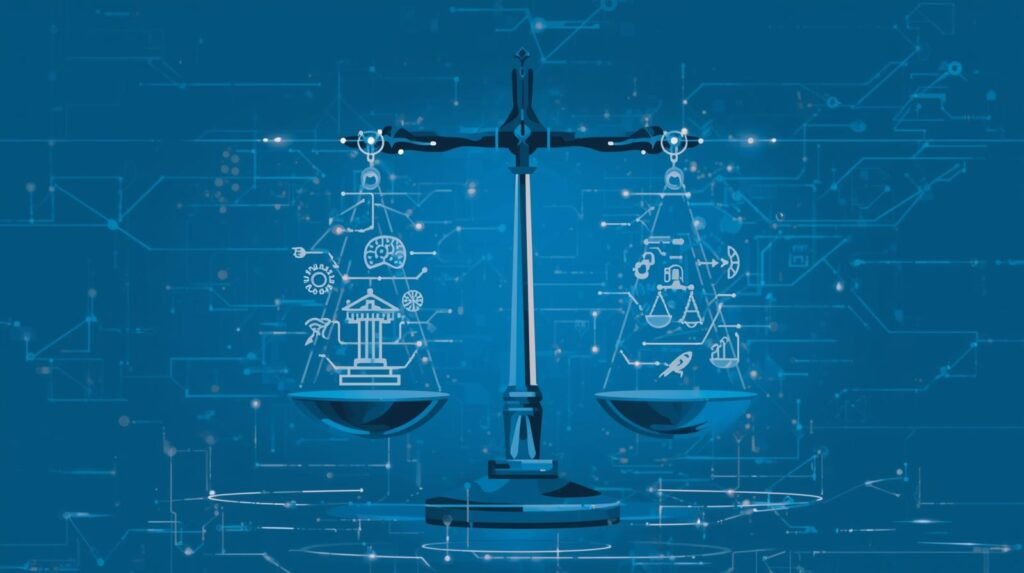
https://ai.nezzhub.com/algorithms-in-ai-a-beginners-guide-to-core-concepts/Ethical AI in government is a growing concern. The public sector must ensure AI is transparent, accountable, and fair. This responsibility is crucial for maintaining trust in government institutions.
To establish ethical AI, certain principles must be upheld. These principles ensure AI is implemented fairly and responsibly. They guide the development and deployment processes in government settings.
Fairness is a primary principle in ethical AI. Systems must be designed to prevent bias and discrimination. This measure is essential to ensure AI serves all demographics equally.
Another critical principle is transparency. Citizens should understand how AI makes decisions affecting them. This openness encourages trust and facilitates engagement.
Accountability is also vital. Governments must ensure there is oversight on AI usage. It is crucial to have clear measures in place for accountability in AI systems.
Core Principles
Fairness and non-discrimination
Transparency and openness
Accountability and oversight
Addressing these principles involves significant challenges. Data biases are a major concern; historical data can perpetuate existing biases. Addressing these issues is fundamental for equitable AI development.
Privacy is another challenge. AI systems require vast amounts of data, often personal. Ensuring data privacy while utilizing AI for public benefit is delicate.
Key Challenges
Data bias and discrimination
Privacy and data protection
Ensuring transparency in AI decision-making
Governments must navigate these challenges meticulously. Strategies should focus on robust frameworks to guide ethical AI use. Developing clear policies and guidelines is imperative.
An ethical AI system also mandates continued evaluation. This process ensures systems remain aligned with societal values. Governments must embrace adaptive measures in AI governance.
Ensuring ethical AI in government is complex but achievable. It requires dedication to principles and innovative solutions to challenges. By adhering to these values, AI can enhance the well-being of all citizens.
AI Policy and Regulation: The U.S. Approach

Policy and regulation are crucial for AI in governance. The U.S. approach focuses on balancing innovation with oversight. Such a balance is necessary to foster technological advancement while protecting public interests.
The government has taken several steps to regulate AI. These measures are intended to promote ethical AI deployment in various sectors. Ensuring that AI systems adhere to regulatory standards is a top priority.
National AI strategies emphasize public sector engagement. These strategies outline guidelines and frameworks for AI integration. They aim to create a cohesive approach across federal, state, and local levels.
A key component of AI policy is transparency. Regulations encourage open data policies and algorithmic transparency. These aspects are critical in maintaining public trust and engagement.
Regulatory Focus Areas
Encouraging innovation alongside robust oversight
Ensuring transparency and accountability
Establishing ethical guidelines for AI deployment
Another focus is on privacy protections. U.S. policies strive to safeguard individual privacy within AI systems. This effort involves implementing strict data handling and storage protocols.
Collaboration is essential for effective regulation. The U.S. government works with tech companies and stakeholders. These partnerships help craft regulations that are both practical and protective.
Regulating AI faces inherent challenges. Rapid technological advancement often outpaces policy-making processes. Staying ahead requires continuous review and adaptation of AI regulations.
AI’s complex nature demands cross-sectoral policies. A coordinated approach ensures consistency in AI regulation. It seeks to align AI innovations with national security and economic strategies.
Developing AI policy involves stakeholder consultations. Input from various sectors helps create comprehensive guidelines. It ensures that regulations reflect a broad range of perspectives.
In conclusion, U.S. AI policy and regulation aim to harness AI’s potential while safeguarding public interest. These efforts are ongoing and evolving to meet new challenges. A dynamic regulatory environment is essential for the responsible integration of AI in government.
Case Studies: AI in Action Across U.S. Public Sector
Artificial intelligence has found numerous uses in the U.S. public sector. Various agencies are leveraging AI to enhance services and efficiency. These case studies highlight AI’s transformative impact.
City governments are adopting AI for urban management. For instance, San Francisco uses AI to optimize traffic and reduce congestion. The city has reported improved public transport efficiency as a result.
AI is playing a role in healthcare as well. The Department of Veterans Affairs utilizes AI for predictive analytics. This technology helps in anticipating patient needs and improving care quality.
- Healthcare AI Applications:
- Predicting patient outcomes
- Automating administrative tasks
- Enhancing diagnostic accuracy
In law enforcement, AI aids in crime prediction. Chicago’s Police Department uses predictive policing models to deploy resources efficiently. These models aim to reduce crime by anticipating criminal activity patterns.
AI has also improved disaster response strategies. FEMA employs AI to analyze satellite data for disaster impact assessments. This analysis speeds up recovery efforts by streamlining response coordination.
AI is revolutionizing education in public schools. Districts use AI to personalize learning by tailoring educational content. This approach seeks to improve student engagement and educational outcomes.
Educational AI Applications
Personalized learning experiences
Virtual tutoring systems
Administrative process automation
Various cities are using AI for environmental monitoring. Los Angeles integrates AI to track air quality data and drive policy decisions. Insights from AI models direct initiatives to improve urban environments.
These examples showcase AI’s broad applicability in governance. Whether in healthcare, law enforcement, or education, AI offers numerous benefits. Each implementation improves efficiency and service delivery.
Public sector agencies continue to explore AI’s potential. Lessons from these case studies guide future projects. By learning from successful implementations, other agencies can better harness AI’s capabilities.
In summary, AI’s role in the public sector is growing. These case studies provide valuable insights into practical applications. By leveraging AI, governments can transform operations and enhance citizen engagement.
Overcoming Barriers: Data, Security, and the Digital Divide
While AI offers numerous benefits, significant barriers remain. Data, security, and the digital divide pose challenges to AI integration. Addressing these issues is crucial for successful implementation.
Data quality is a foundational concern. AI systems rely on accurate and comprehensive data. Inadequate data can lead to flawed insights and decisions. Governments need robust data collection and management strategies to ensure AI effectiveness.
Another critical issue is cybersecurity. With the rise of AI, protecting government systems is more important than ever. Cyber threats can undermine AI integrity and public trust. Implementing strong security measures can mitigate these risks.
The digital divide continues to limit AI’s reach. Not all communities have equal access to technology. This inequality hinders the equitable distribution of AI benefits. Bridging this gap is essential for inclusive governance.
Several strategies can help overcome these barriers:
- Improving data infrastructure to ensure reliability and completeness.
- Enhancing cybersecurity frameworks to protect AI systems.
- Promoting digital literacy and access to technology in underserved areas.
Government partnerships with the private sector can play a pivotal role. Collaboration can accelerate the deployment of secure AI technologies. Industry expertise in data management and security is invaluable to public projects.
Furthermore, transparency in data use is vital. Citizens need assurance on how their data is being utilized. Clear communication can foster trust and facilitate broader acceptance of AI initiatives.
In summary, overcoming barriers requires a multi-faceted approach. By focusing on data quality, security, and inclusivity, AI’s potential can be fully harnessed. These efforts will pave the way for a more efficient and equitable digital governance landscape.
Building Smart Government Technology: Infrastructure and Workforce
Building a smart government requires robust infrastructure and a skilled workforce. These components are essential for implementing AI technologies effectively. Without them, achieving digital transformation in governance is challenging.
Infrastructure serves as the backbone for AI deployment. It includes both physical and digital components. High-speed internet, cloud computing, and data centers form a critical part of this setup. These systems must support the storage and processing needs of AI applications.
A skilled workforce is equally important. Government employees need expertise in AI to harness its potential. Training and upskilling programs are necessary to equip them with relevant skills. Continuous learning opportunities help keep pace with AI advancements.
To build smart government technology, focus on these key areas:
- Develop advanced IT infrastructure for AI implementation.
- Foster government-private sector partnerships to leverage expertise.
- Promote education and training for a tech-savvy workforce.
Partnerships between government and private enterprises can accelerate infrastructure development. These collaborations can introduce innovative solutions and shared resources. Such joint efforts benefit from the agility and creativity of the private sector.
Investment in education is crucial for workforce readiness. Government initiatives can encourage learning in STEM fields. Scholarships, workshops, and AI literacy programs can widen career opportunities in tech. This prepares employees for AI’s evolving demands.
Technology adoption also requires cultural shifts within government agencies. Transitioning to a data-driven mindset is essential. This involves embracing technology for insights and decision-making. Adopting AI involves more than just technological upgrades.
Building smart government technology is an ongoing journey. It demands strategic investment in infrastructure and people. By focusing on these elements, governments can ensure successful AI integration and improved public services.
The Future of Public Sector Artificial Intelligence
The future of public sector AI promises significant advances. AI’s role will likely expand, reshaping government operations and public interactions. Predictions suggest an era of enhanced efficiency and citizen-focused services.
AI technologies will enable predictive analytics for better policy-making. Governments can harness data trends to anticipate public needs and allocate resources effectively. This could lead to faster responses to emerging challenges.
Moreover, AI could revolutionize citizen engagement. Chatbots and virtual assistants are poised to become primary interaction tools. This personalization ensures timely and efficient government service delivery. AI can streamline processes, making bureaucracy less daunting for citizens.
Governments must focus on three key areas for AI’s potential:
- Fostering innovation through research and development.
- Ensuring data security and public trust.
- Nurturing public-private collaborations for resource-sharing.
Research and development remain vital for sustained innovation. Continued investment in AI research is necessary. This supports evolving applications that address diverse societal challenges. Cross-sector collaborations can further boost innovation.
Data security and public trust are crucial for success. Transparent AI practices and robust cyber defenses are imperative. Governments need policies that protect citizen data while fostering trust in AI systems.
Collaborations across the public and private sectors could drive forward-thinking AI projects. Sharing knowledge and resources accelerates the implementation of pioneering solutions. Partnerships can lead to creative approaches and optimized AI use.
The future of AI in the public sector is bright, with boundless opportunities. By prioritizing innovation, trust, and collaboration, governments can transform their services. They can create responsive, adaptive, and citizen-focused operations that meet the demands of a digital age.
Conclusion: Charting the Path Forward for AI Technology for U.S. Digital Governance
AI’s integration into U.S. digital governance stands at a pivotal juncture. Embracing its potential can revolutionize public service delivery. Yet, it requires diligence in ethical practices and robust policy frameworks.
A future where AI enhances government efficiency is within reach. Stakeholders must commit to transparency, innovation, and collaboration. These efforts can ensure that AI serves the public interest and builds a more responsive governance model. By maintaining a focus on these pillars, the path forward promises a transformative era for U.S. digital governance.